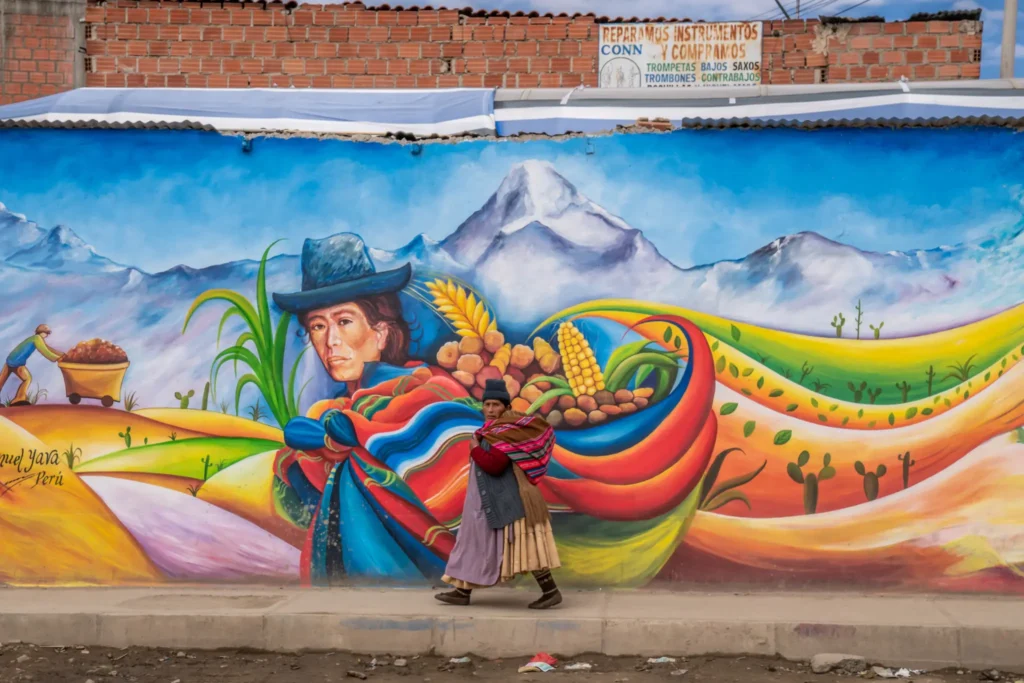
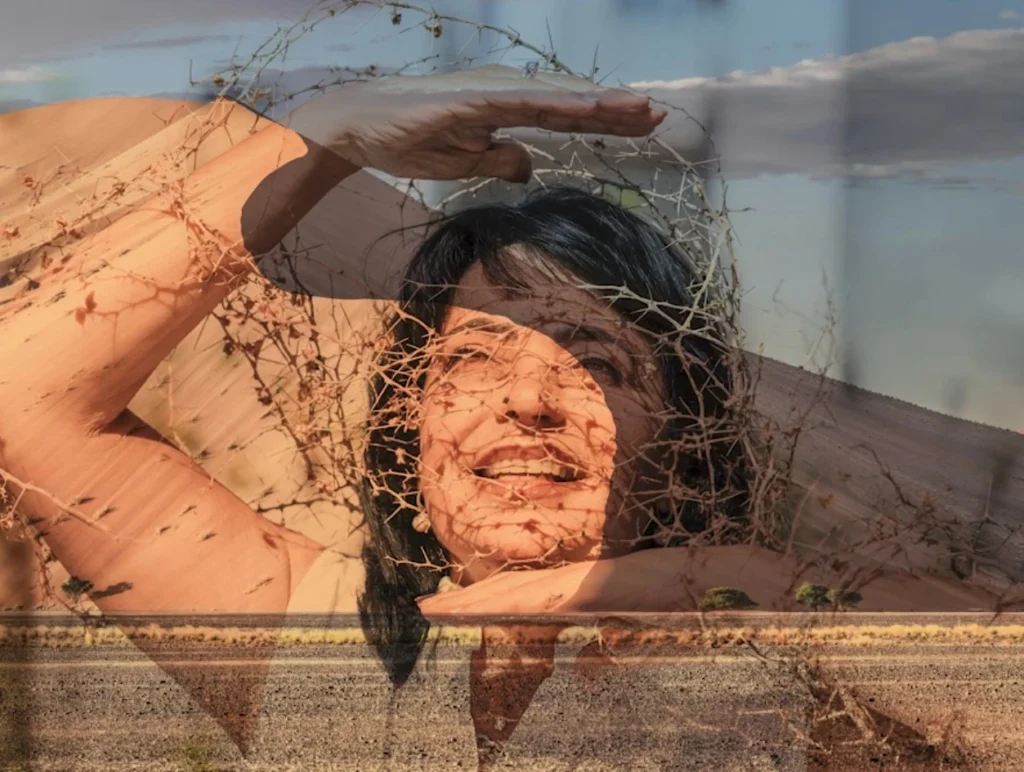
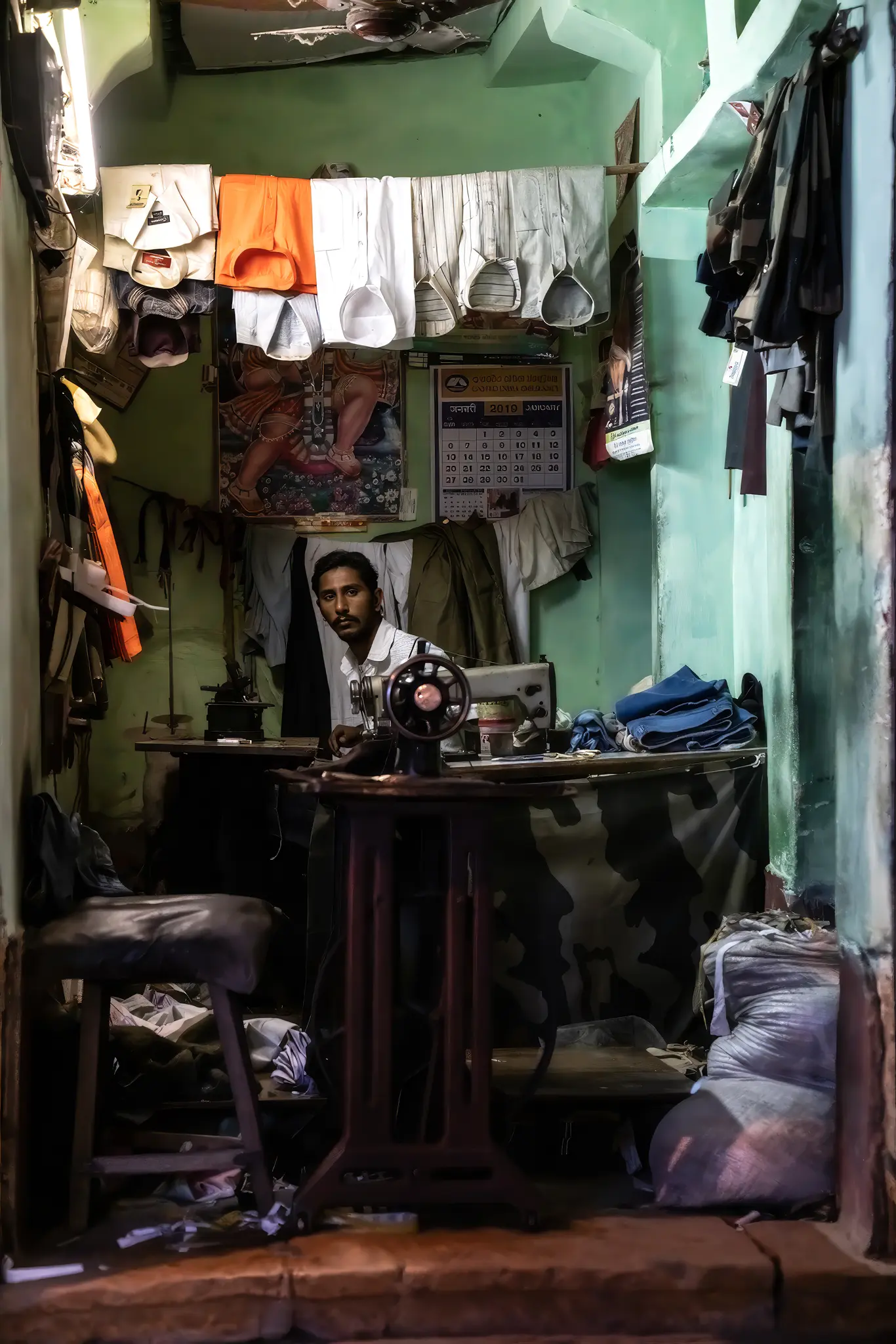
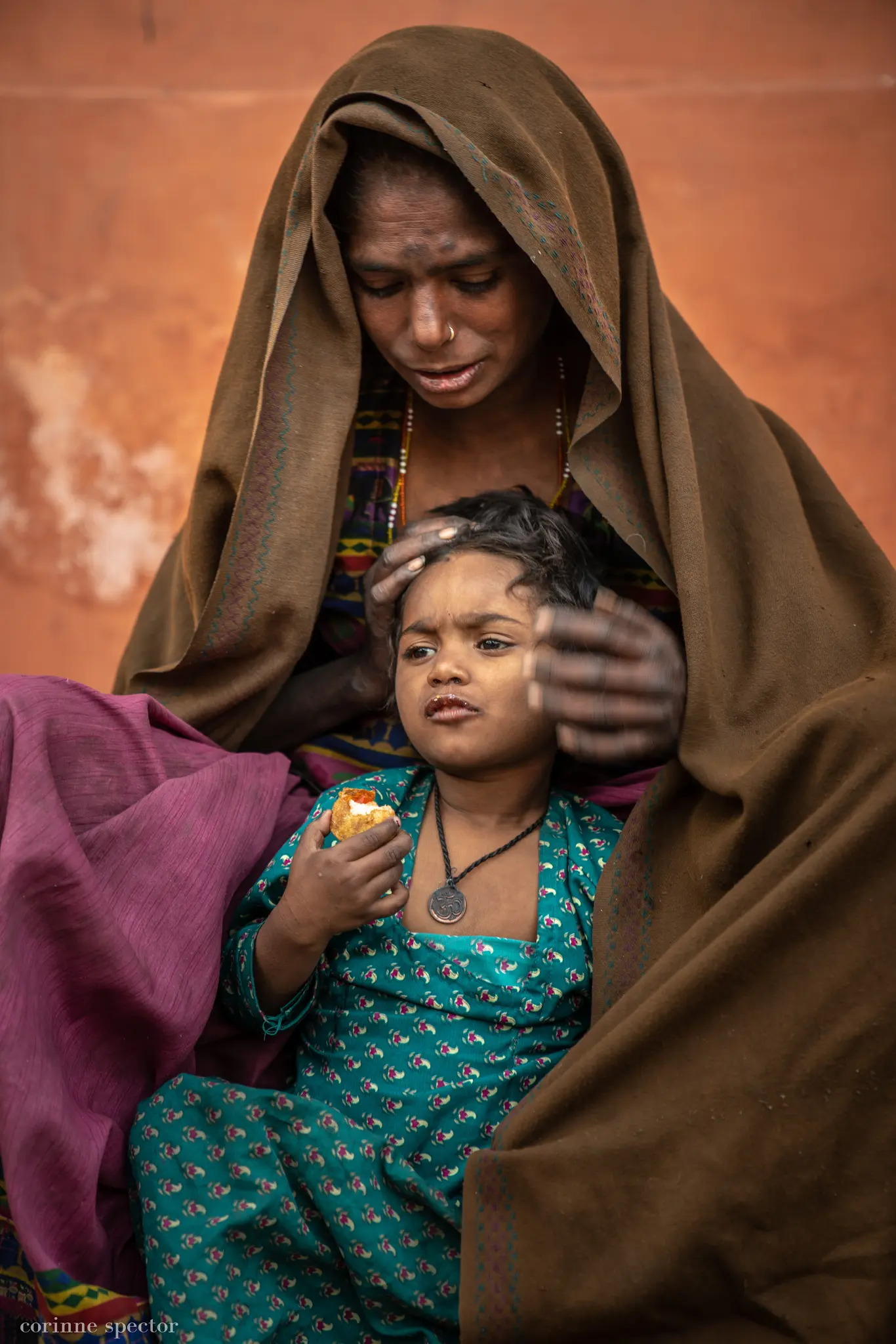
Varanasi and Rajasthan.
Introduction
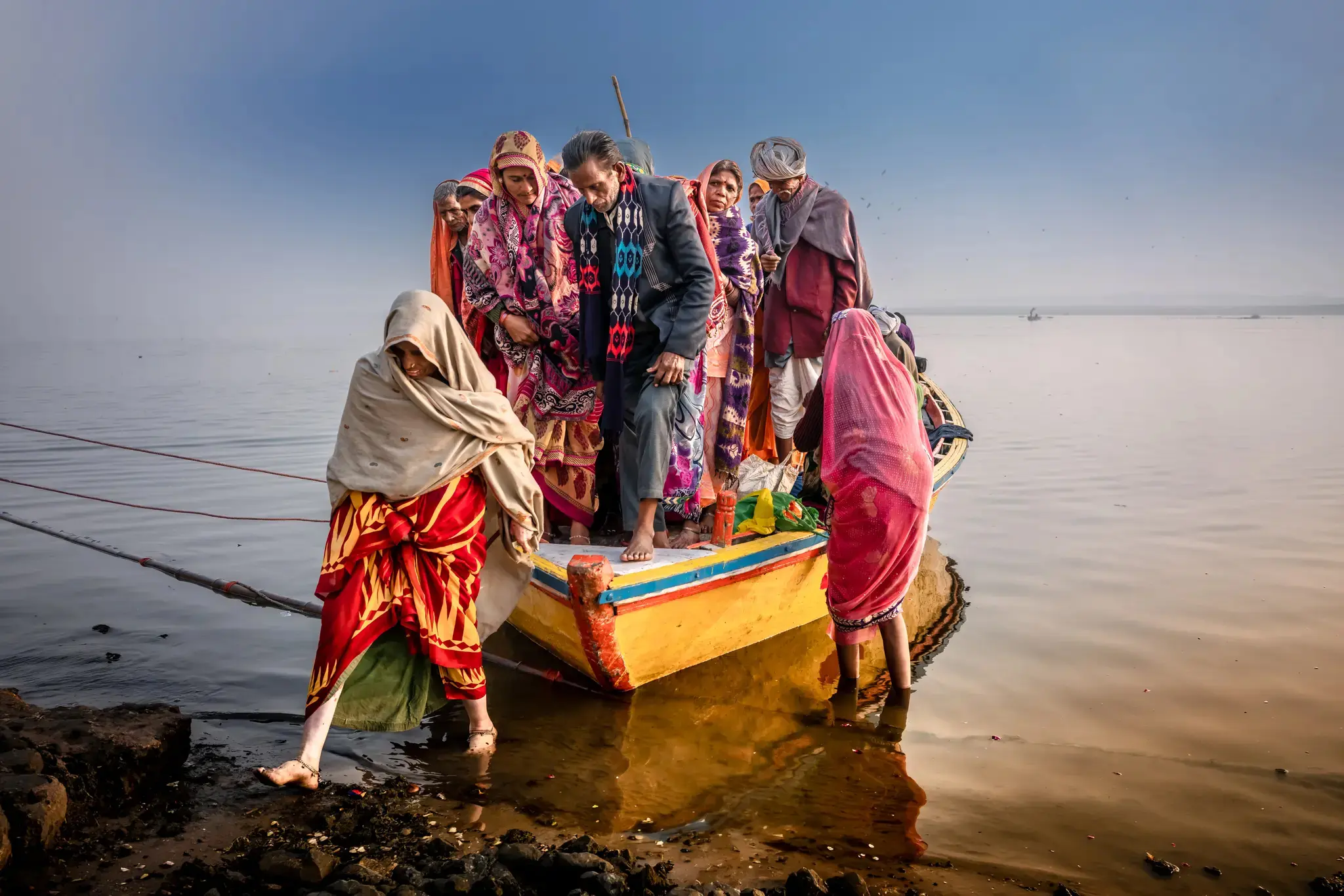
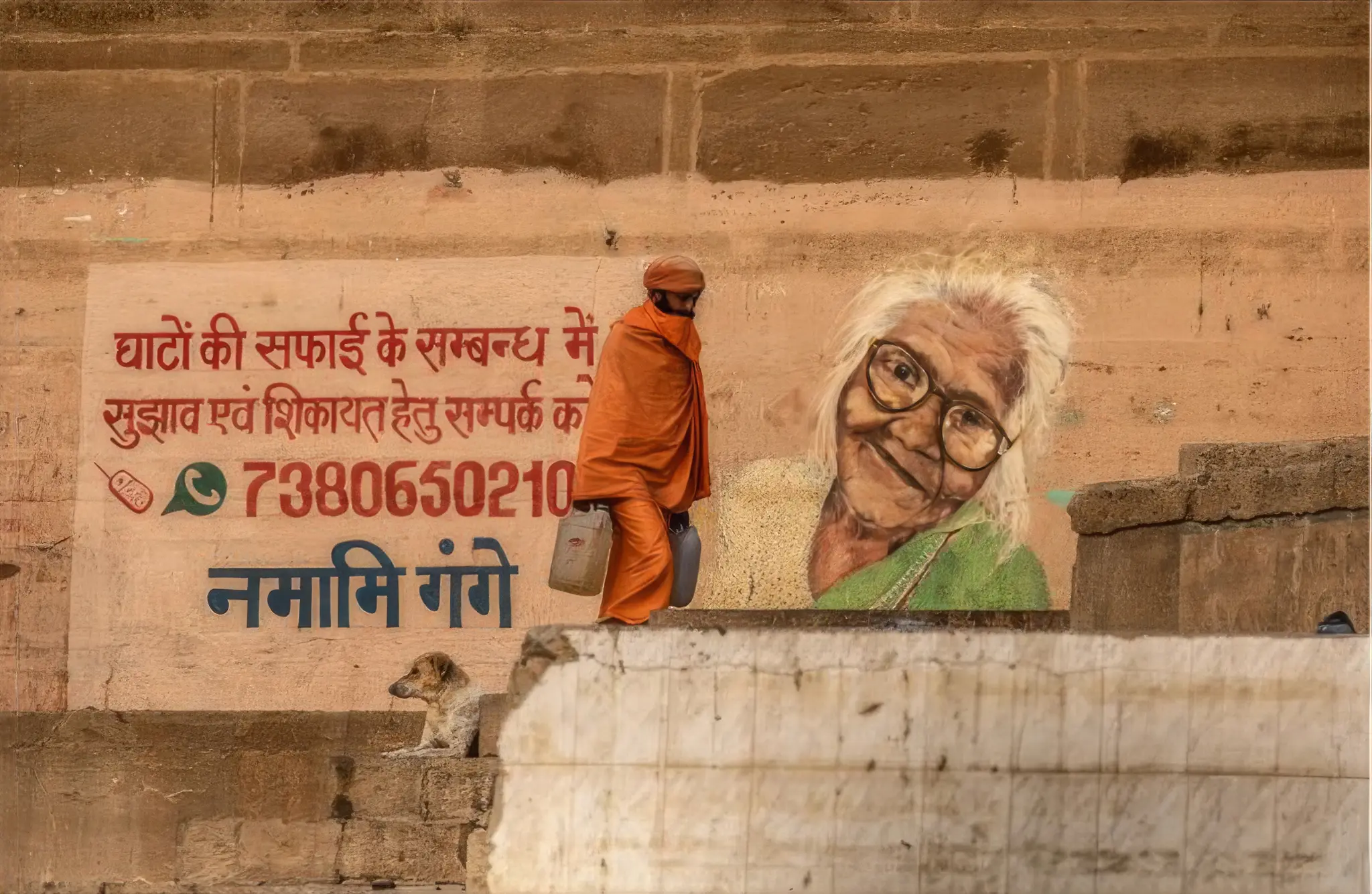
Varanasi is a place where people meet and mingle, cry and laugh together all the time. Today in the West, we don’t see human interaction as much anymore as we sit at our computers, and are on our phones for hours every day. Yet there, they sit for hours, together, often looking at the view, with nothing in their hands. People sit and look, stare, maybe meditating, and their movements are slow.
It’s like a silent movie with scenes that somehow change slowly, without sound. It’s bizarre that this is a place with thousands of people around, yet there is little noise, and few words are heard. People of many religions meet here, but in a different way from where I grew up.
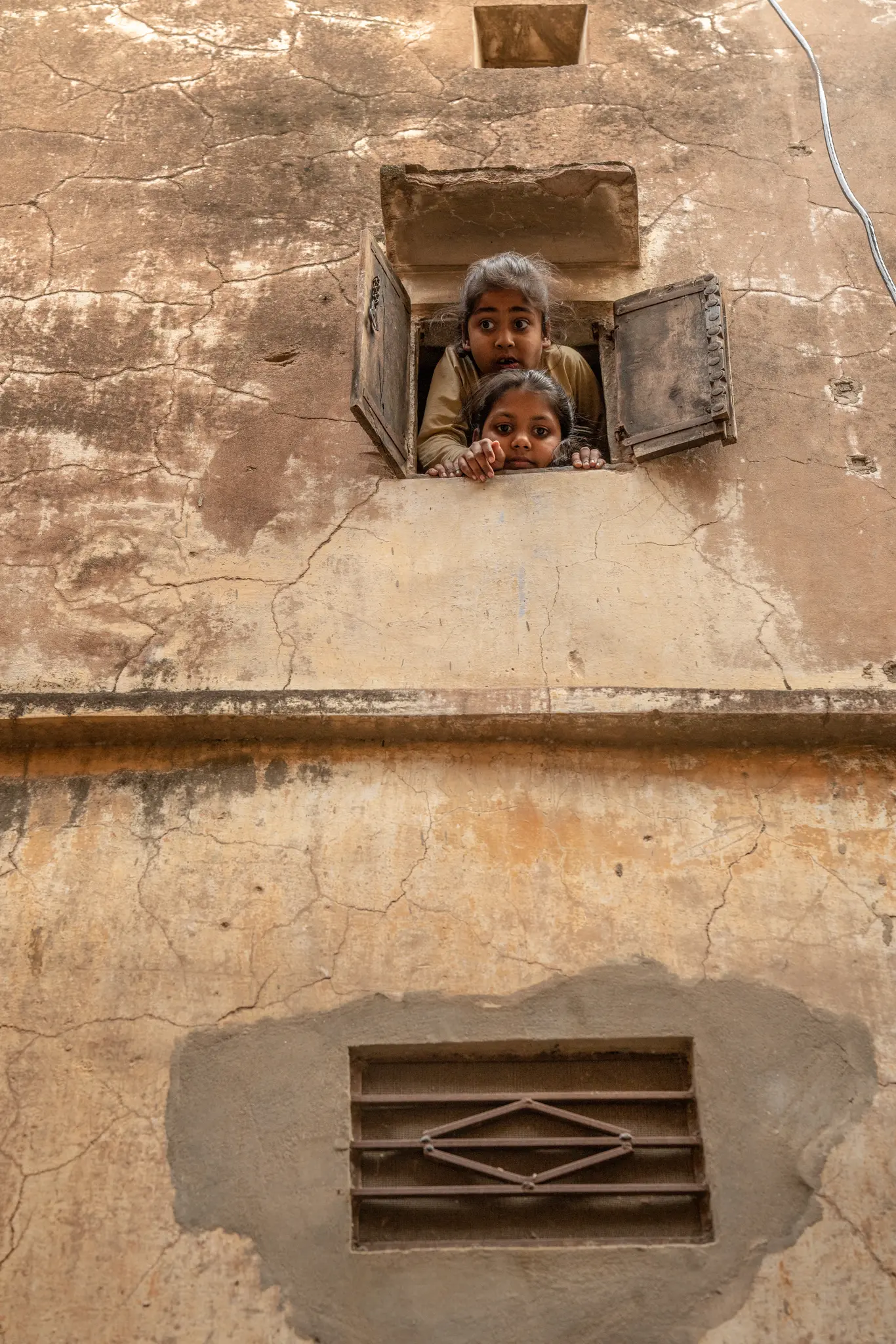
In the alley-ways, it is as if there was an earthquake in the distant past– there are pieces of structures, doorways, and stairways, and new people seem to float up, as if from inside the earth – from the dust – with sacks, children, goats, rocks, dogs, carts, fruit, pigeons – all of them moving all the time, but in silence. And yet they are clean, with pleasant faces.
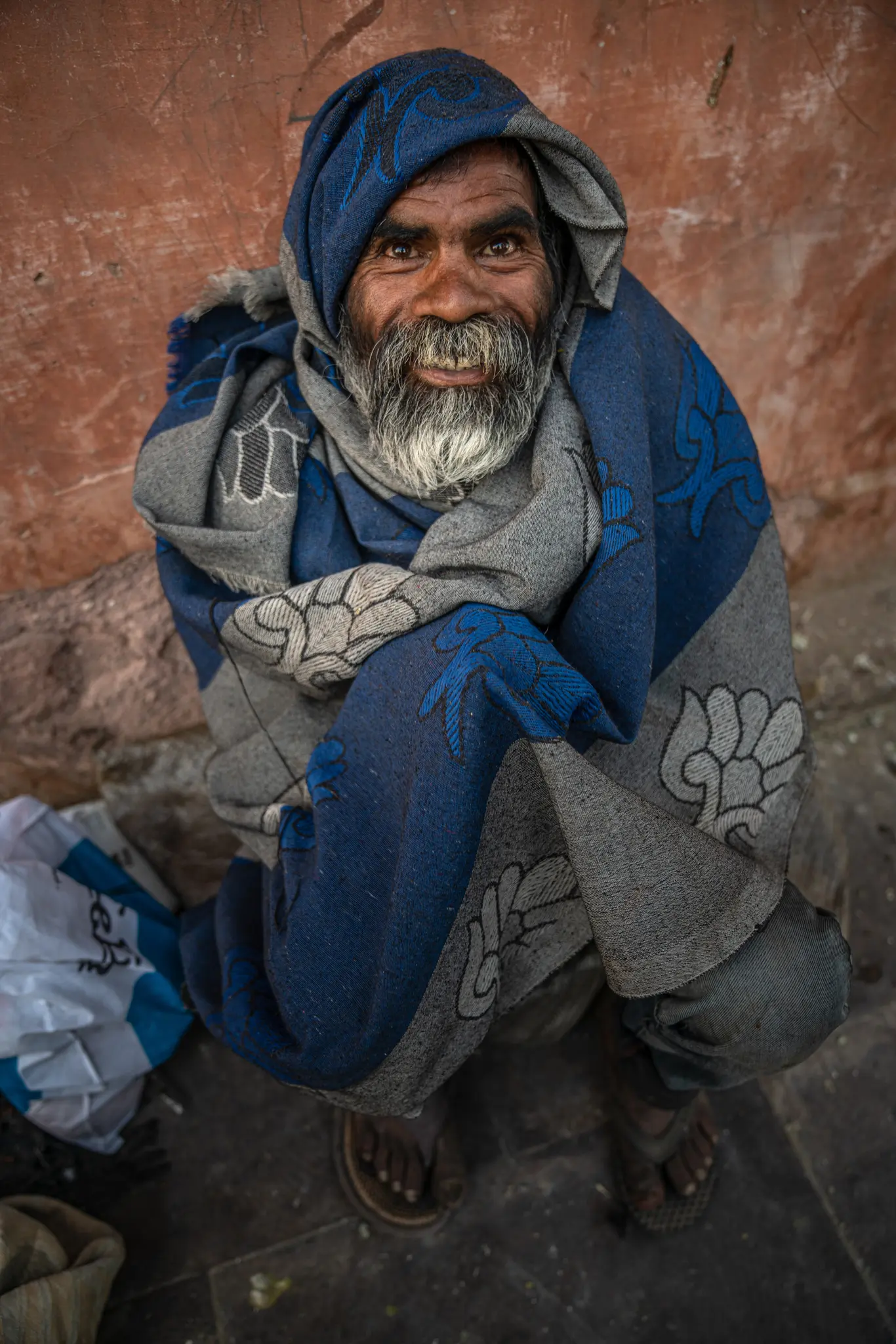
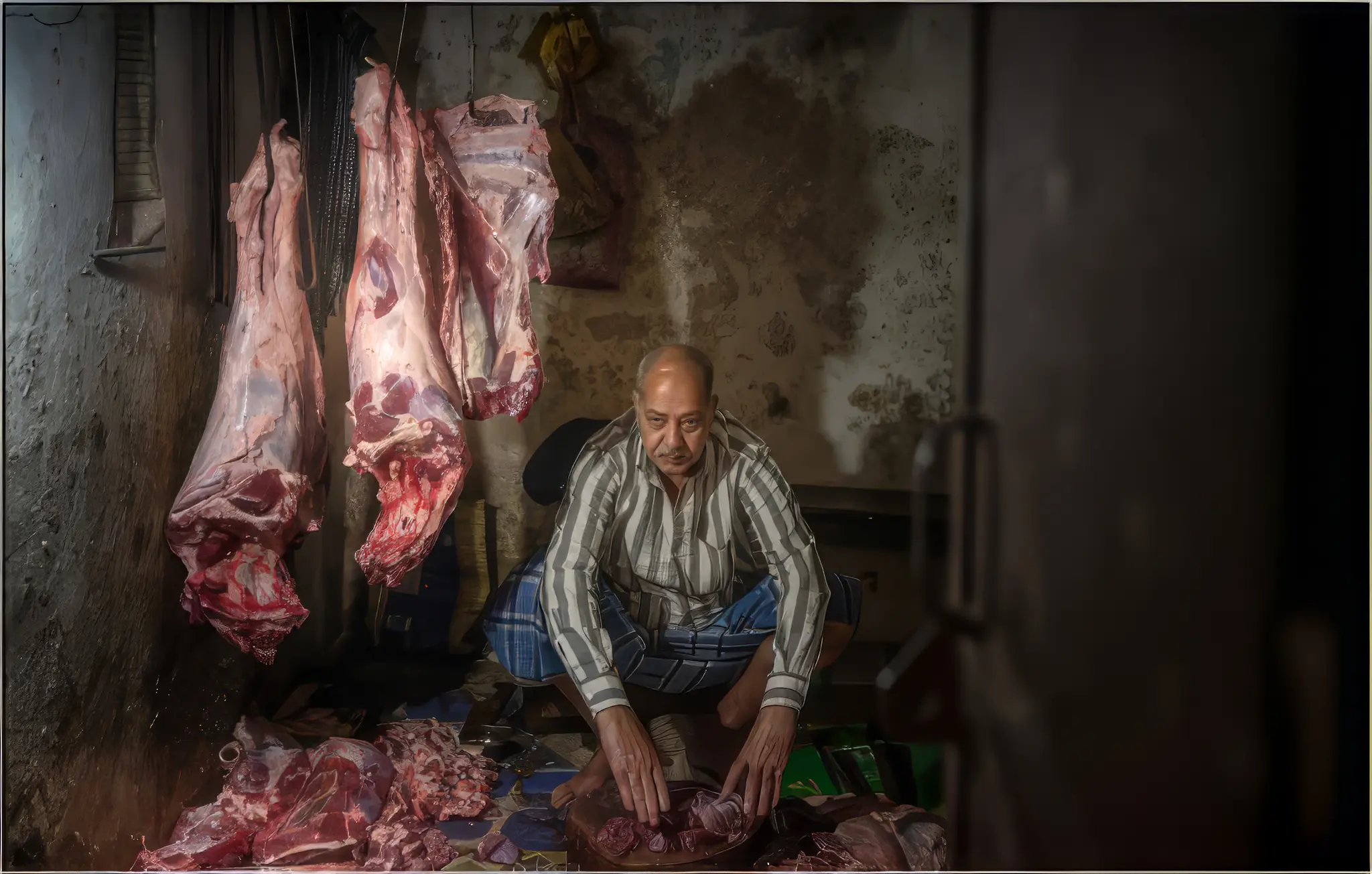
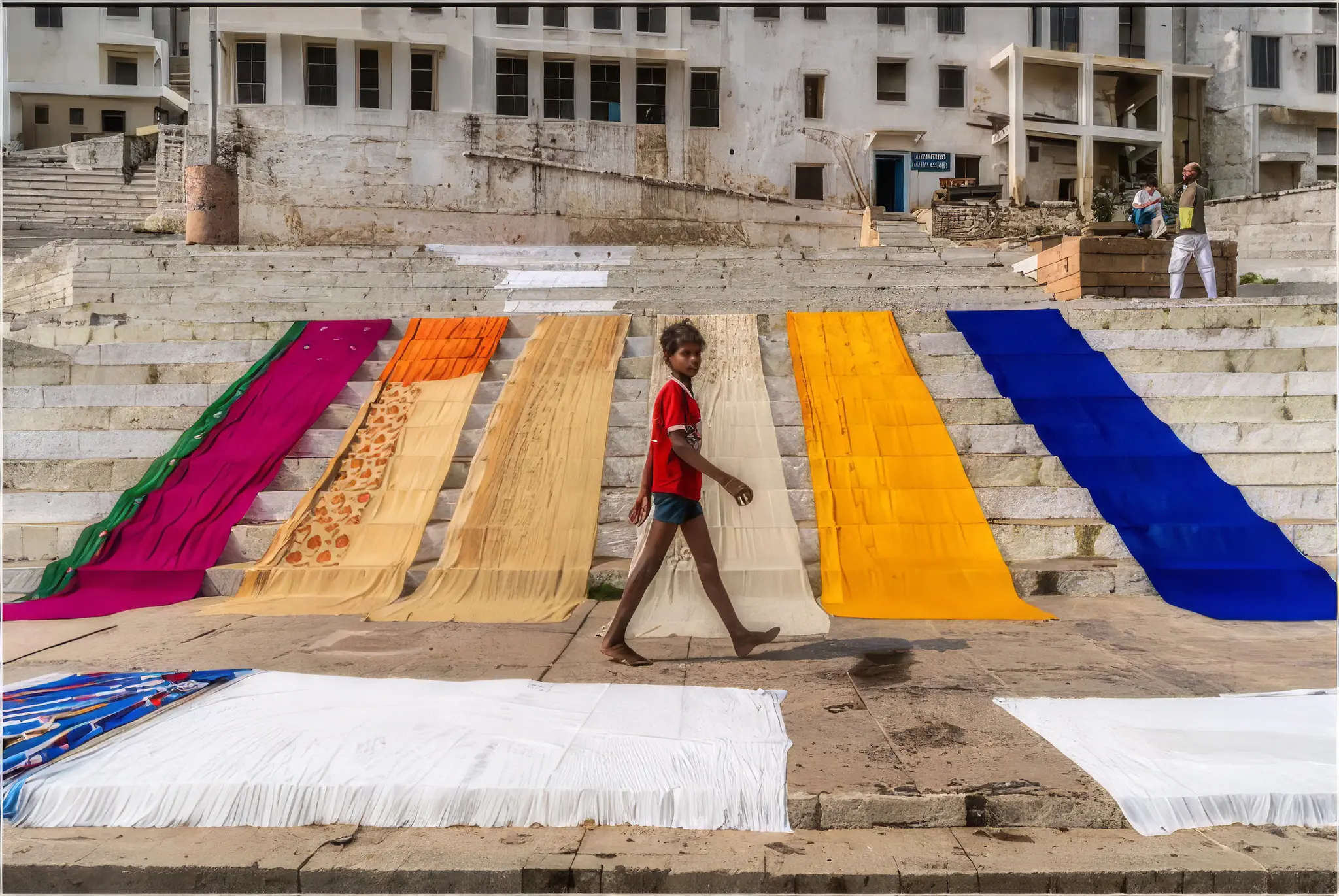
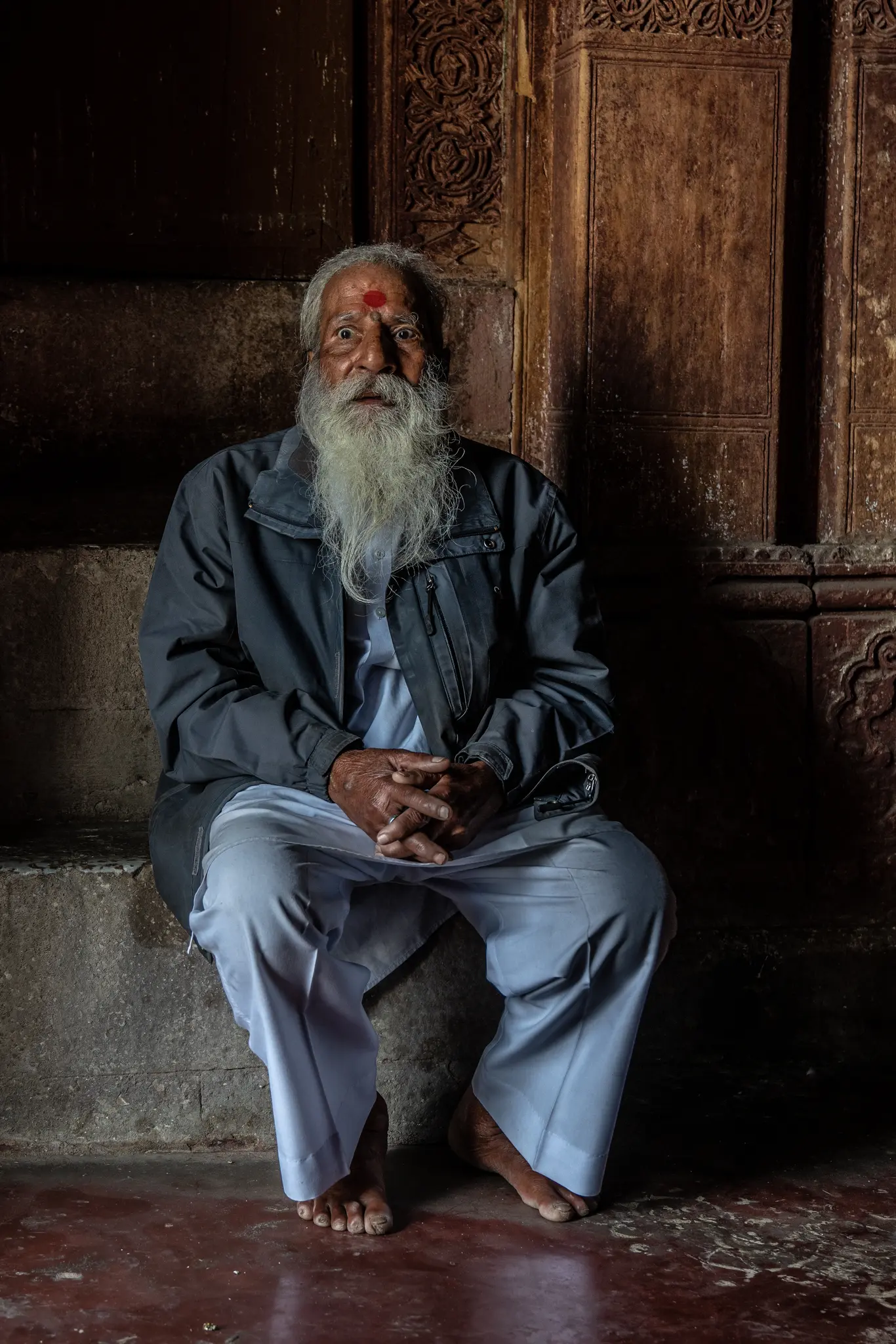
When I come closer, even when I am without my camera, people freeze and look at me, looking at them. They are as still as statues, honoring the moment and the fact that I have approached them. They are in a state of wonder also, they look straight at me but don’t ask me for anything or think I will ask anything of them. They present themselves to me as they are, in that moment. All of this is on a backdrop of amazing colors, of a rainbow of saris. They walk as if on tiptoe, they are barefoot, without shoes in the heat and in the cold. Every movement is as if it is a frame. It is real, authentic, as if the “global village” has not touched them. It feels like the embodiment of the phrase “from dust to dust”.
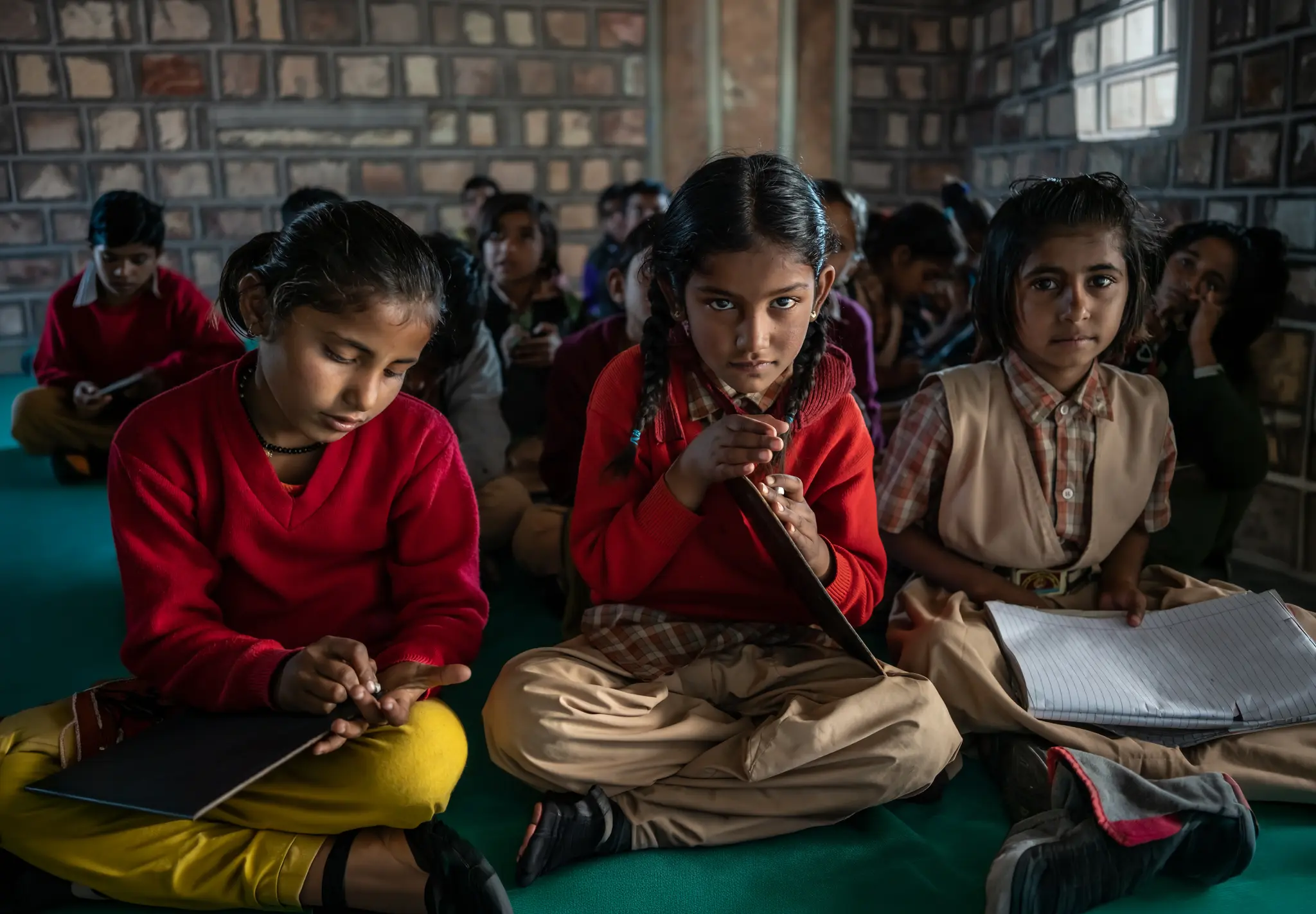
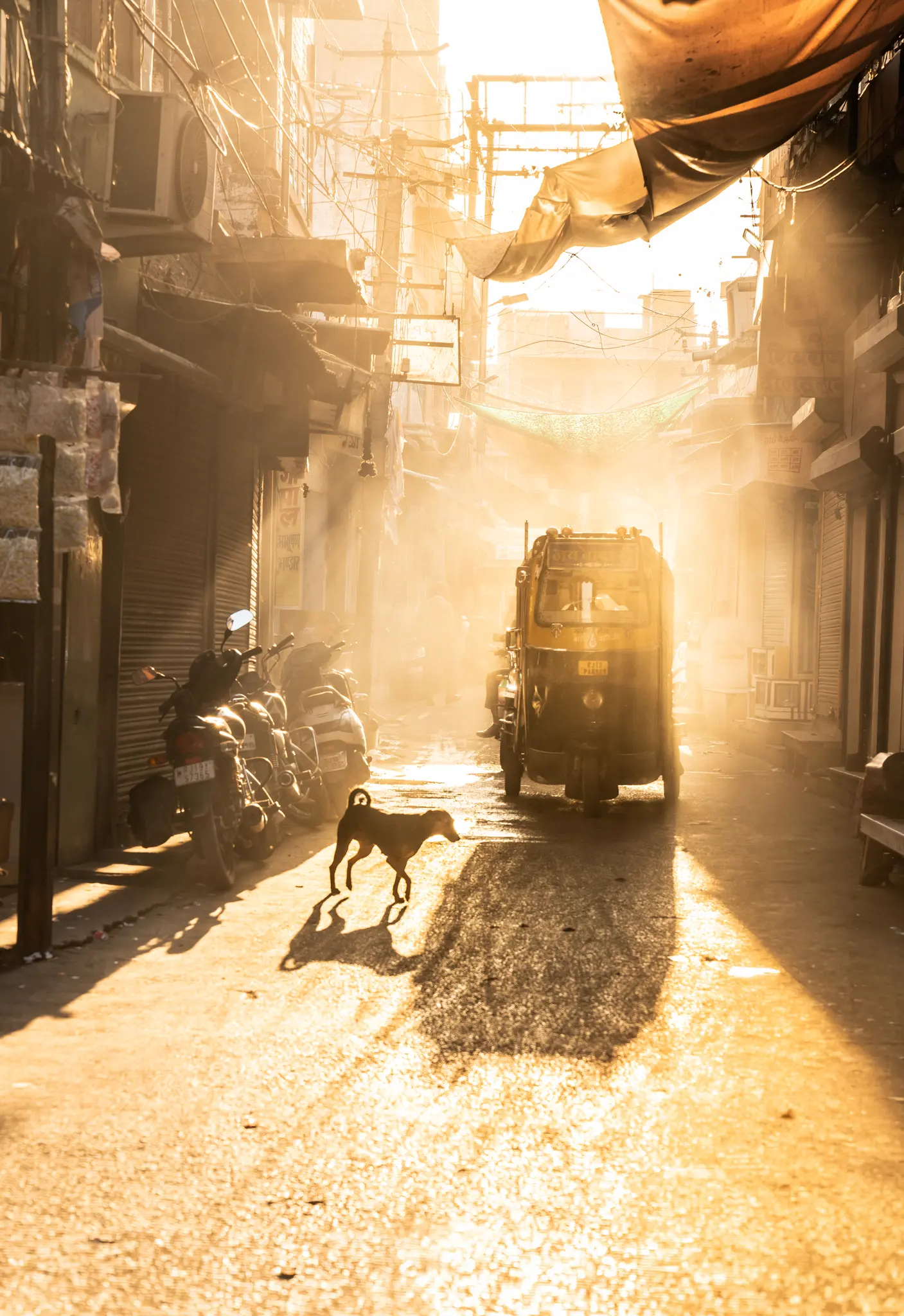
Rajasthan is a land of kings, full of forts and castles, with desert and also colorful cities like Jaipur the pink city, Jodhpur the blue city and Jaisalmer, the yellow city. The views are exotic and romantic. The monkeys come down to the beautiful fruit being sold off the carts, and while the cart owner chases them away, a cow comes up to take an apple from the other side of the cart.
It is like a scene out of a thousand and one nights. There is constant movement here; people are always moving, carrying things from place to place, or lighting a fire because they are cold.
A bit about my background… I was born in 1961 in Morocco, but arrived in Israel at the age of 9 months. I spent my childhood in Jaffa but grew up in Bat Yam. I currently live in Shoham.
Beginnings
I was always a story teller; I am the eldest of 6 sisters, and I always invented and told them stories. Often I’d tell stories starting from one small detail. Sometimes people asked me how I reached these conclusions; I realized that they didn’t understand or see the same things that I did. But when I described a scene, others felt they could see it.
My passion for photography was born a long time ago. It seems I always had a camera but I never really learned to take photos. I always documented my daily life, and that of my family, and with my camera, I wanted to tell stories.
Only when I was older, and I understood that if I wanted another way to tell these stories, I could use a camera, but that I must learn more about everything that this tool can do.
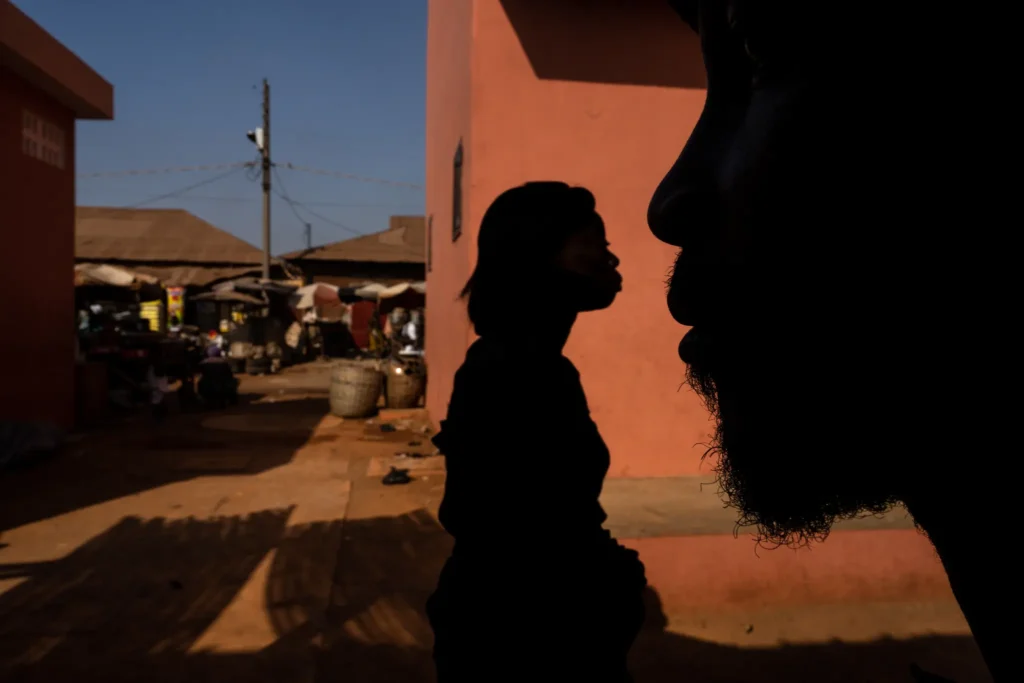
Photography for me now is a means to tell a story, to give the reality that I see, an interpretation. I have done some nature photography but street photography is new for me. It is different in that I see a connection between the gestures of people or their movements, and reflections or things that are written in the street, and all these things happen at the same moment, and then I try to connect and combine these. Street photography requires great sensitivity, intelligence, humor and the art of taking several parts and making a whole picture, one that interests and touches others.
The photos that have marked my entrance into the world of real photography are those from the time when I took a photo of an older woman sitting in the sun outside her house, and then she invited me into her home. As I just sat and looked at her, not able to communicate, she cried as she showed me her fragility and I cried with her.
Why do street photography?
To tell a human story, to show a kind of metaphor. In photography, there is a decisive moment to show something unusual or a connection, or a human story. Nothing is staged, for me. With all this, I insist on maintaining a strong esthetic, unlike some street photographers. In the developing world, the human faces seem to have so many strong accents to them; there is something very intense and essential about them, are they somehow trapped in their lives, or only from our perspective?
Maybe I go down to the streets to take pictures because I am searching for something I’ve lost – perhaps meaning or authenticity or memory…
Photography for me is a serious hobby.
My background studies include a BA in Theater and an MA in Education.
The thesis I wrote in my MA studies was about serious leisure and youth.
In this type of leisure, there is consistent and meaningful participation in which one acquires knowledge and expresses skills (Robert Stebbins, 1982).
In it, a space is created for trial and investigation, in which one tries to perform an activity in real life, but without paying the full “price” of one doing so as a profession. This space invites a search in which one can be one’s true self, and in which his or her uniqueness can shine through, with the potential to develop a career in it. Once I researched this topic and now I am living it through photography. I currently work as a developer of curricula at the Open University, working with training teachers for their work in different areas so I am constantly thinking about how best to structure and teach things.
One of my great influences is the work of photographer Sebastião Salgado. When I saw the documentary “The Salt of the Earth”, I was dumbstruck.
It was as if there was an external force watching the earth from above, and there were small people in it who were moving and working. We each think we are very important in our daily lives but in fact we don’t often see the bigger picture.
Other influences are photographers who take pictures in conflict zones. I often feel that the street also has these elements of conflict – there is so much happening at once that it can feel like a war zone, but not always in a dangerous way – and that is so difficult to capture. People cross one another’s path, one opens a door while another closes one, there may be an ad and a person somehow becomes a part of it… The frame often gives another meaning to what is there.
I am still influenced by famous painters who have searched out the light in their pictures and enlightened their viewers by describing a period or telling a story with light and composition…
As I am new in this field of street photography, I have only a few influences – Tony Ray Jones (1941-1972) who shot personal, anthropological photos of daily life with empathy and humor and irony. Also Vivian Maier, Alex Webb, Helen Levitt, Jacob Reese and Lewis Hine, the social photographers of immigrants and children…
Equipment
I am currently using a Sony A7R III mirrorless camera, with a Sony FE 24-70mm lens. It is small which helps me to be less dominant in the street and not threatening, allowing me to follow and perhaps talk to my subjects more easily. This is the opposite of when I take photos in nature, where I often use very large lenses…
In the field
I don’t have a relationship with the street and the people who are in my shots. When I was a child in a somewhat violent neighborhood of Jaffa, I was kept indoors as much as possible, but I could sit on our balcony and still see life unfolding in scenes from above – nuns walking to prayer, funeral processions with open caskets and the body made up, and in its best clothing, or gangs of immigrants from different countries fighting. The street was always a place that drew my curiosity but I wasn’t a part of it. Even now, I feel I am not part of the street so it’s challenging; I still see the street as if outside it. Because of this distance and because I have great respect for people, I have a hard time putting my camera in their faces, as some people seem to do. I arrive in the street as an outsider still, with a great deal of curiosity and wonder, so I feel it’s difficult for me to “take” from the people I am shooting.
The frame is built while I am there; I don’t plan in advance, but rather come as an open book and put the elements together in the frame, in the moment.
I want to get the temperature, the smells, the sights and everything I feel into my frames.
Post-production
I do very little in terms of post-production, if at all.
I look for stories, so these techniques help with that: depth of field, the light, a certain angle… all of these serve the story.
Almost all of my photos are taken in color but then I consider them in B&W, which I also love. I use Lightroom for post-production. I do initial processing in about 15 minutes but then return again and again to look and find the focus, or consider if it has the emphasis I wanted…
For me, a photo is “good one” if it continues to excite me, and I find more layers of meaning in it each time I look. It should also be timeless.
Those pictures where I can get a moment of feeling into one frame are those that are able to make me, and hopefully others, feel something, and be excited by it. I also love those pictures where we see how the light breaks and that gives greater depth and meaning to the photo. And I always want to return again to try get another kind of light, another perspective, or see what else is new in another season but that rarely happens.
One of the things I became so aware of during photography –both street and nature- is the temporary nature of everything – of sights, smells, time, and of course ourselves as people. Taking a photo is bearing witness – to bear meaning to hold or carry, and also to withstand. The photographing of these scenes allows us to feel like we are preserving this moment in time – at least for a little longer.
My best shot is the one I haven’t yet taken because I am always thinking about the next frame; I want to improve each time; I want to see and be excited, more and more, again and again.