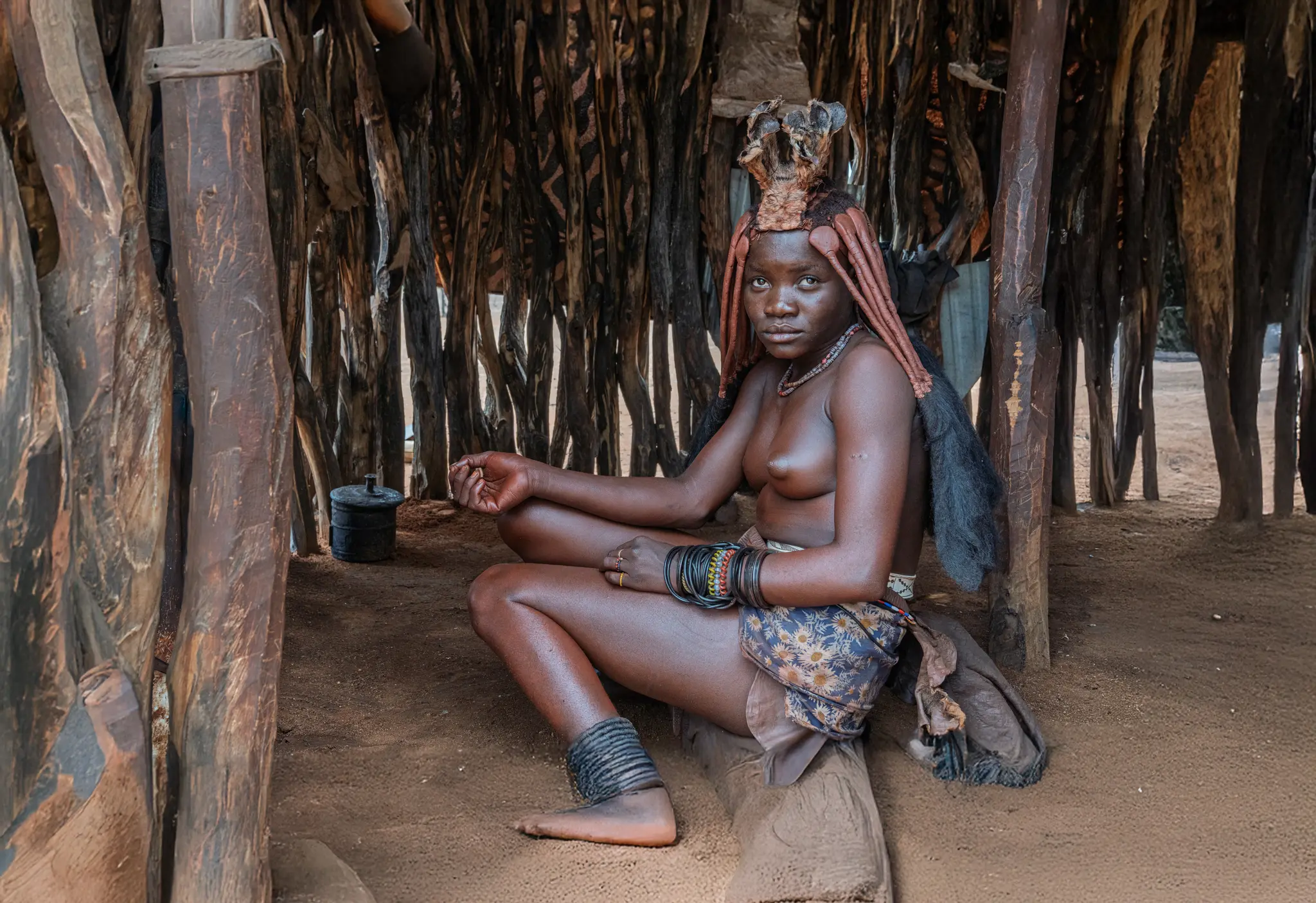
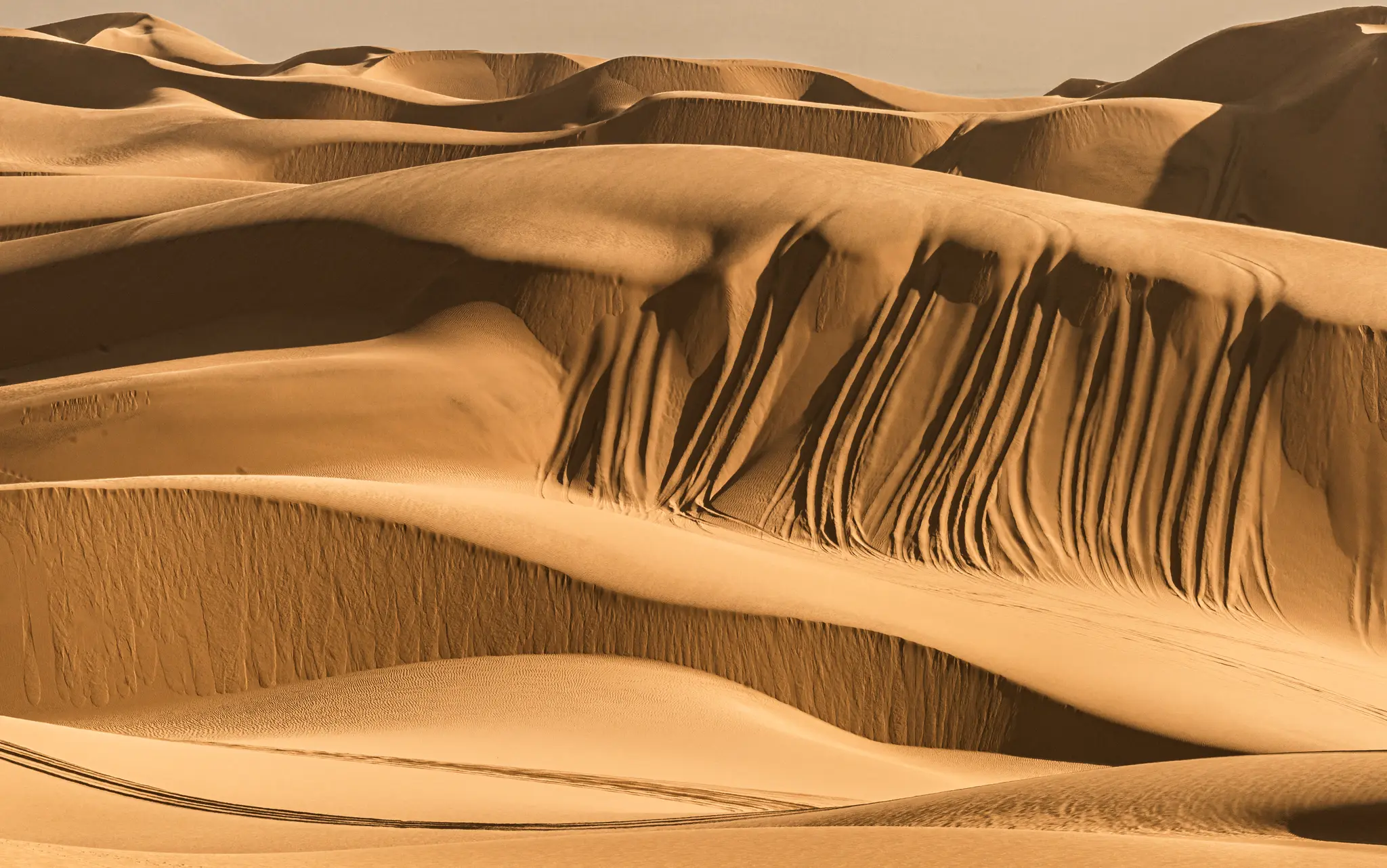
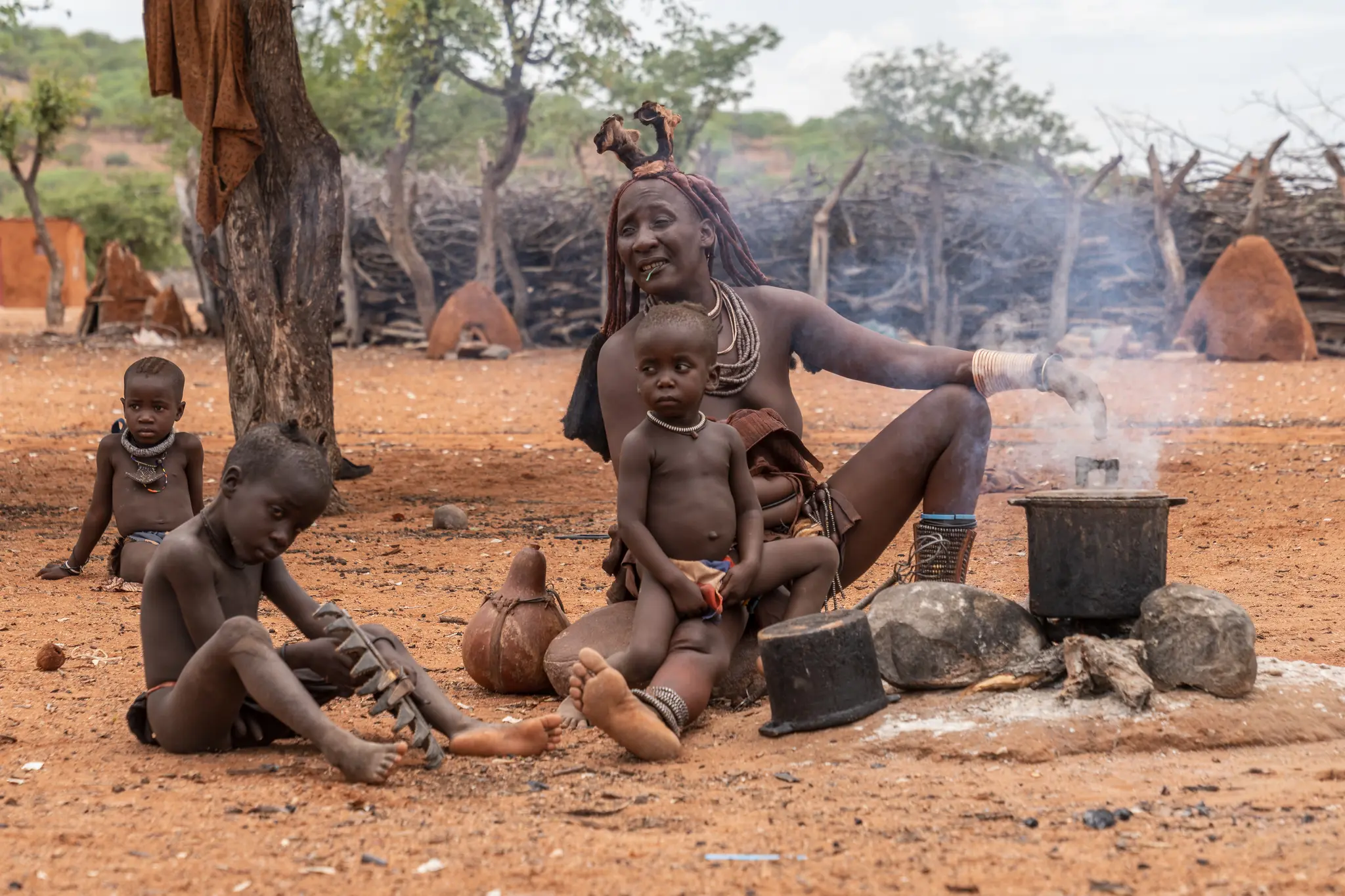
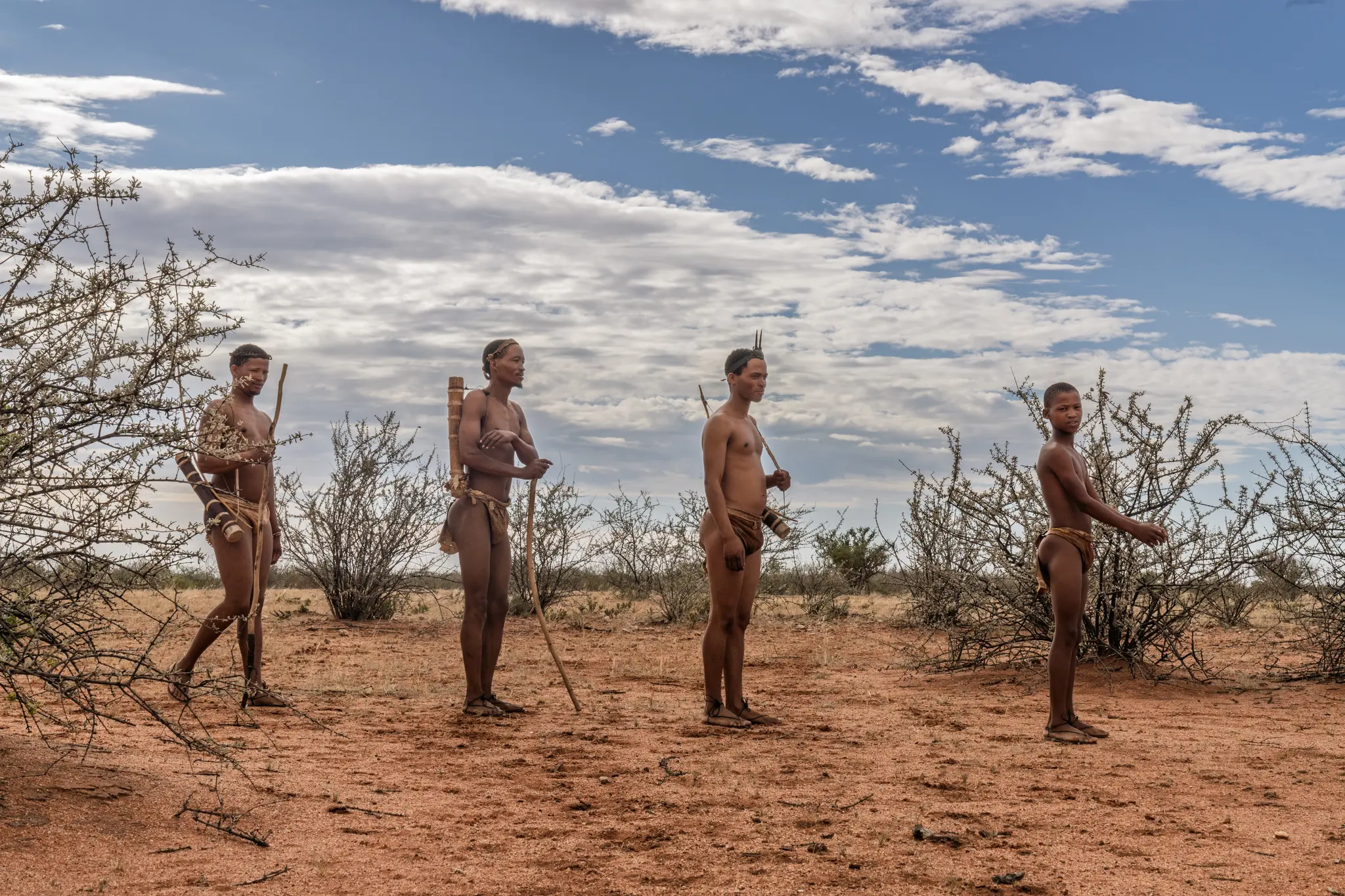
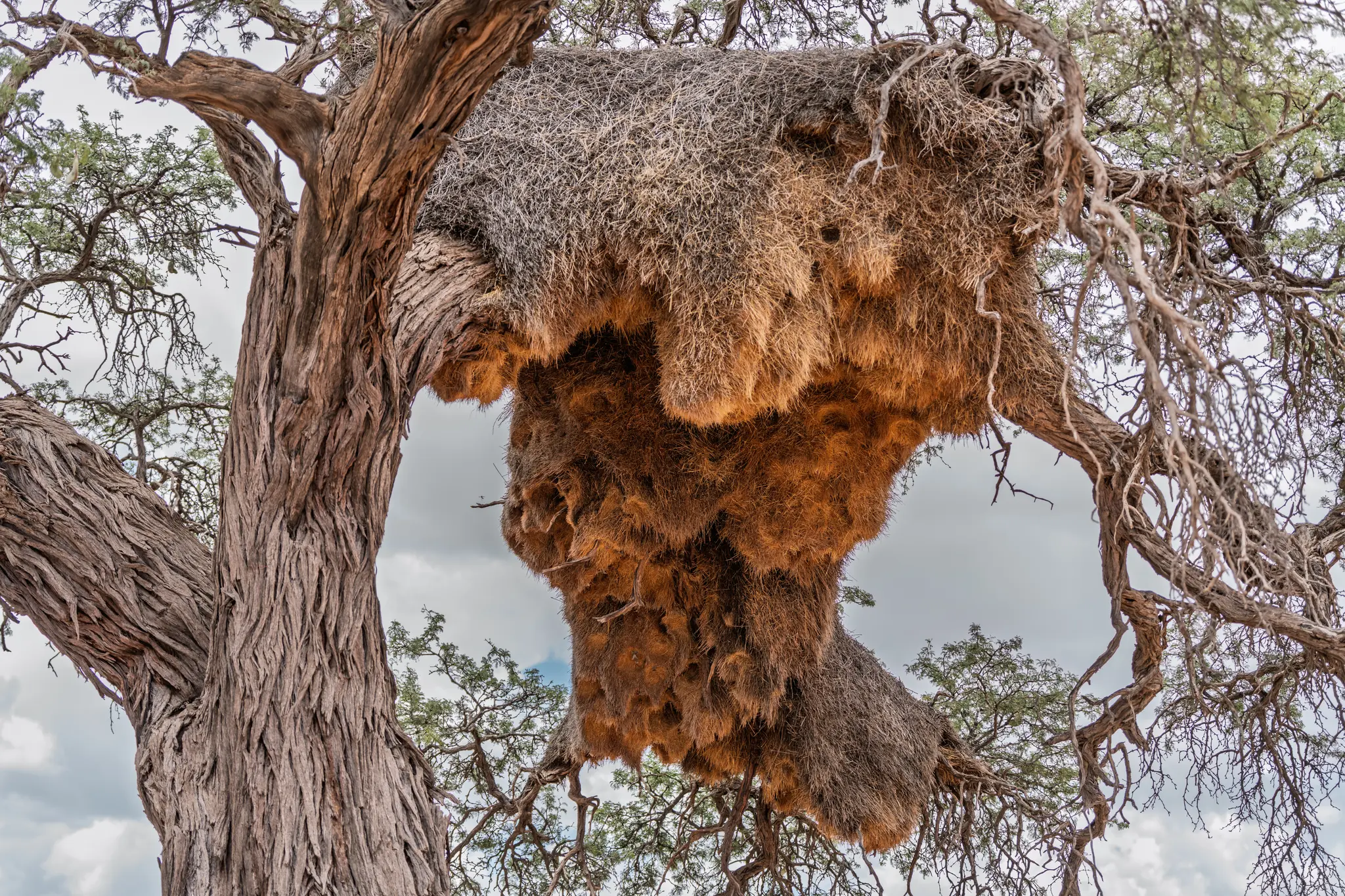
This trip, through the infinite, hypnotic expanses of Namibia, led me on an inner journey. I am newly retired from work and was temporarily free of family responsibilities for the first time in my life. I understood in advance that the Namib desert and the Kalahari desert in Eastern Namibia, with ever-changing dunes and absolute silence, would be the perfect setting for looking inwards.
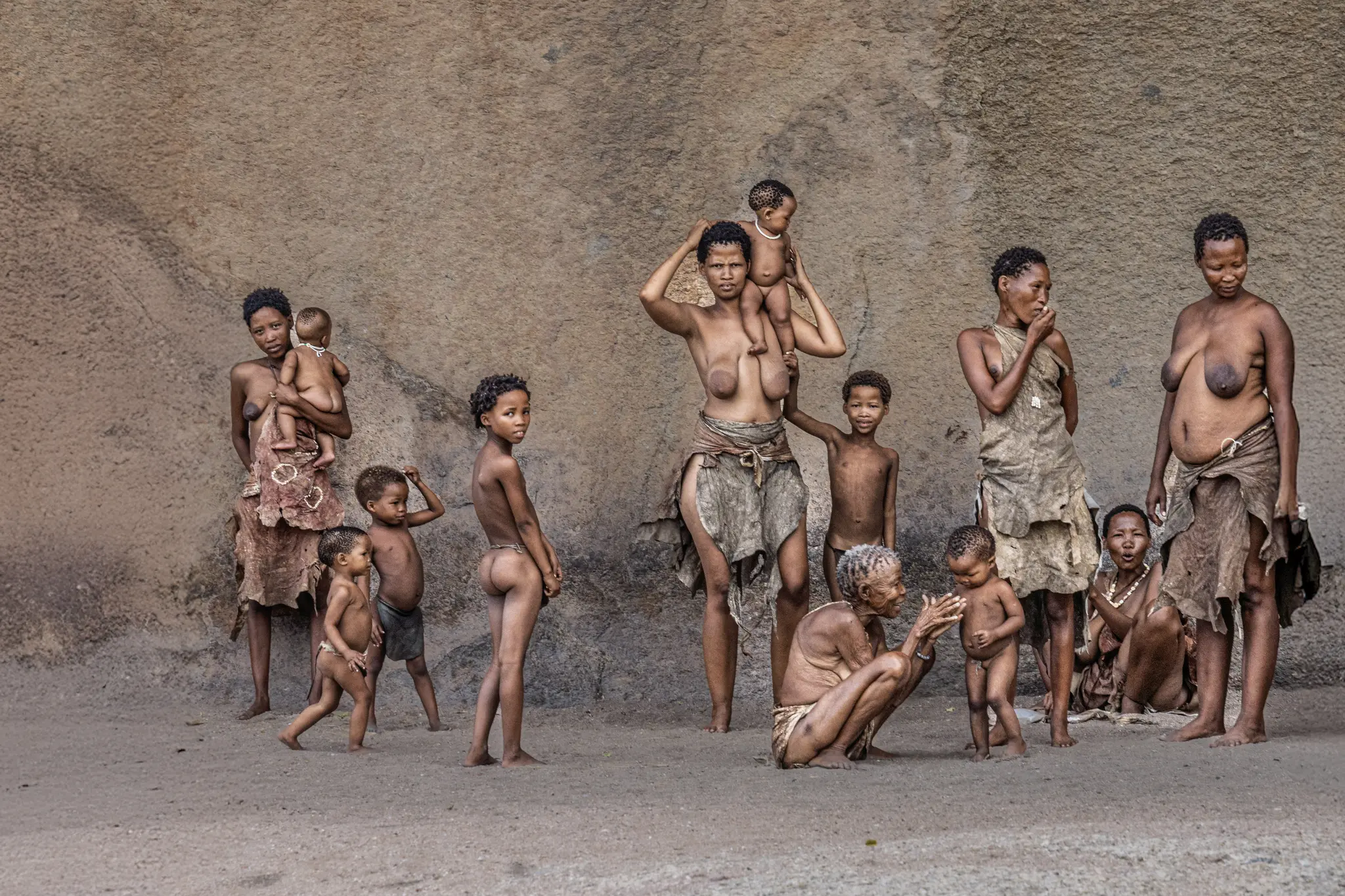
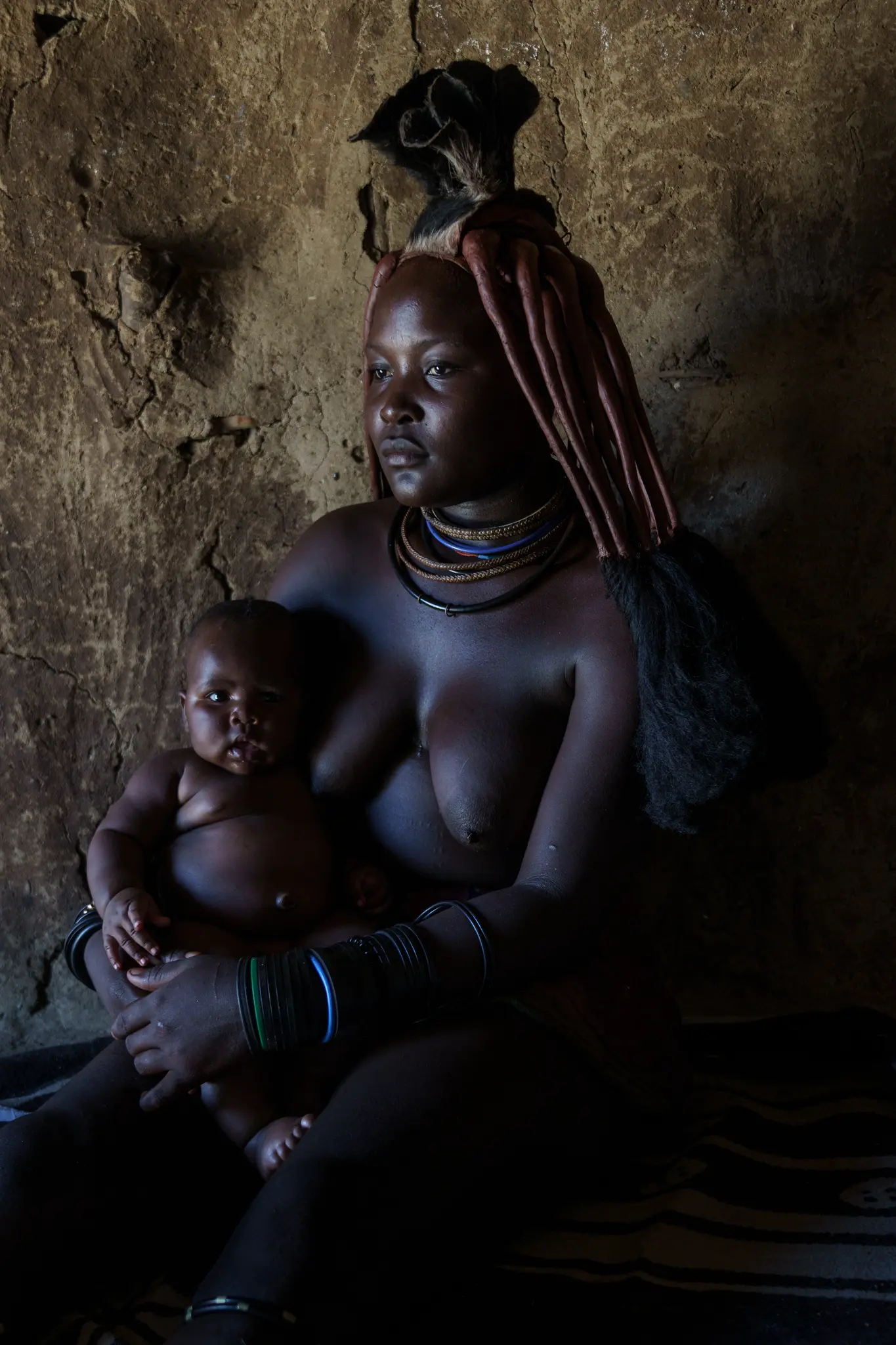
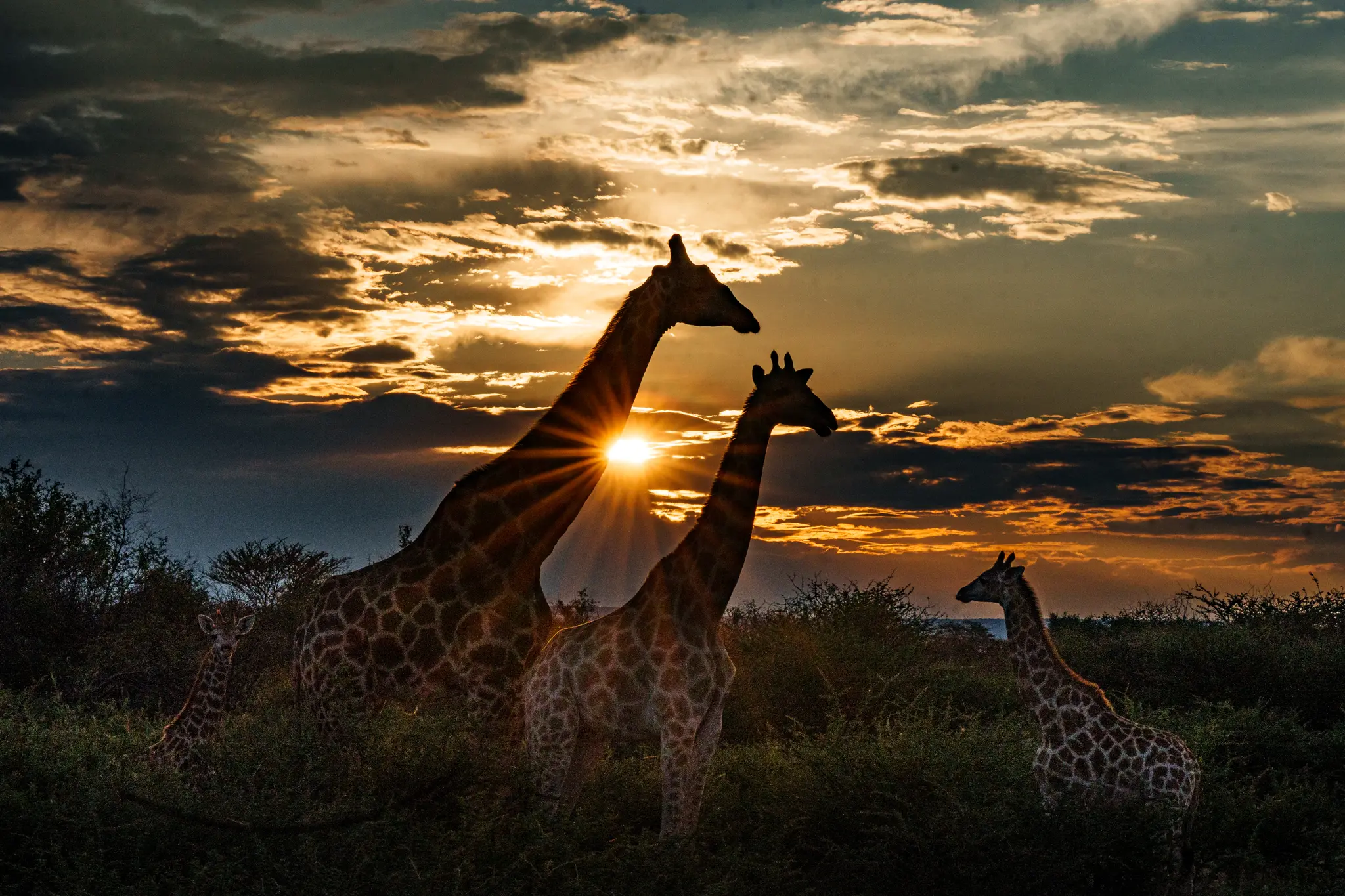
This time, I packed everything in a planned, calm manner rather than in the usual chaos. I felt I had all the skills and equipment I needed for taking photos in new techniques I hoped to try. I had prepared myself to “flow with” the now humid heat we would experience on 40 degree days in February. Here I traveled with only four others who didn’t speak my language, so their silence was unusual for me. The transition from the daily noise of my life to the silence of the desert was familiar, but this encounter with the views of Namibia would be different from my other trips to Africa where the focus had been on tribespeople. Although we would see giraffes, rare black rhinos and Greater Kudu at Etosha Park, and also Cape fur seals on the coast, it was the land I had come to see.
As we drove through the ever-changing landscape near Solitaire, through the Kuiseb and Gaub Passes, I wondered: was I searching for external silence or was this trip an attempt to understand something internal, within me?
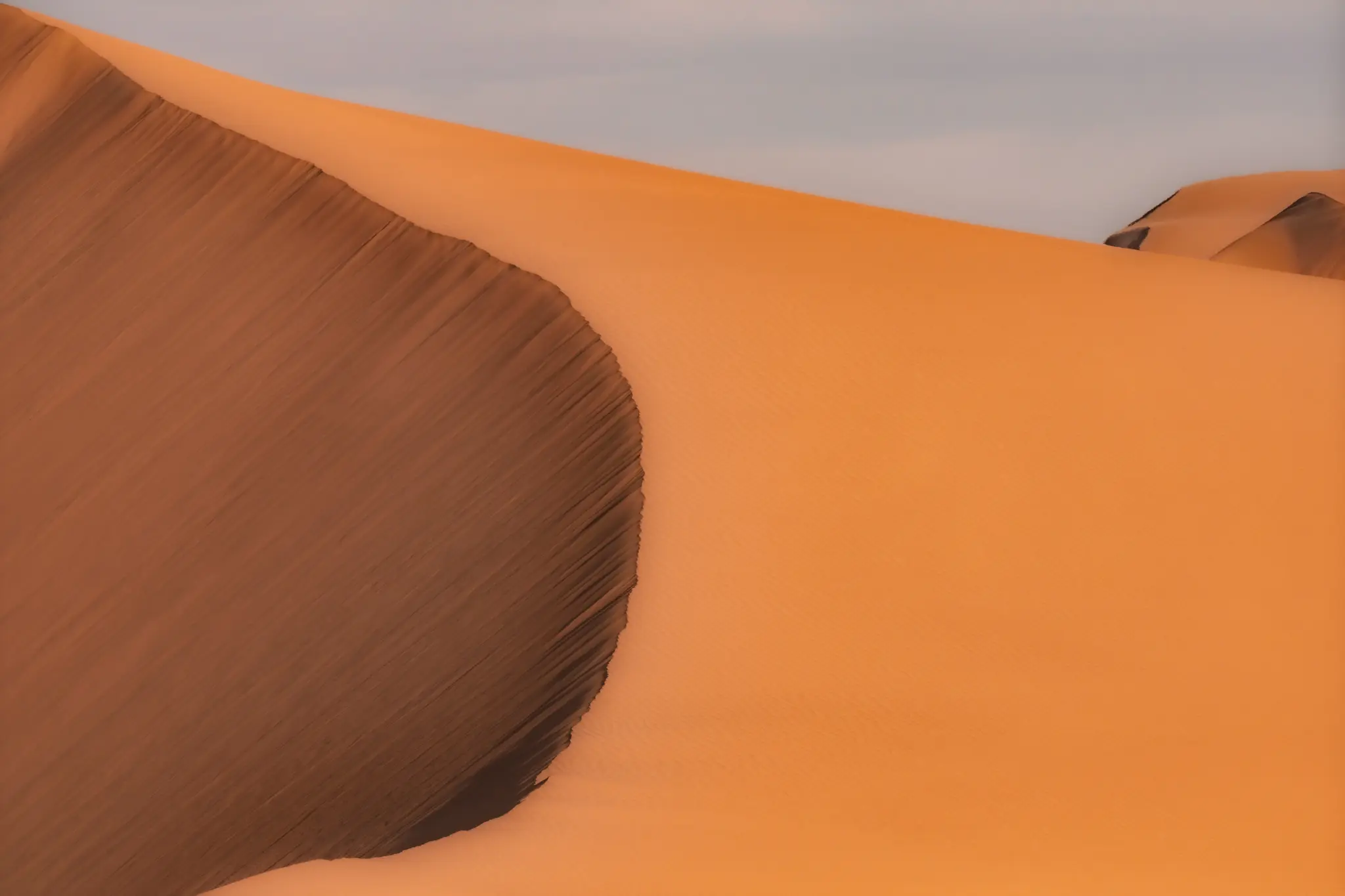
The landscapes in Namibia are a symbol of constant change within a deep eternal stability. The wind reshapes the dunes every day, similar to how my life experiences have shaped and changed me over time. What things are we born with that remain constant? For me, it is the search for beauty, and for hidden meaning and layers. There is an ongoing desire to find outlets for my creativity and for deepening understanding, and a desire for freedom. Family has always been a central part of my life – and although my roles in it have shifted, it is mostly about ‘doing’. My professional life also had many layers of ‘doing’, but what about after it – what about simply ‘being’? Have I changed or only use mental flexibility to change the stories I tell about myself? What about the opposites in ourselves – where is the calm silence and where are the moving, rolling parts? With time, one develops more ability, independence, and authority but what do we keep from our pasts?
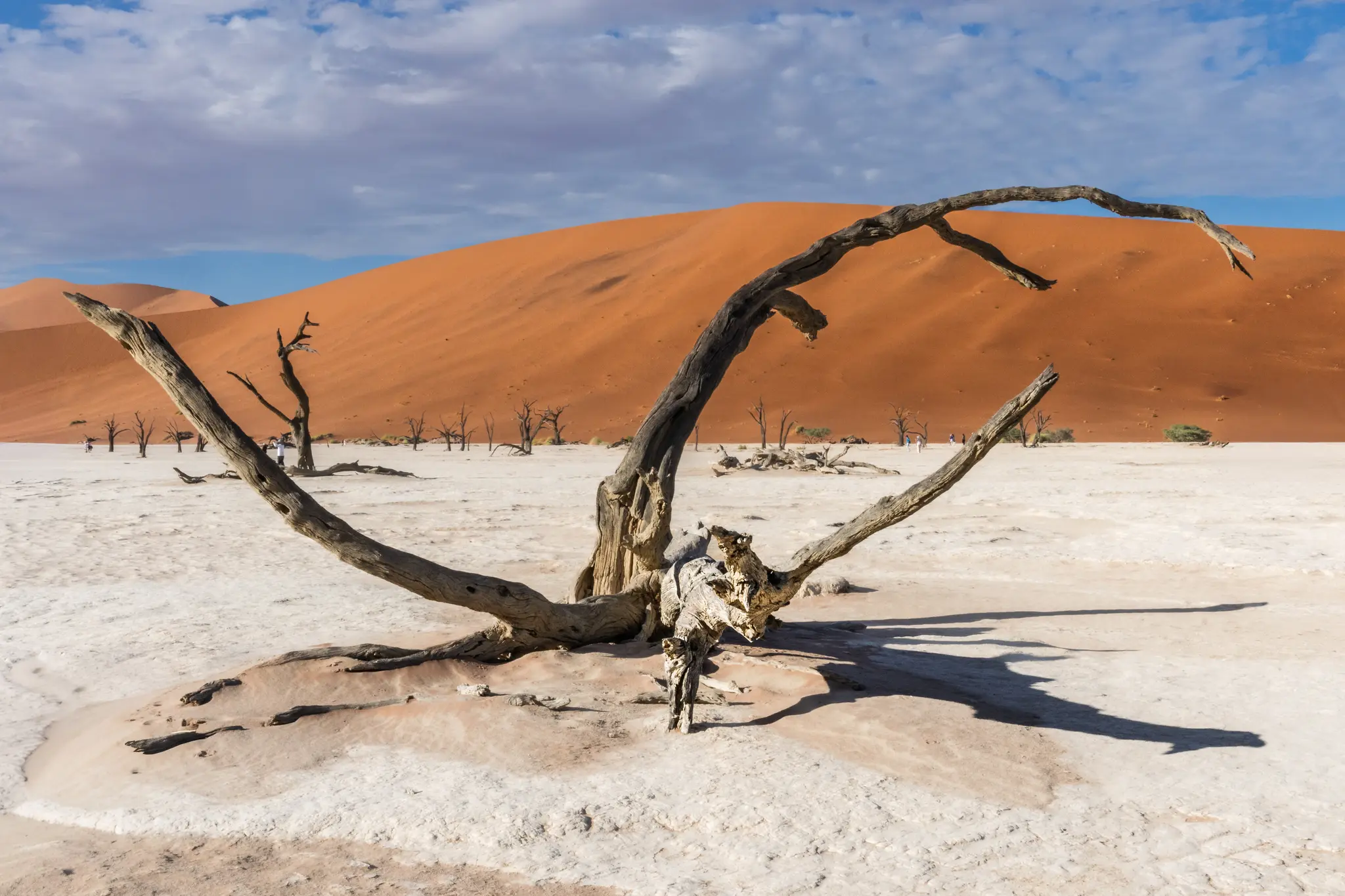
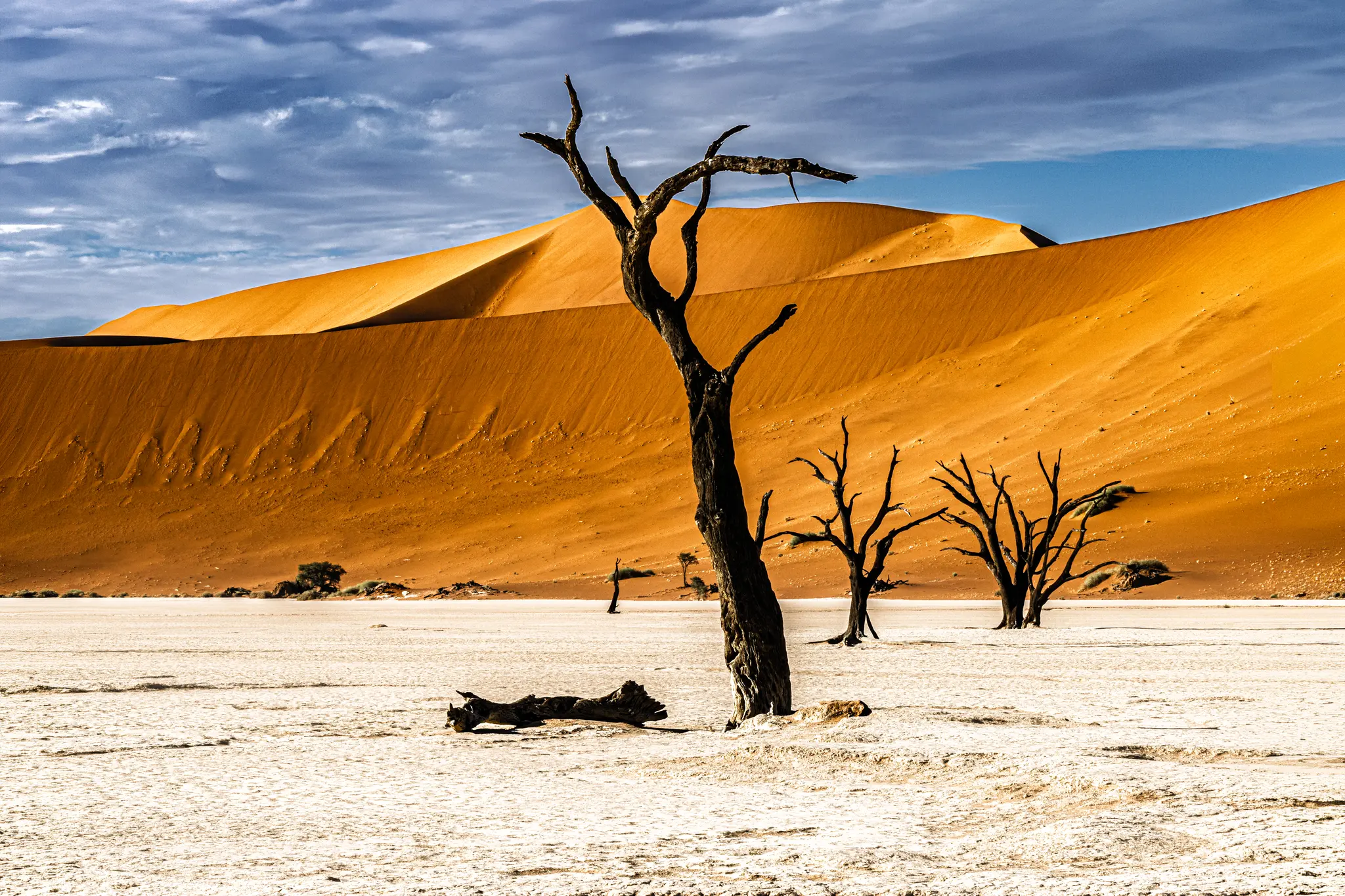
There are skeletons of ancient acacia trees and roots at Deadvlei. This area is one of the most powerful places in Namibia, where the long-dead acacia trees (also called camel-thorn trees) resemble animals, but all are in a state of stagnation. They have been standing still for centuries, showing their resilience – they survive and remain beautiful, while they remain in a state of death, diminished. I also stood static in place for some time in wonder, in the present moment. What else stands so firm even in the ravages of time?
As always, I love the mystery in the lack of clarity. When I take a photograph of dry vegetation in the intense heat, or through a dusty car window, layers of depth are created. This seems to be the personal angle of my gaze as a photographer. I ask myself: What is hidden from the eye? How does the camera help me see?
I returned from this journey with a “suitcase” full of photos and insights. The journey did not end when the plane touched down but rather continued as I began processing the sights and experiences in my photos.
The “private Namibia” I took home was about the ADHD I’ve suffered from for years, in which I am often restless and can even become irritable. Namibia is full of geological layers that have been revealed over centuries – sometimes one can see layers of small magnetic sand or purple or clear quartz in the dunes. I thought maybe my restlessness is just the top layer of ADHD – what could be revealed if I take the time to look underneath it?
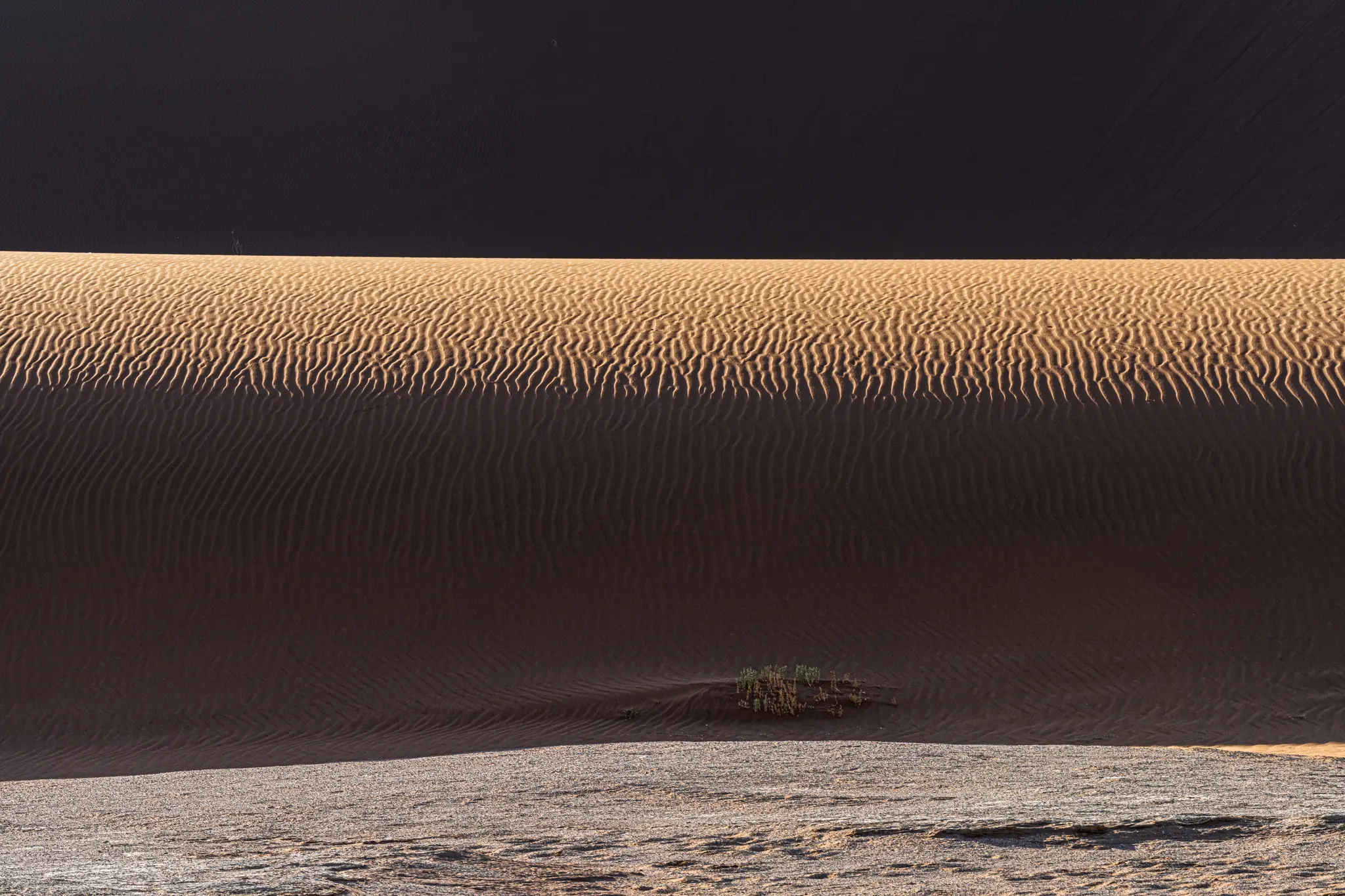
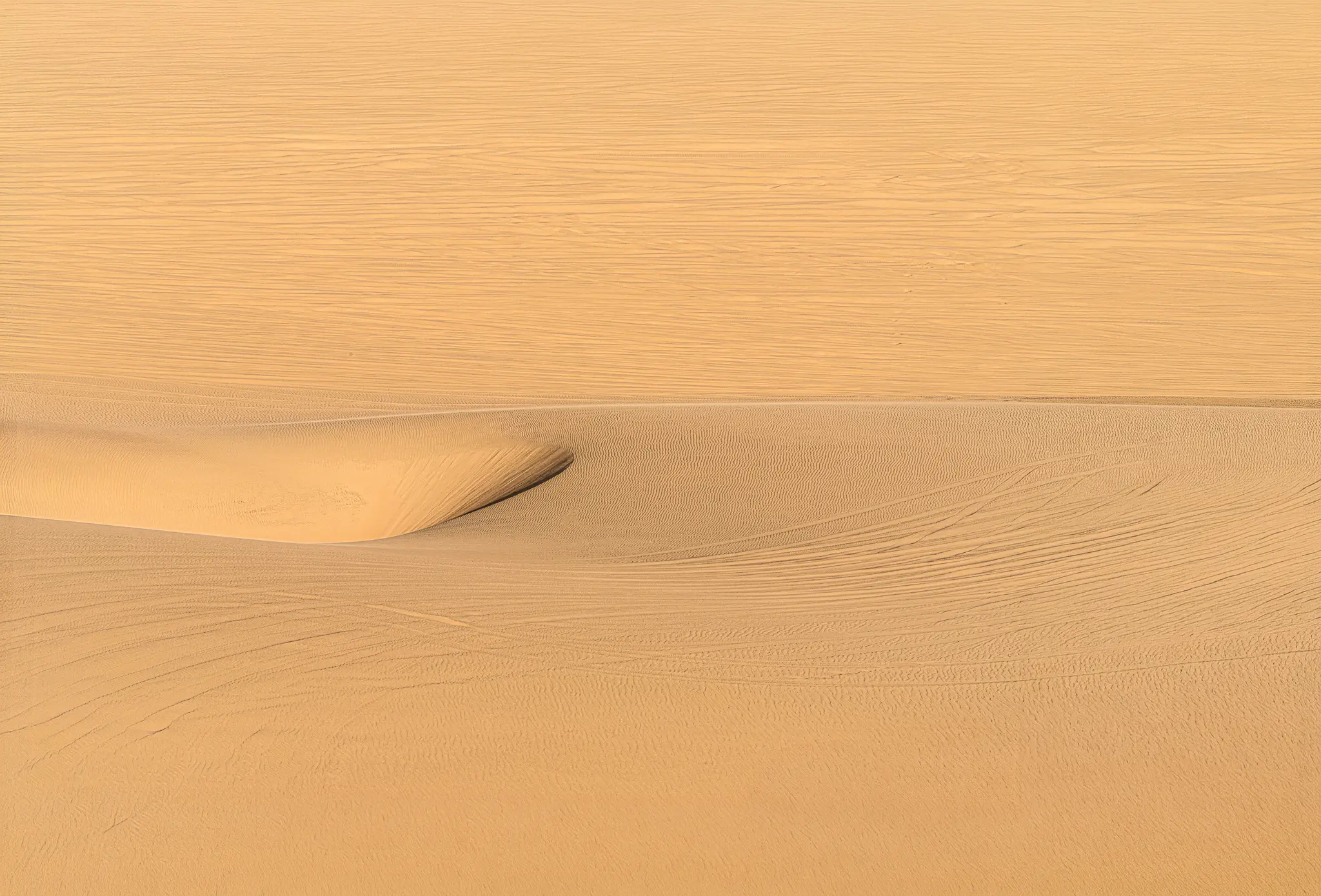
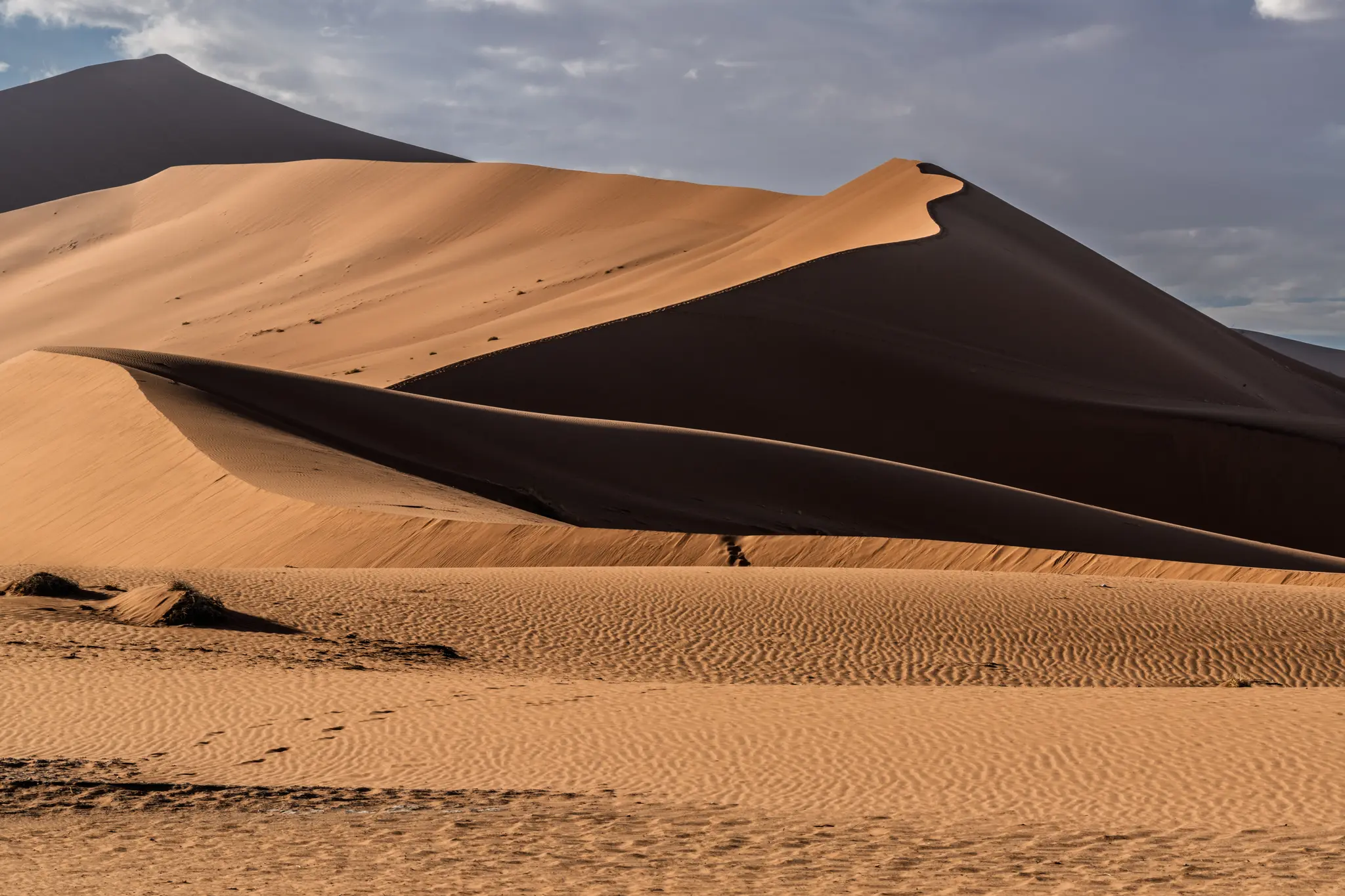
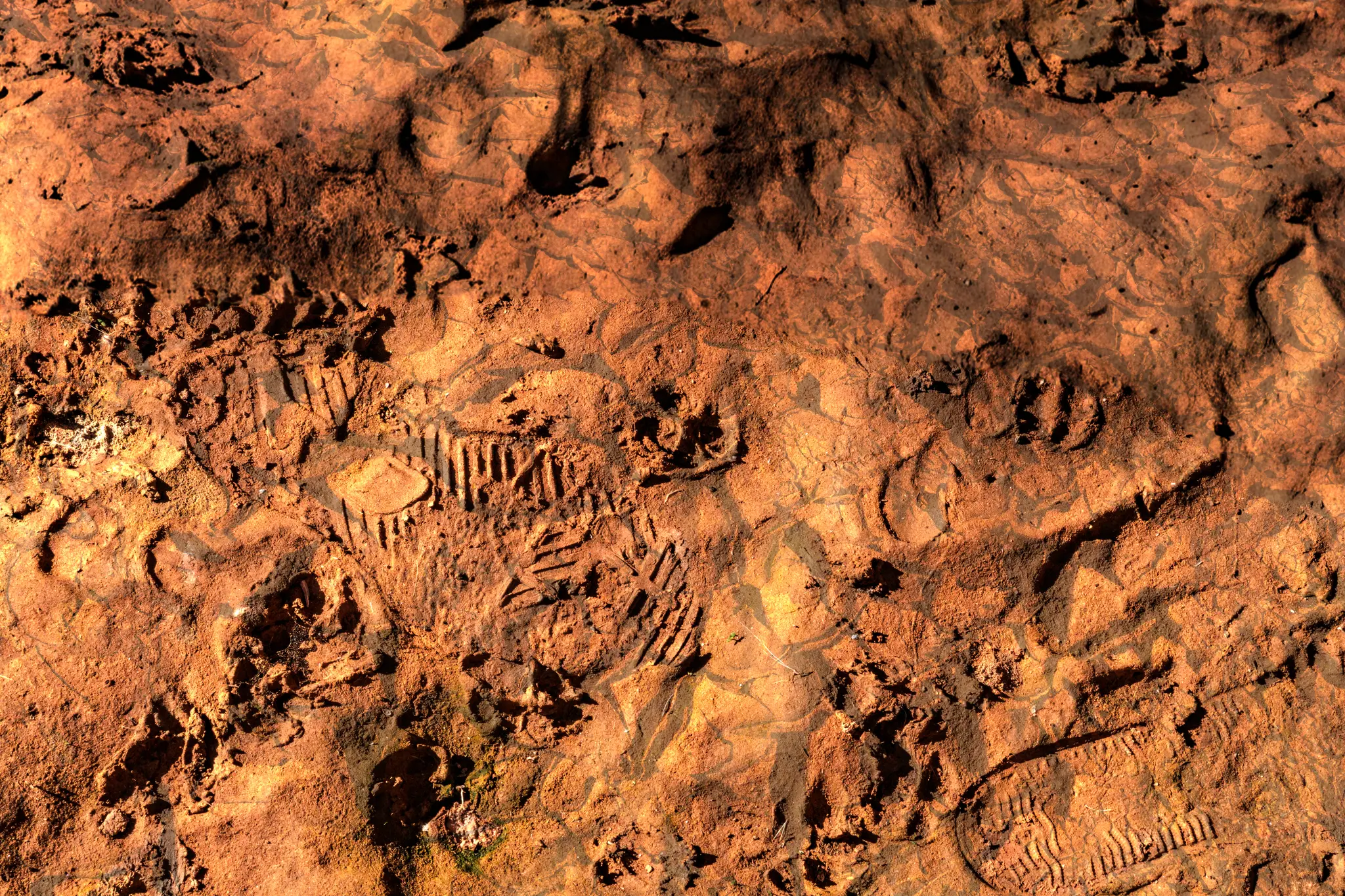
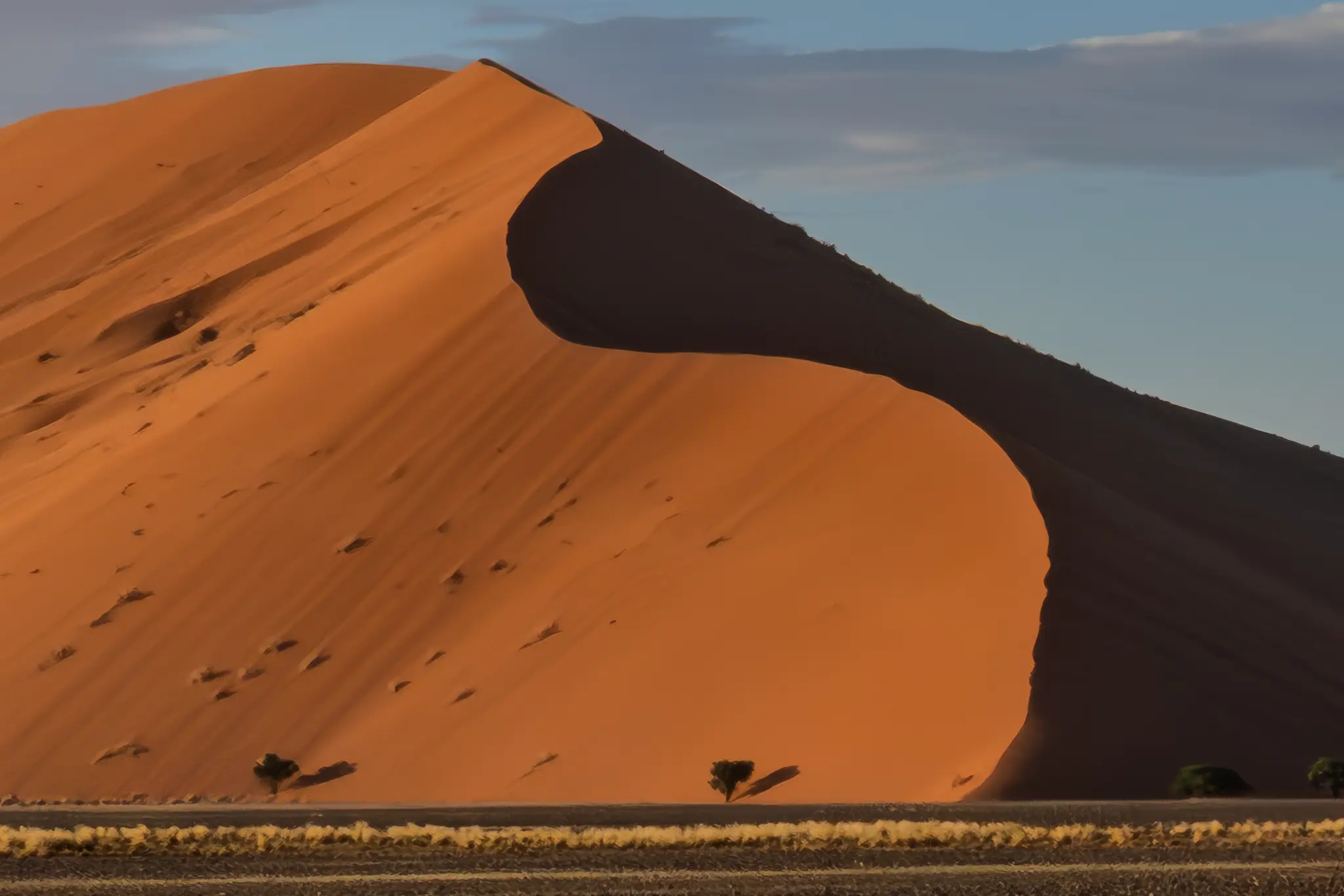
Namibia was therapeutic for me, thanks to its opposites, such as the small details like a tiny tree in the distance, versus the huge empty landscapes. These landscapes force the eye and brain to open up, allowing my ‘internal noise’ to swirl out. There is silence and there are vast storms, as seen at the dunes of Sossusvlei. Similarly, ADHD causes everything to come up at once, like a storm with whirling sands that finally subside and recreate the landscape. What remains afterwards? Many things are suddenly quite changed… I tried now to find the softer textures and ripples in the changing dunes, sometimes from the wind playing on the grasses next to them. There are shadows created from light and shade on vast cliffs, or tiny tracks from the Shovel-snouted lizard, not only the starker views of huge orange dunes or Moon Landscapes.
Perhaps I should stop fighting these winds inside myself, the ones that can easily turn into anger at the too-loud world outside. I can instead reorient myself to listen to the calm that’s found among the ancient, fossilized trees that aren’t hurrying anywhere. I found that even in the most arid desert, there exists a clear and wonderful order, deep within.