Issue number 17 South America
I visited 11 places over 2 weeka in Peru and Bolivia. The watercolors I’d known until now exploded into intense acrylic colors.
I arrived there without any particular expectations or stereotypes in mind. What I found was that everything was somehow primal, concrete, and storybook-like, and it was incredibly exciting. The water-colors I had known until now (from Europe, the North Pole, and even from Africa, the Middle East, India and the Far East), suddenly exploded into acrylic colors – intense, rich and deep, like Gauguin painting in the South Seas. I have seen similar things in many countries, but what I saw here was unimaginable and full of beauty, and the intense colors brought forth equally strong emotions in me.
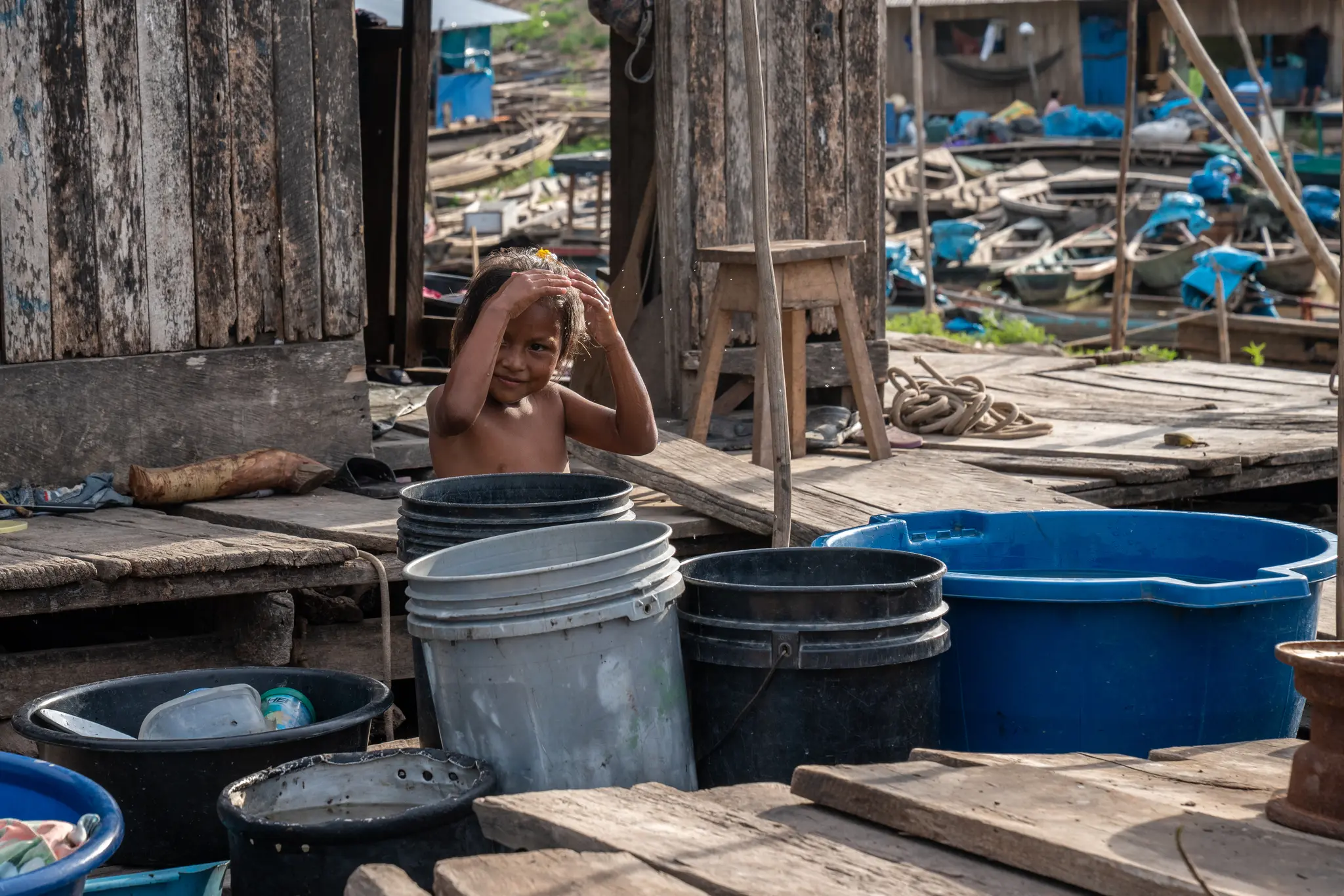
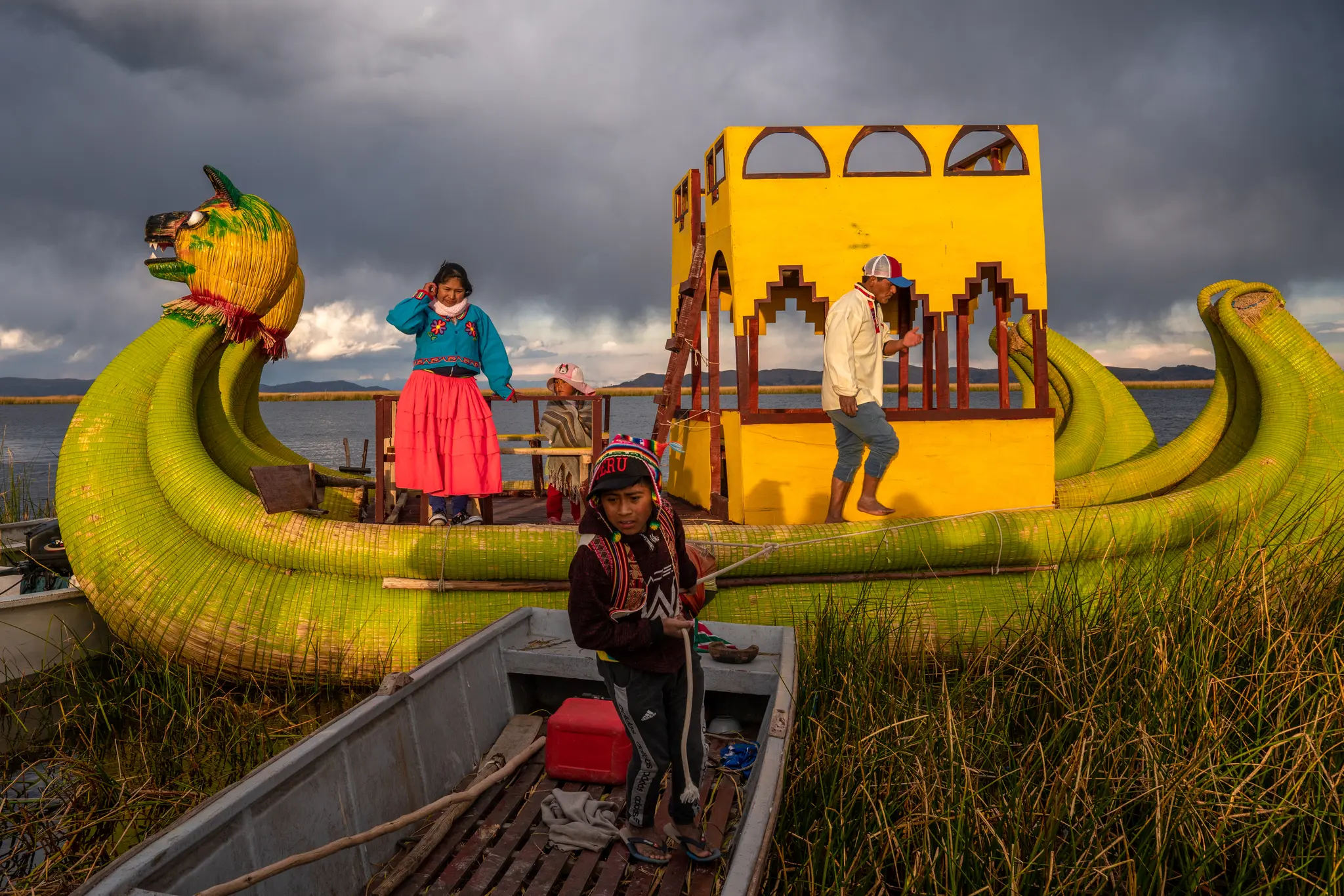
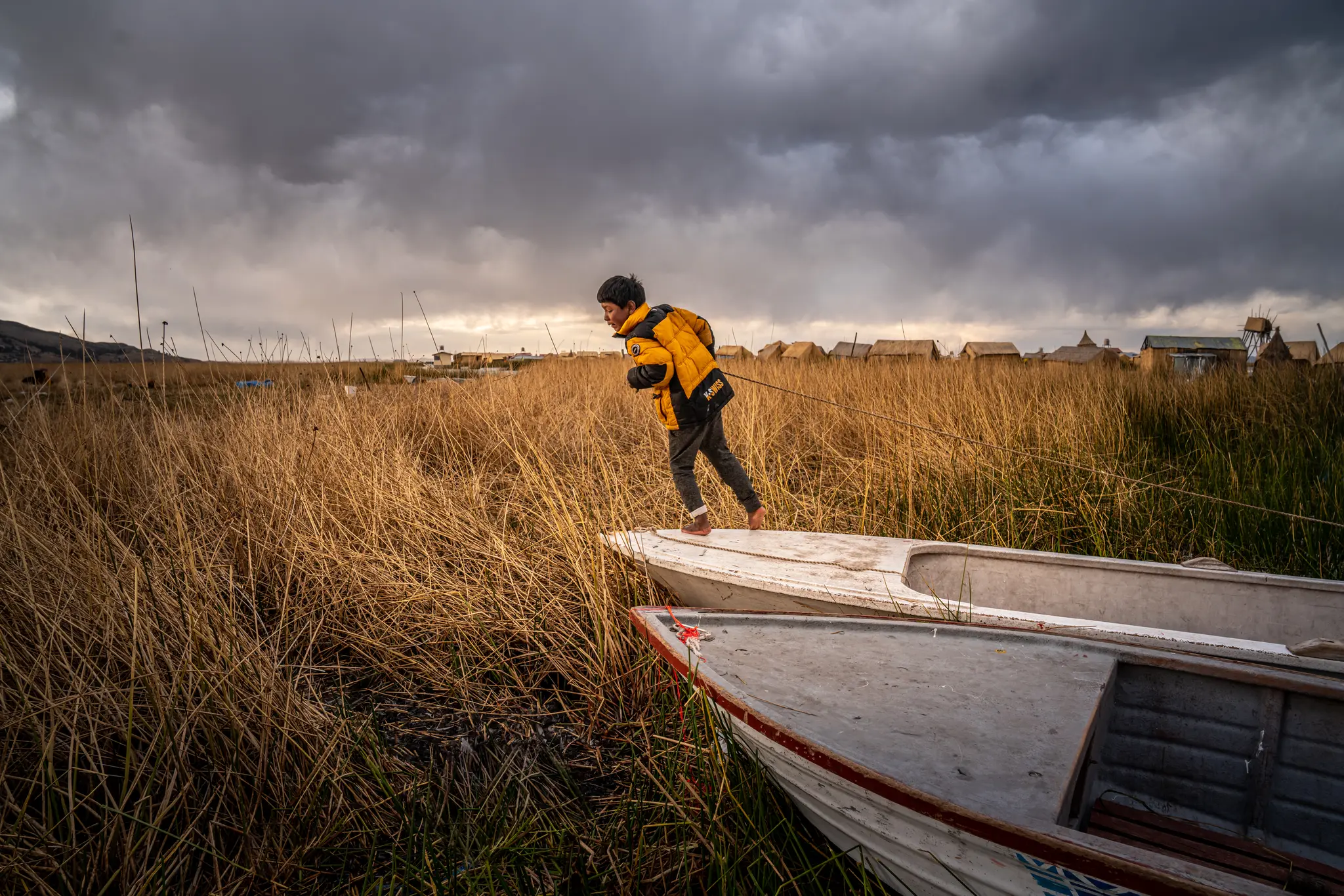
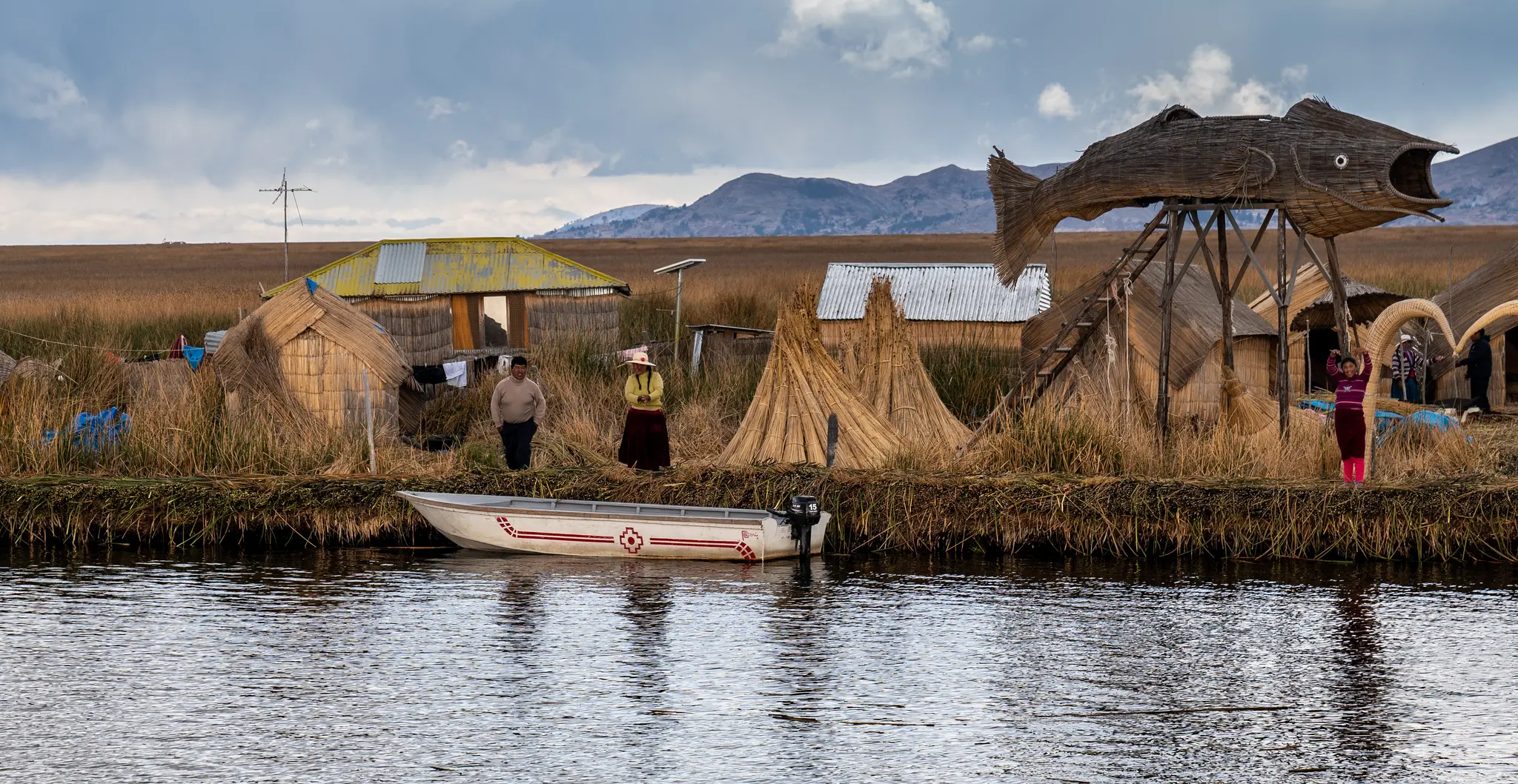
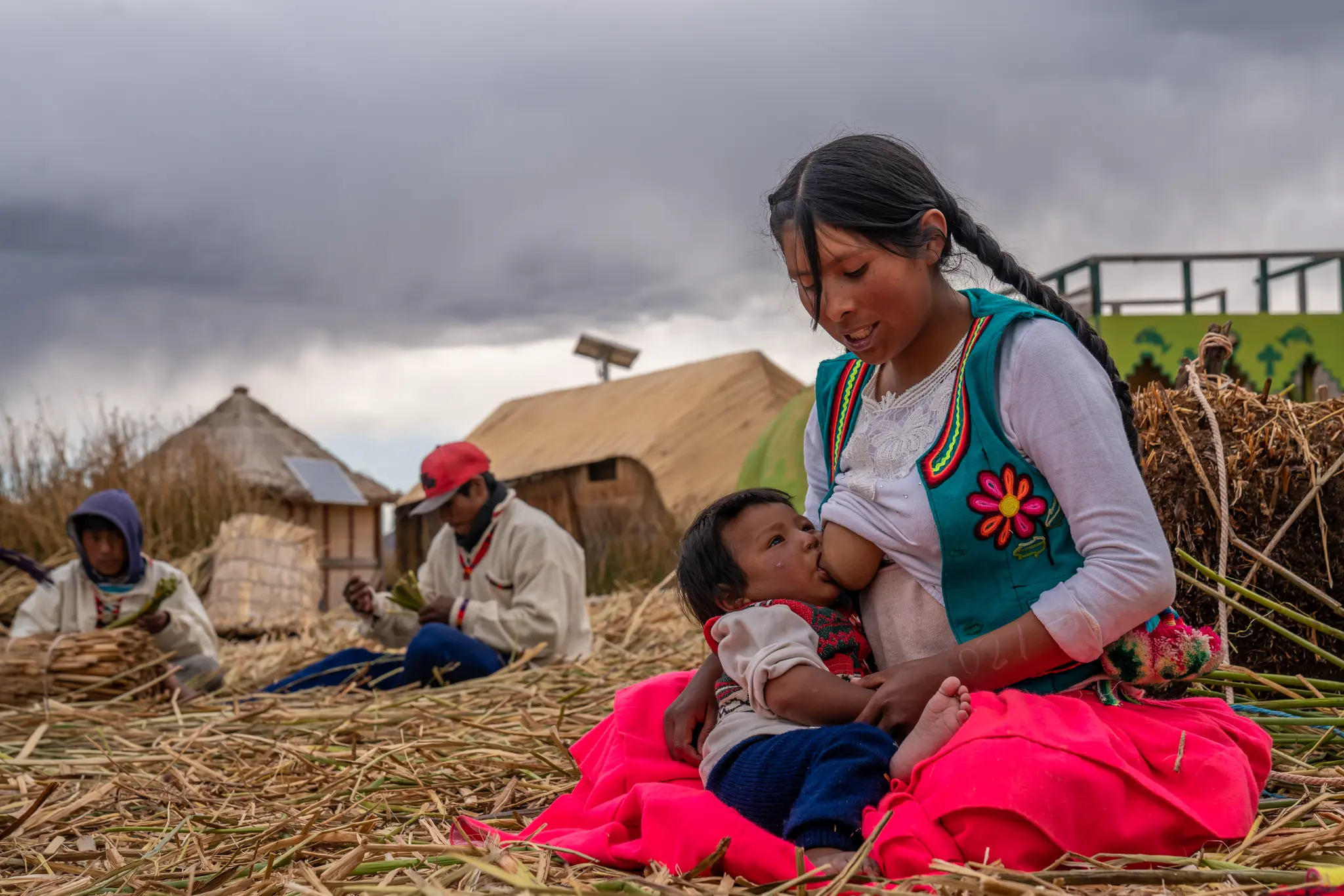
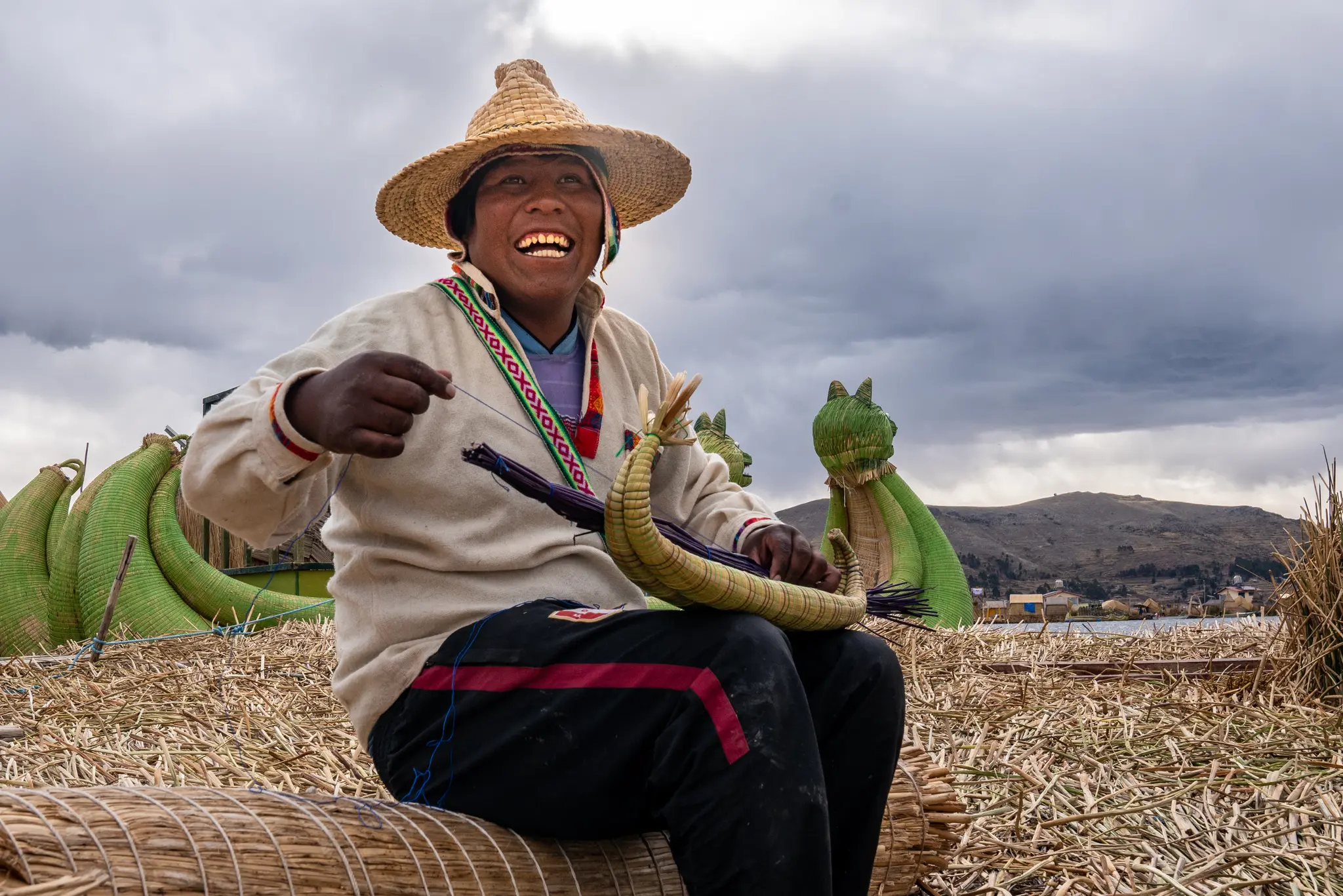
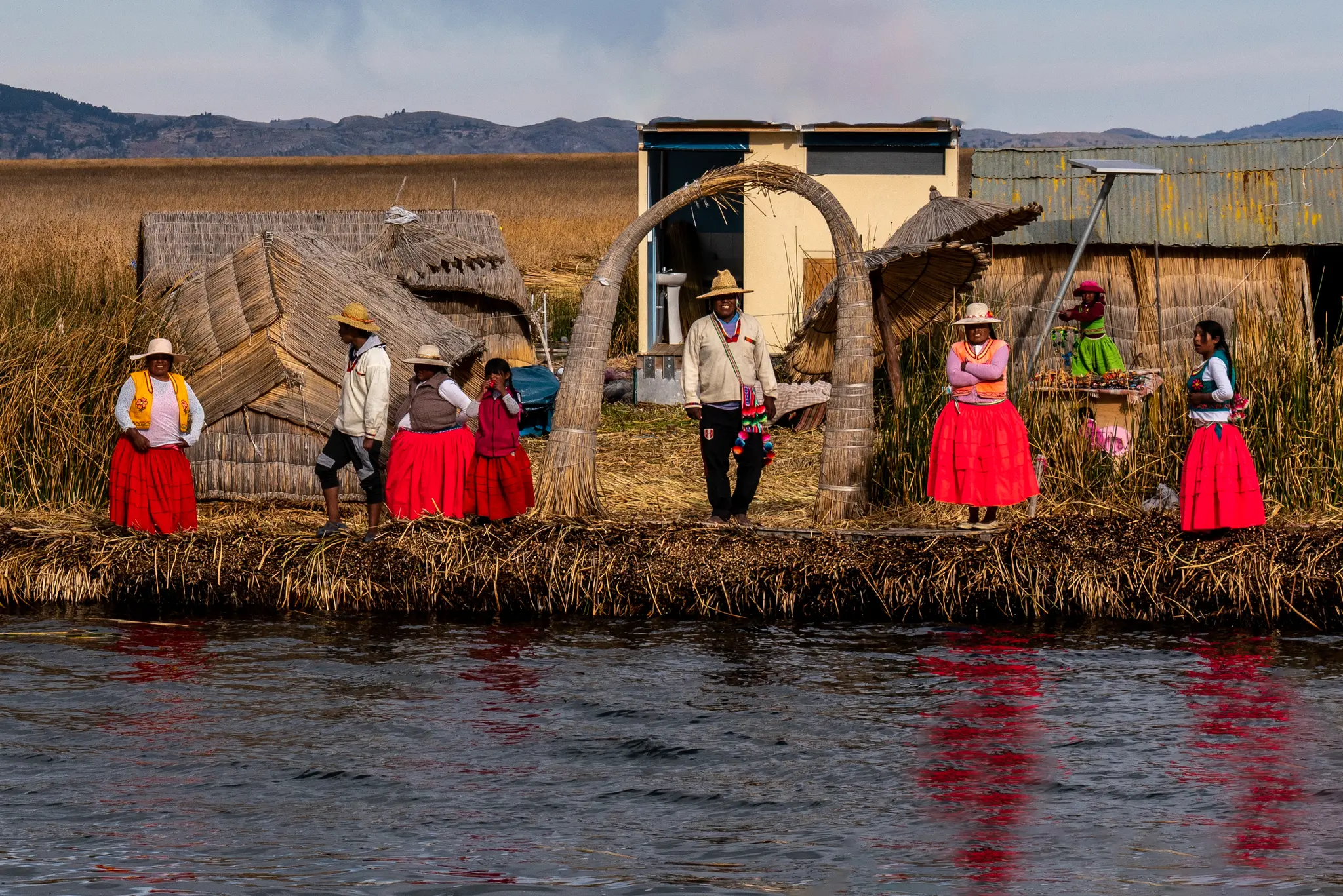
Yet for all of the differences in this incredible new universe (places like the amazing floating islands on Lake Titikaka and the colorful straw boats they make), I didn’t feel foreign or alone there.
Perhaps it is the height of these places that makes the colors so strong, like
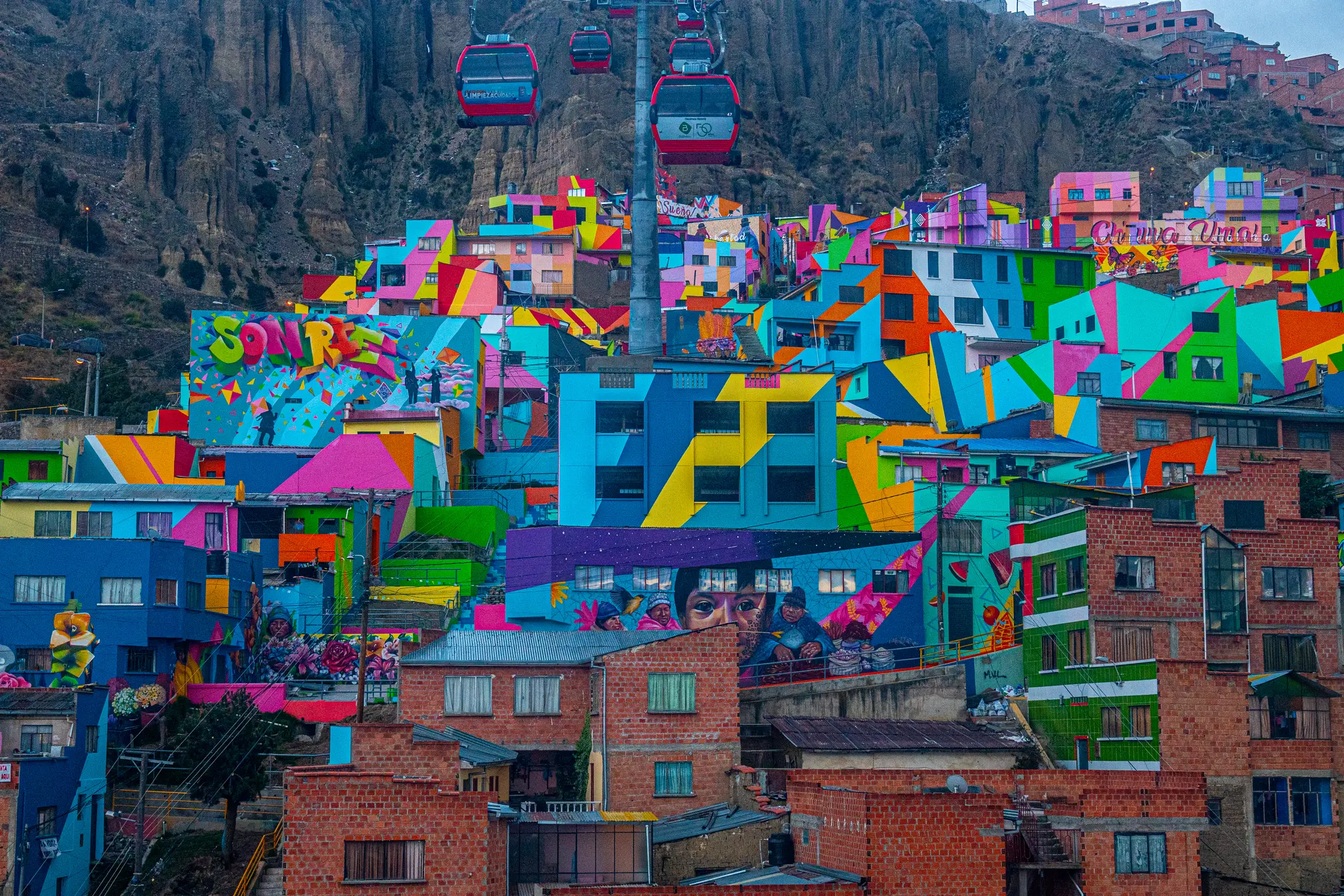
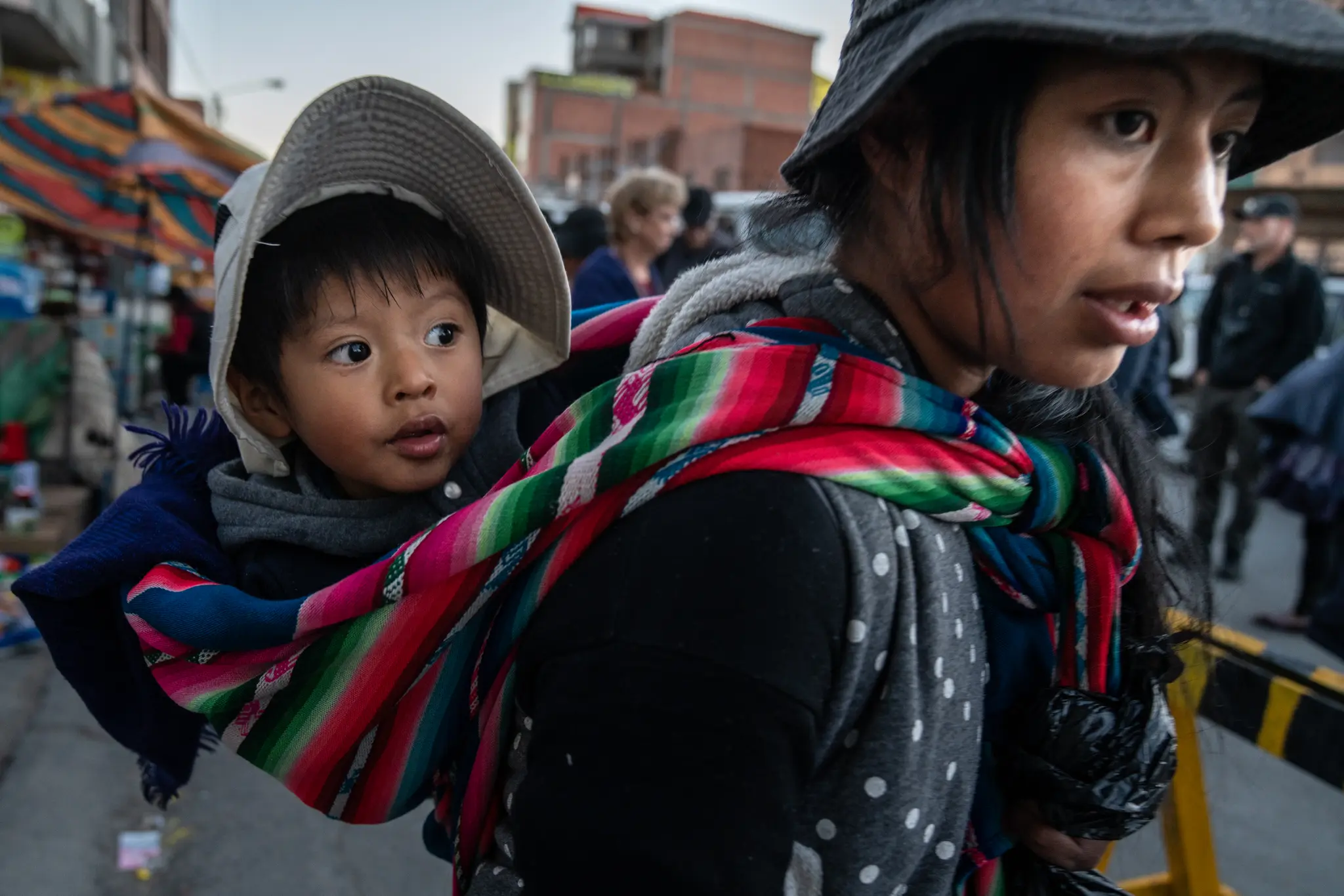
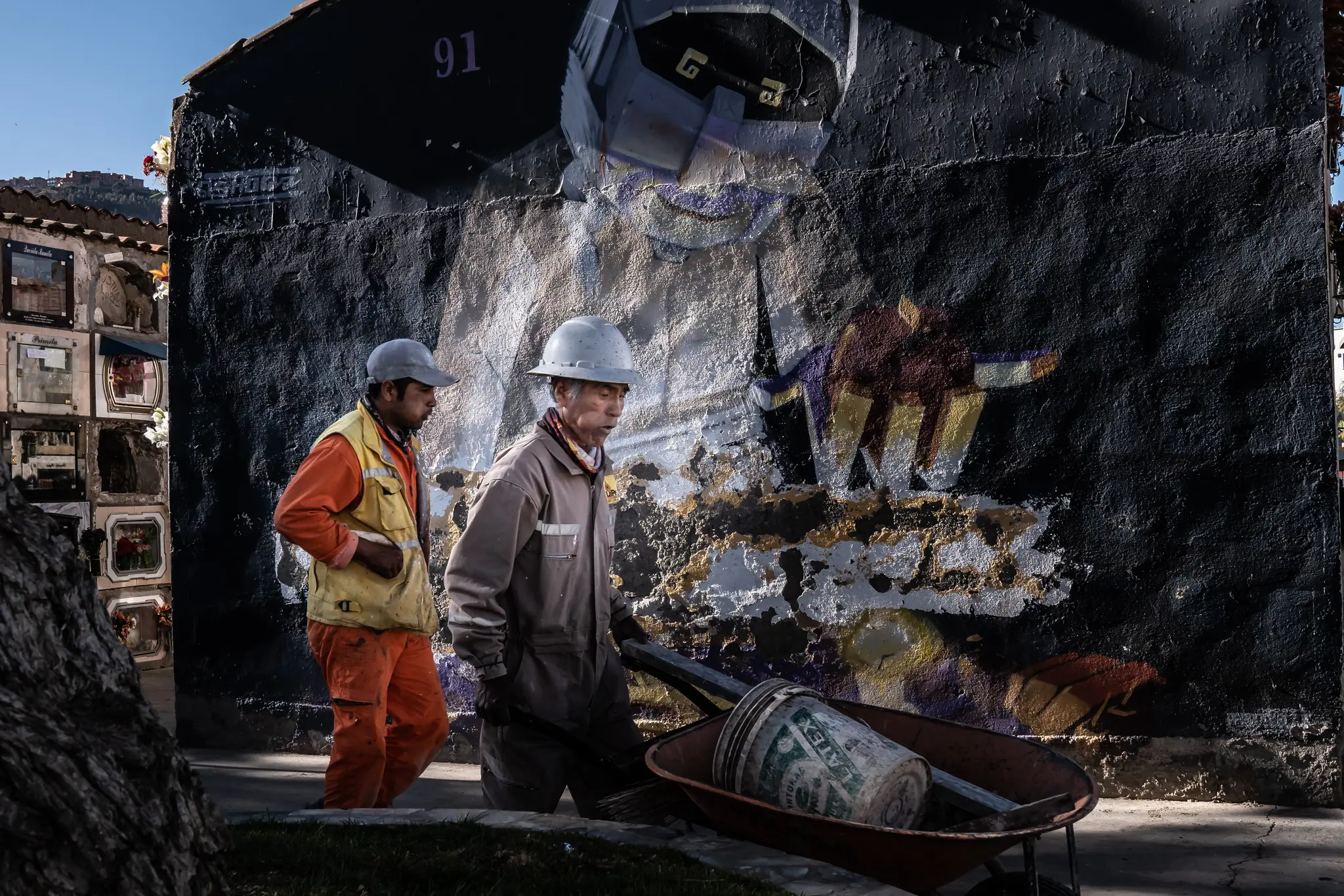
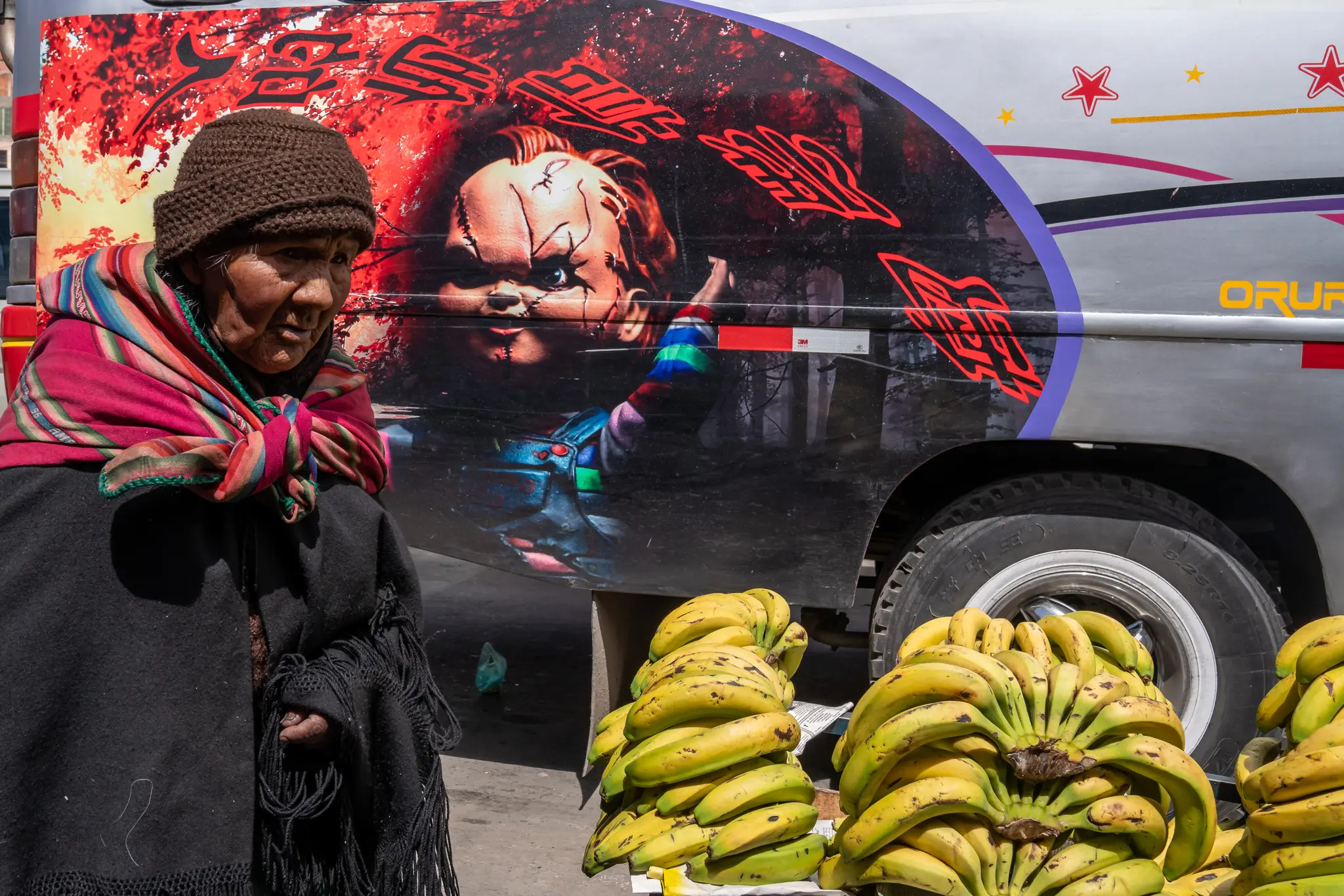
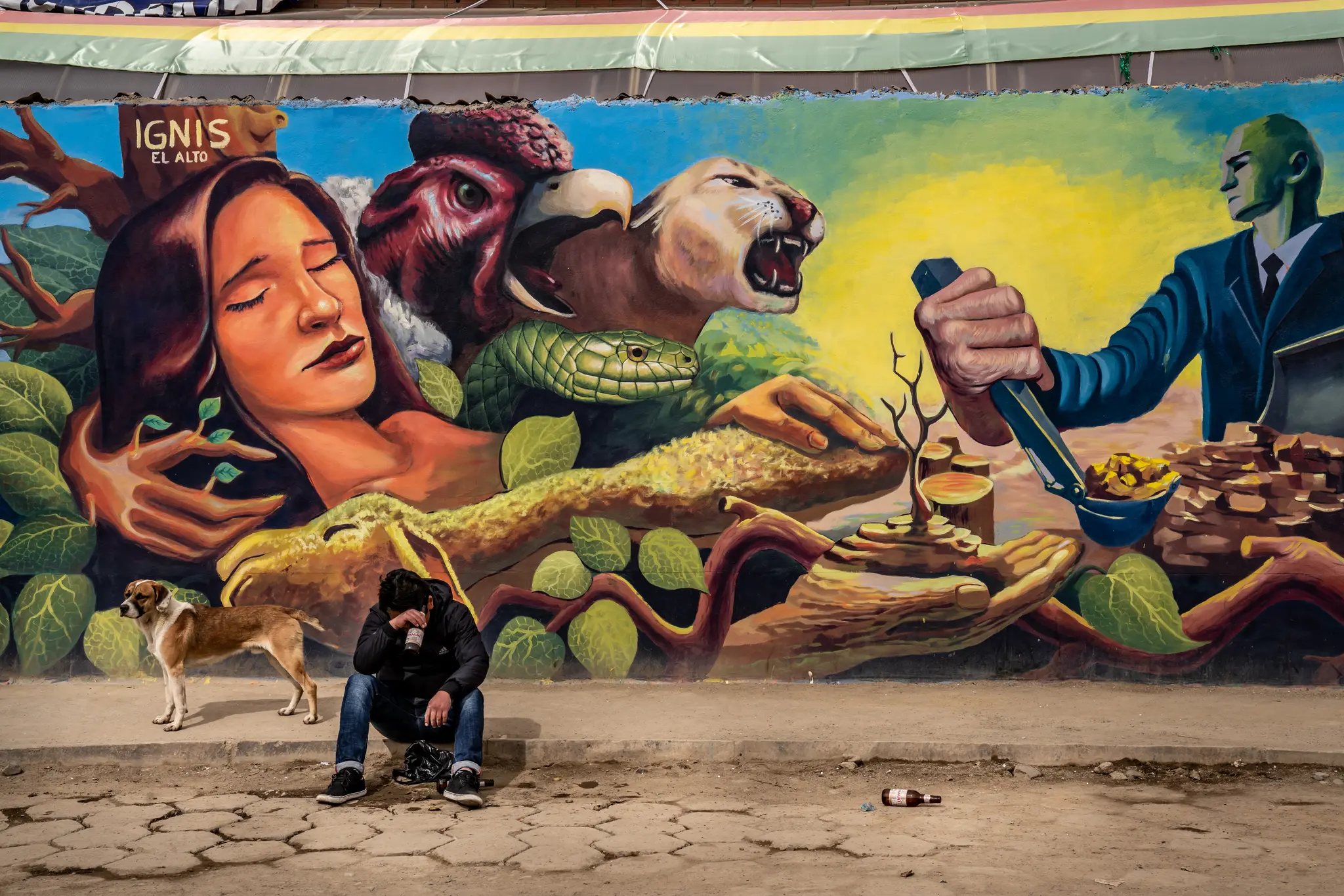
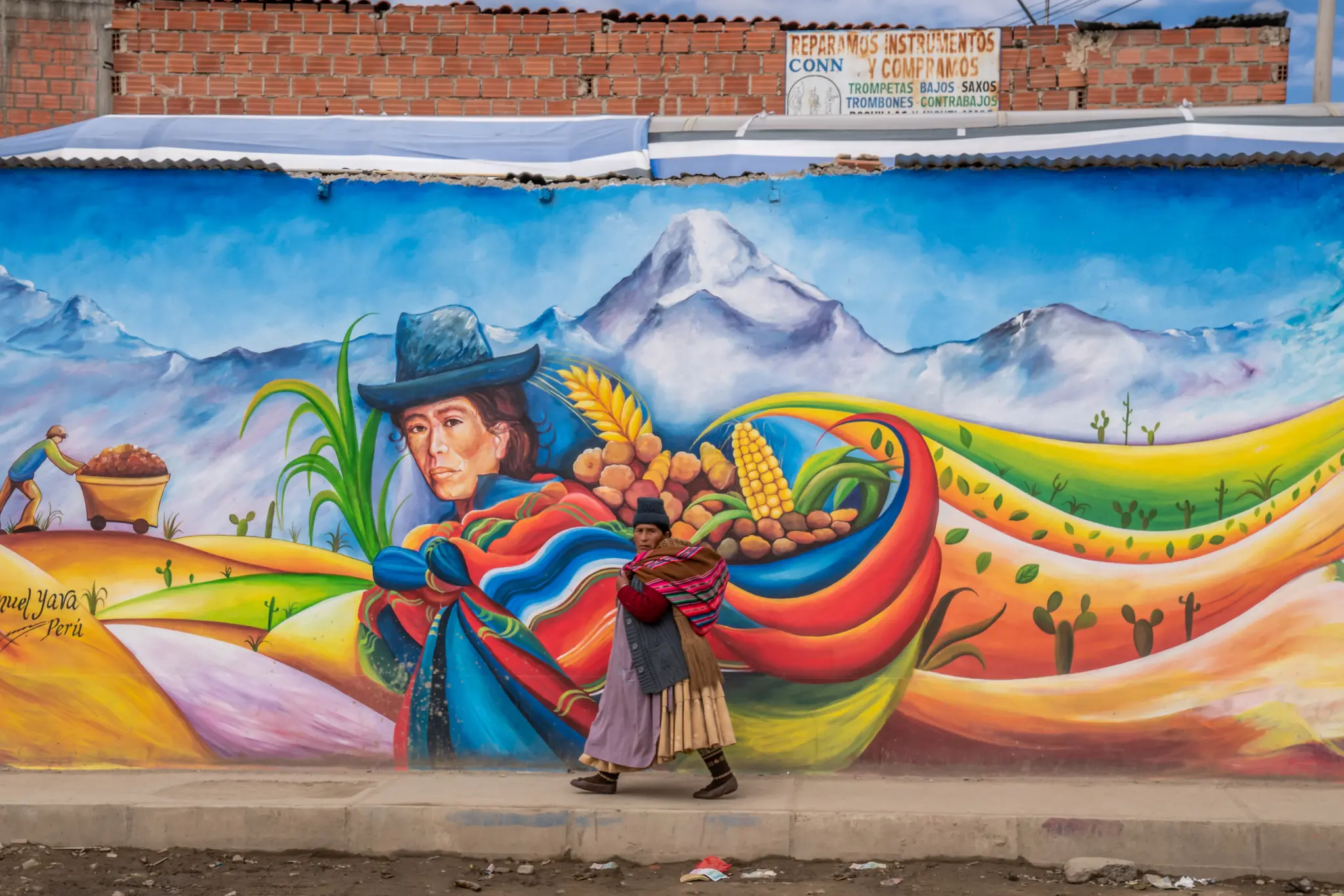
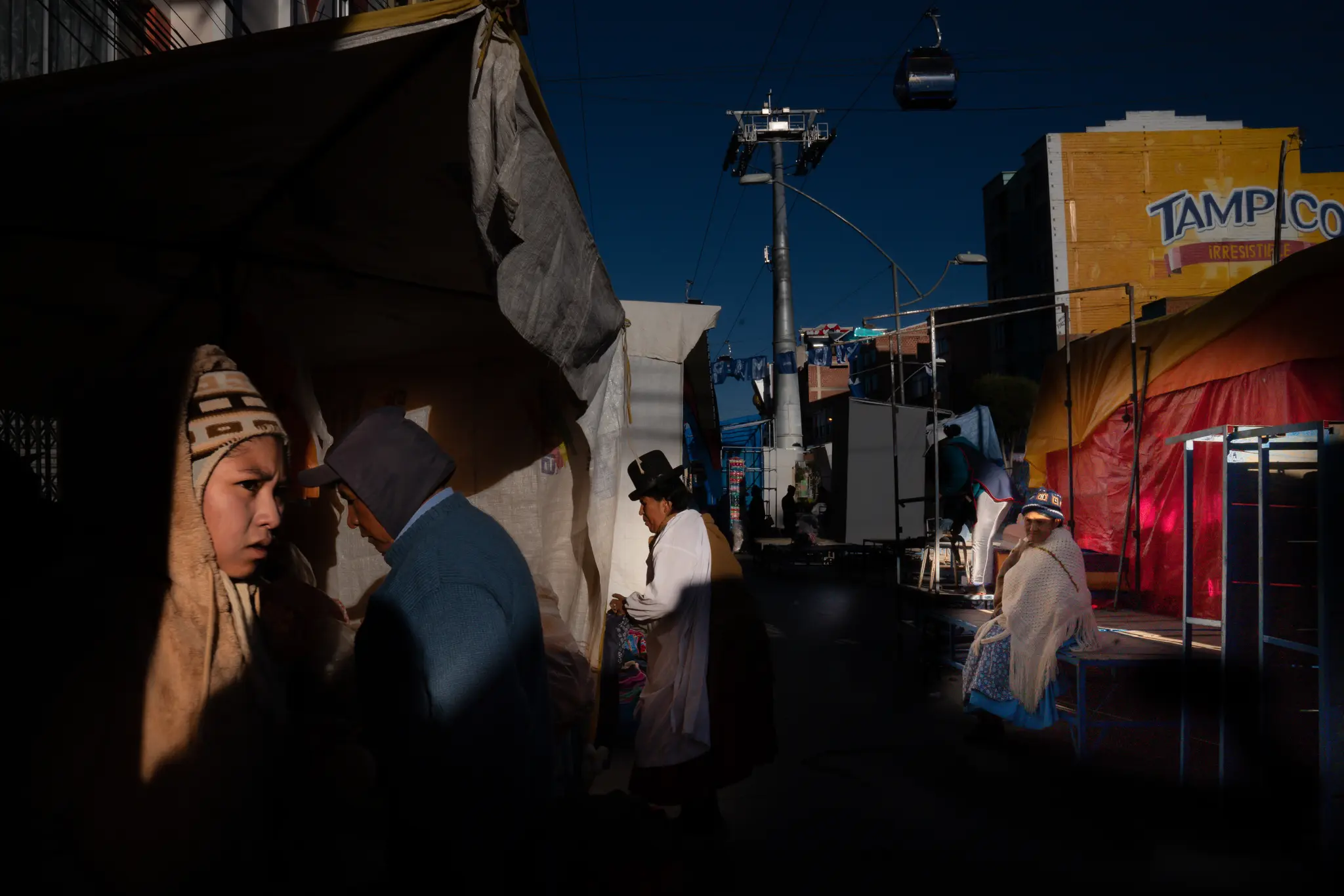
El Alto, La Paz, and Potosi, in Bolivia, and Juliaca, in Peru. On one hand, the complementary colors make photography easy. Yet walking among all of the intense colors made the photography very different, as there was little shading and it was difficult to isolate the people in them. For example, photographing people on the background of the huge murals depicting daily life was challenging but led to some fantastic compositions.
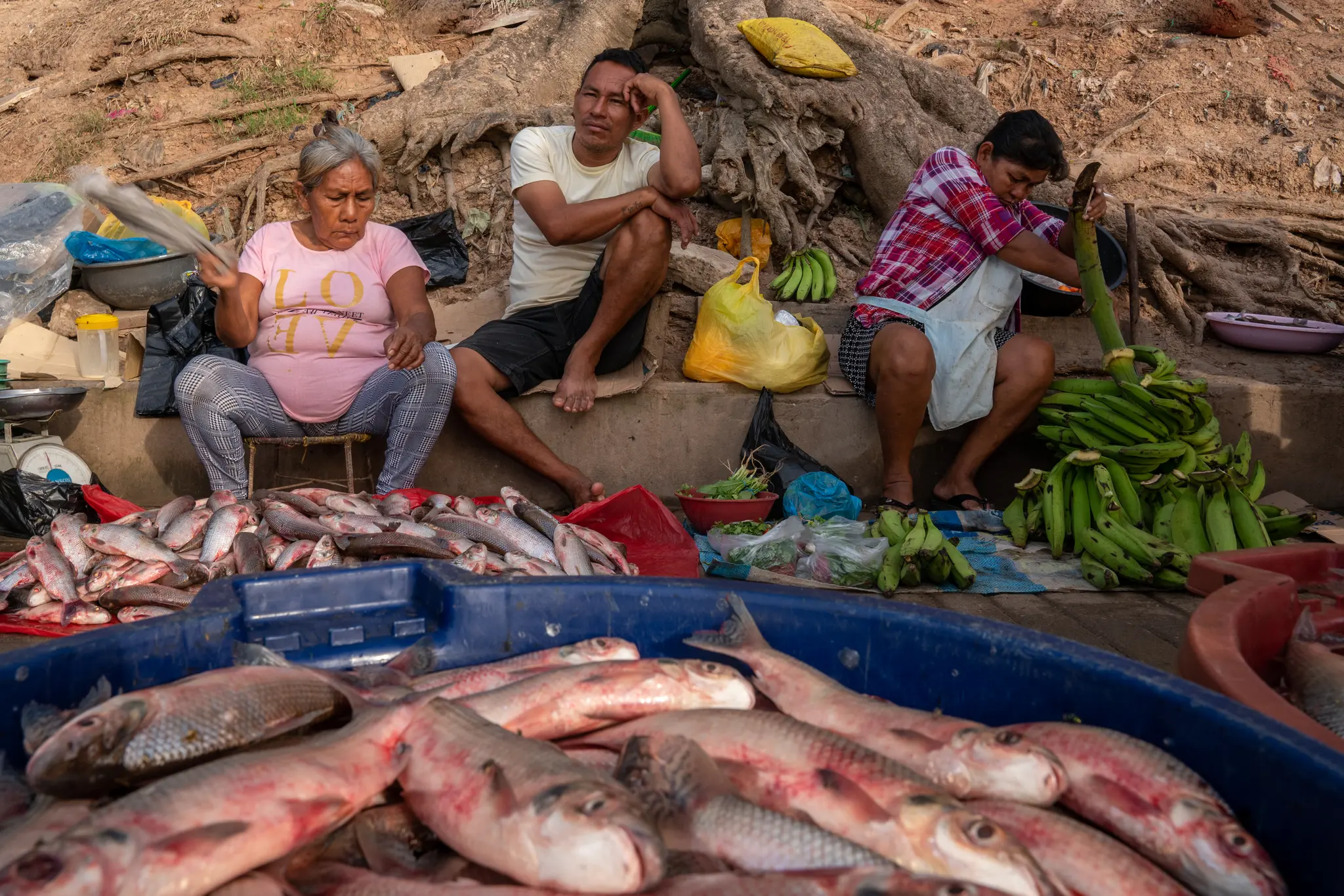
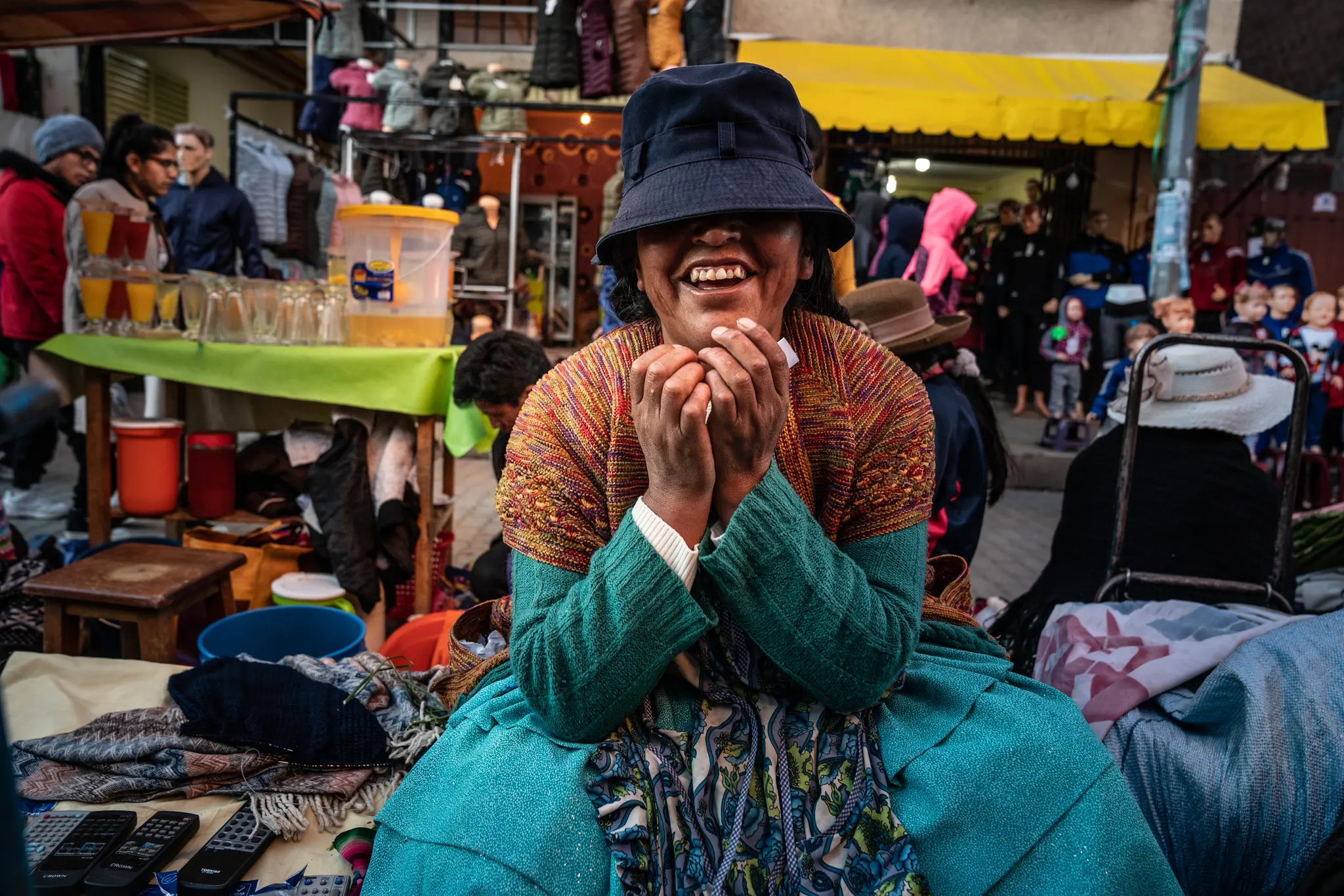
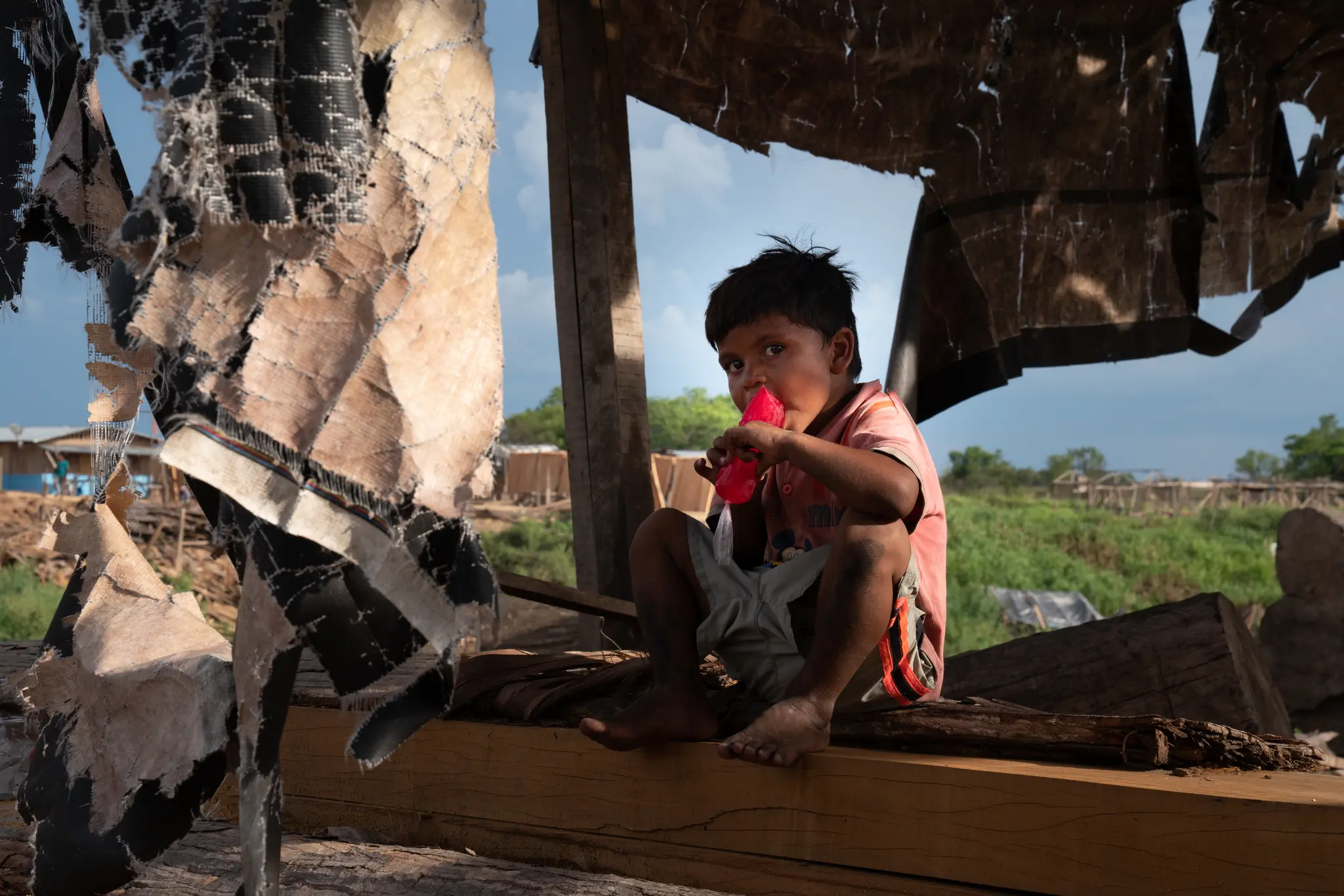
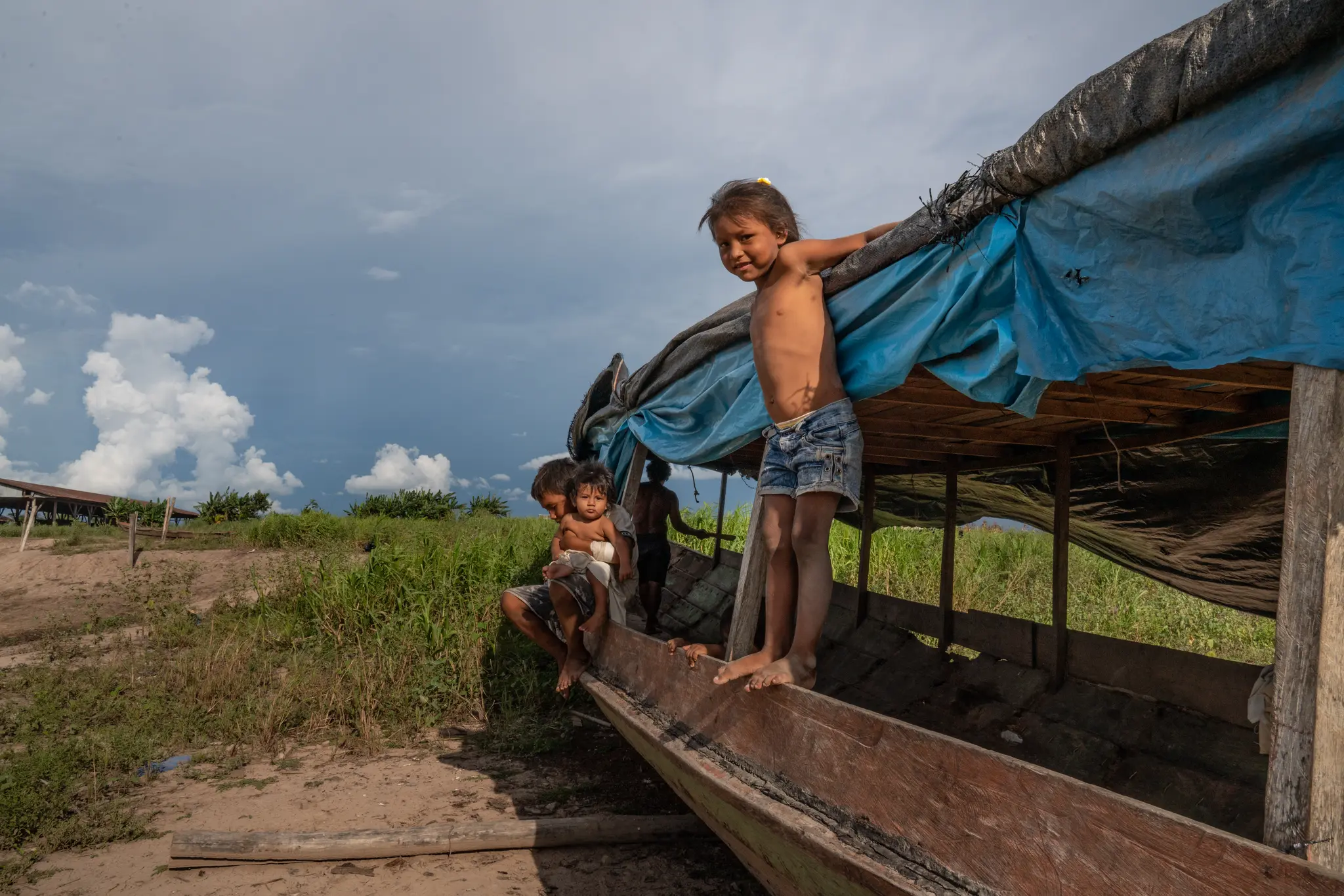
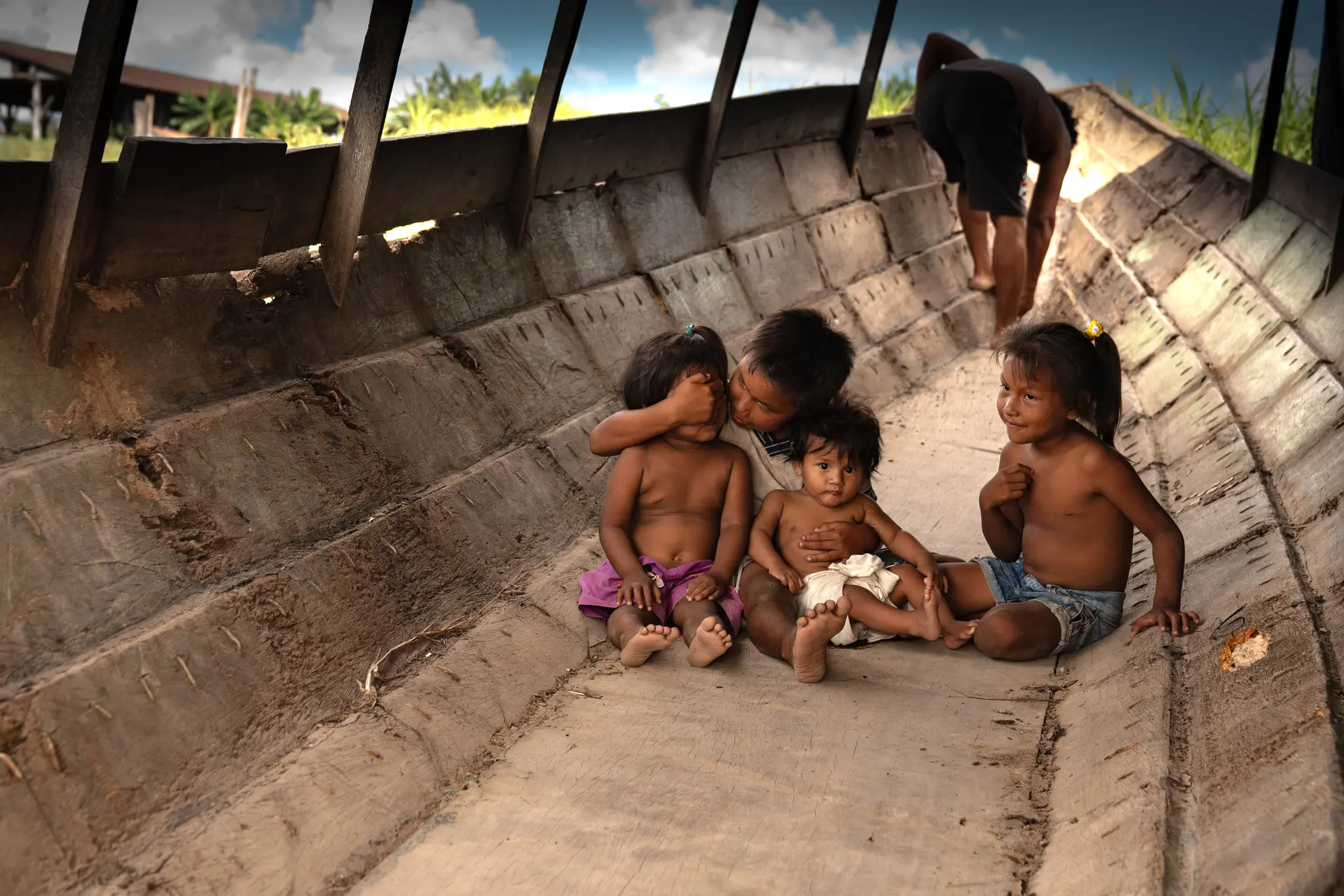
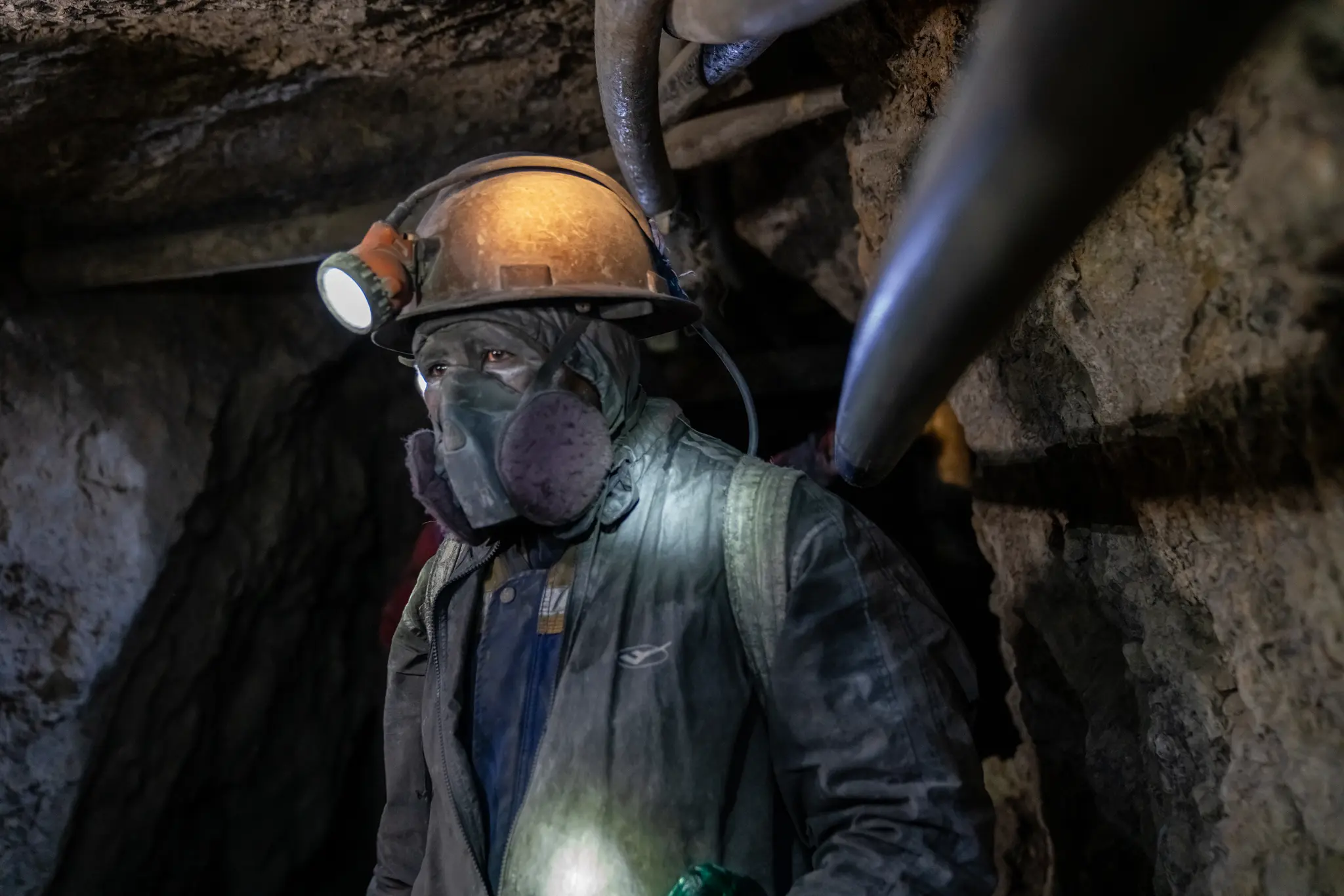
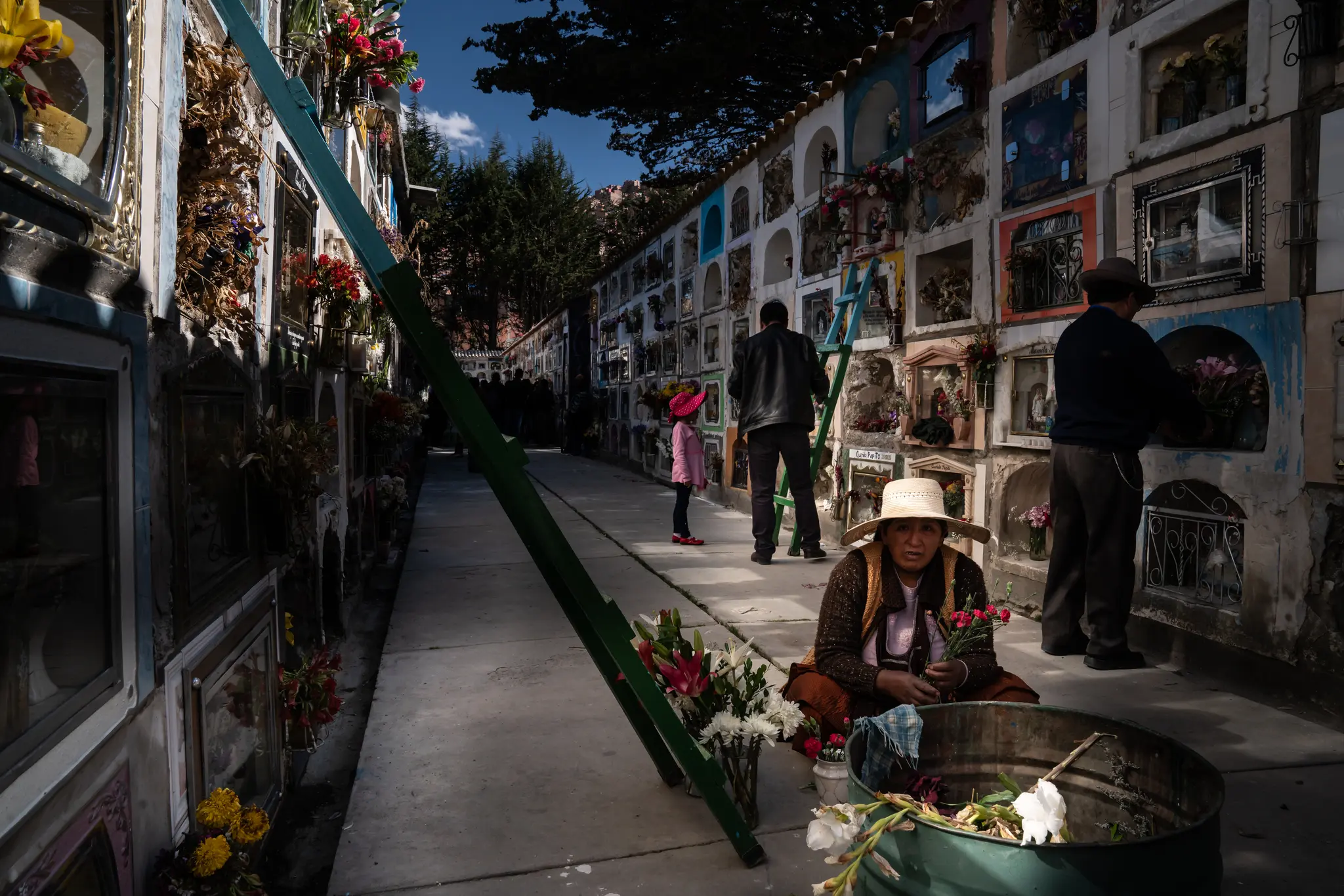
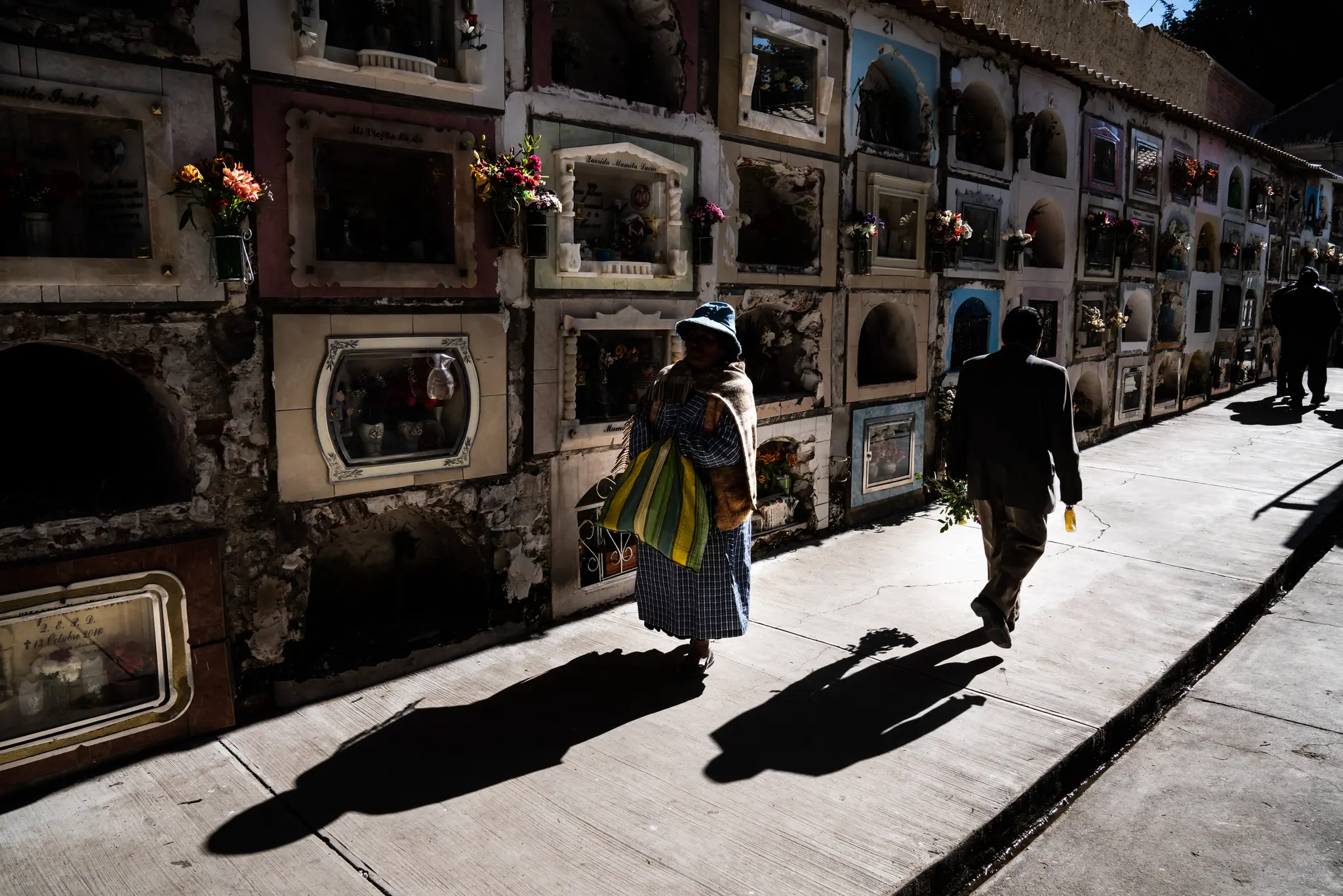
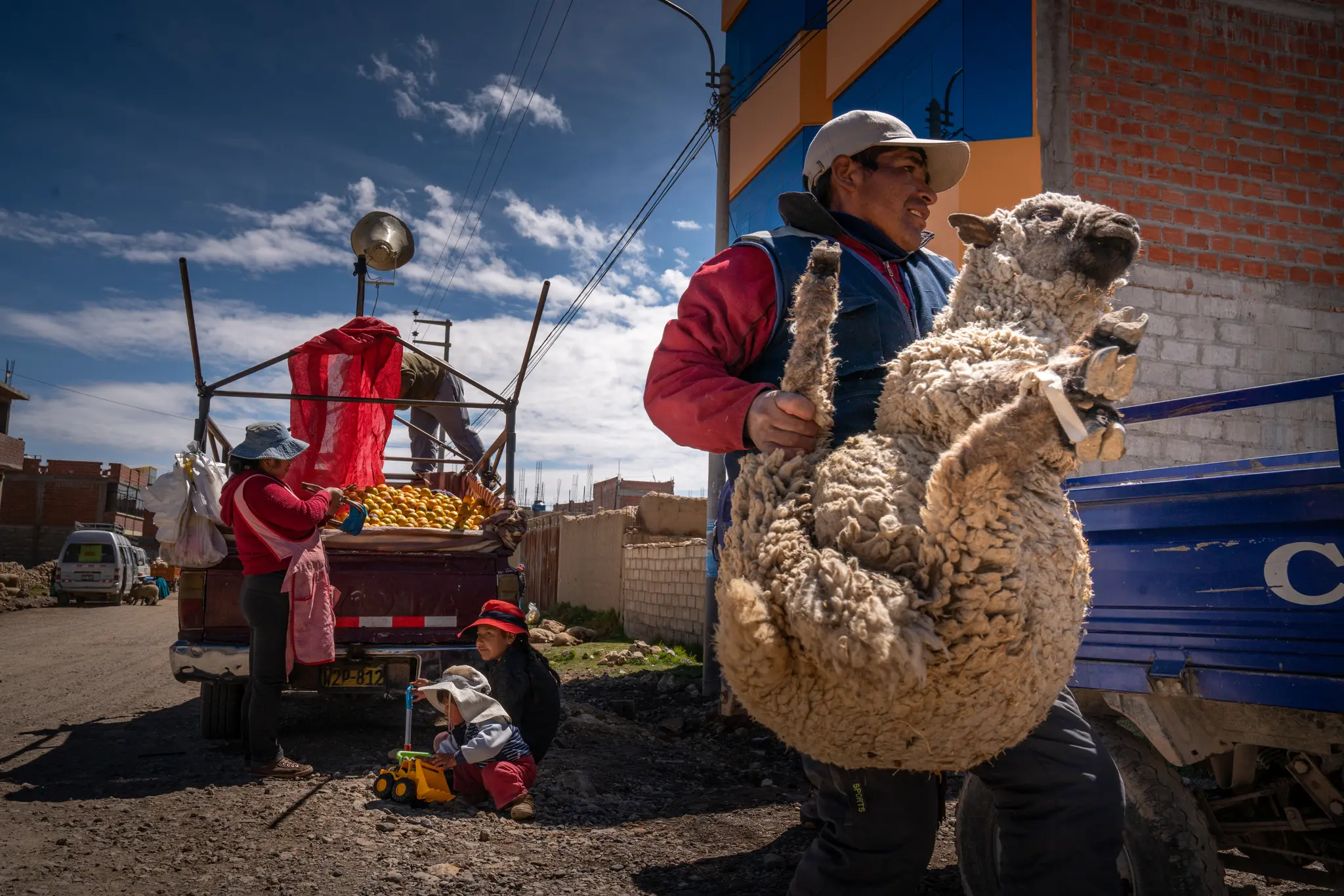
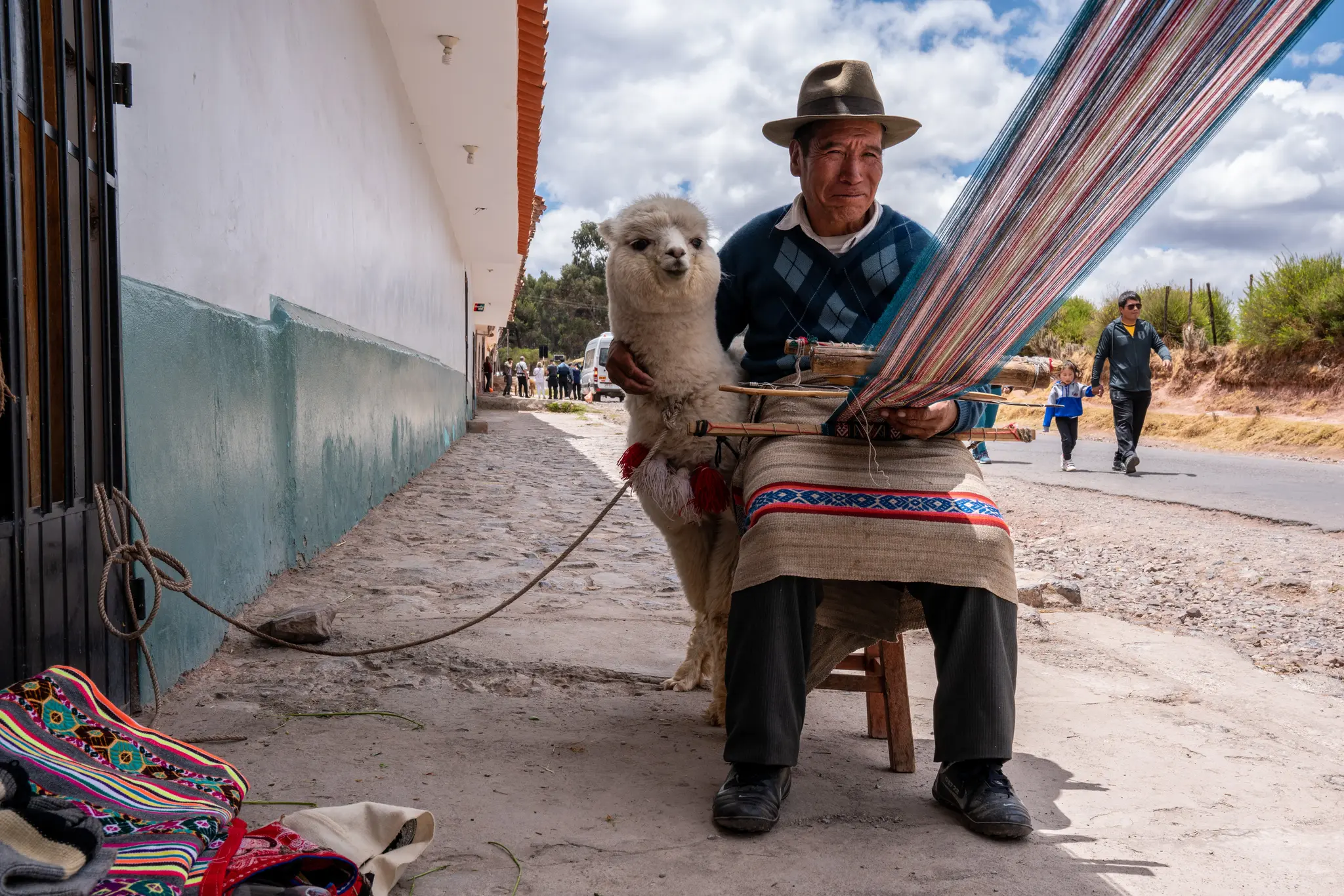
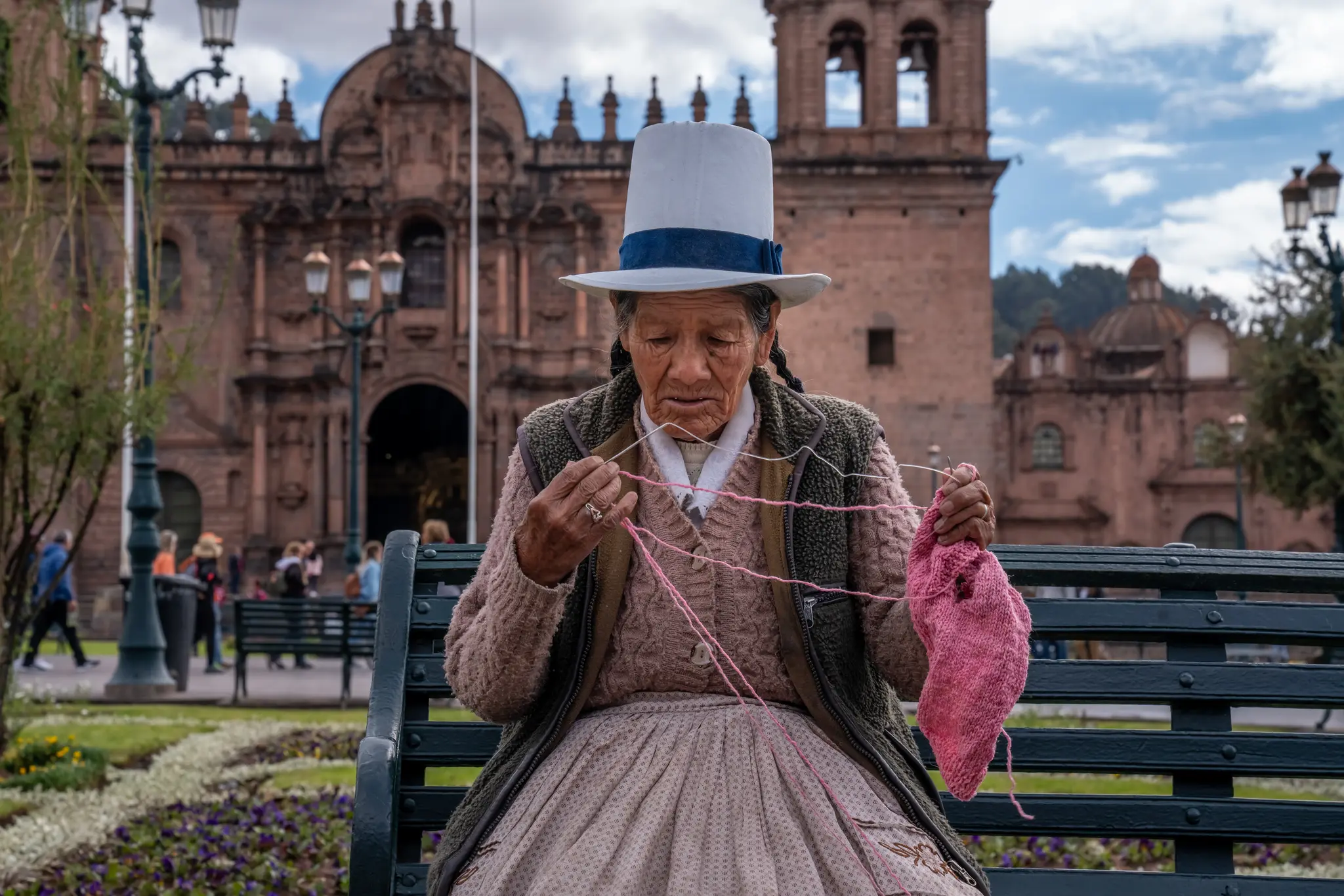
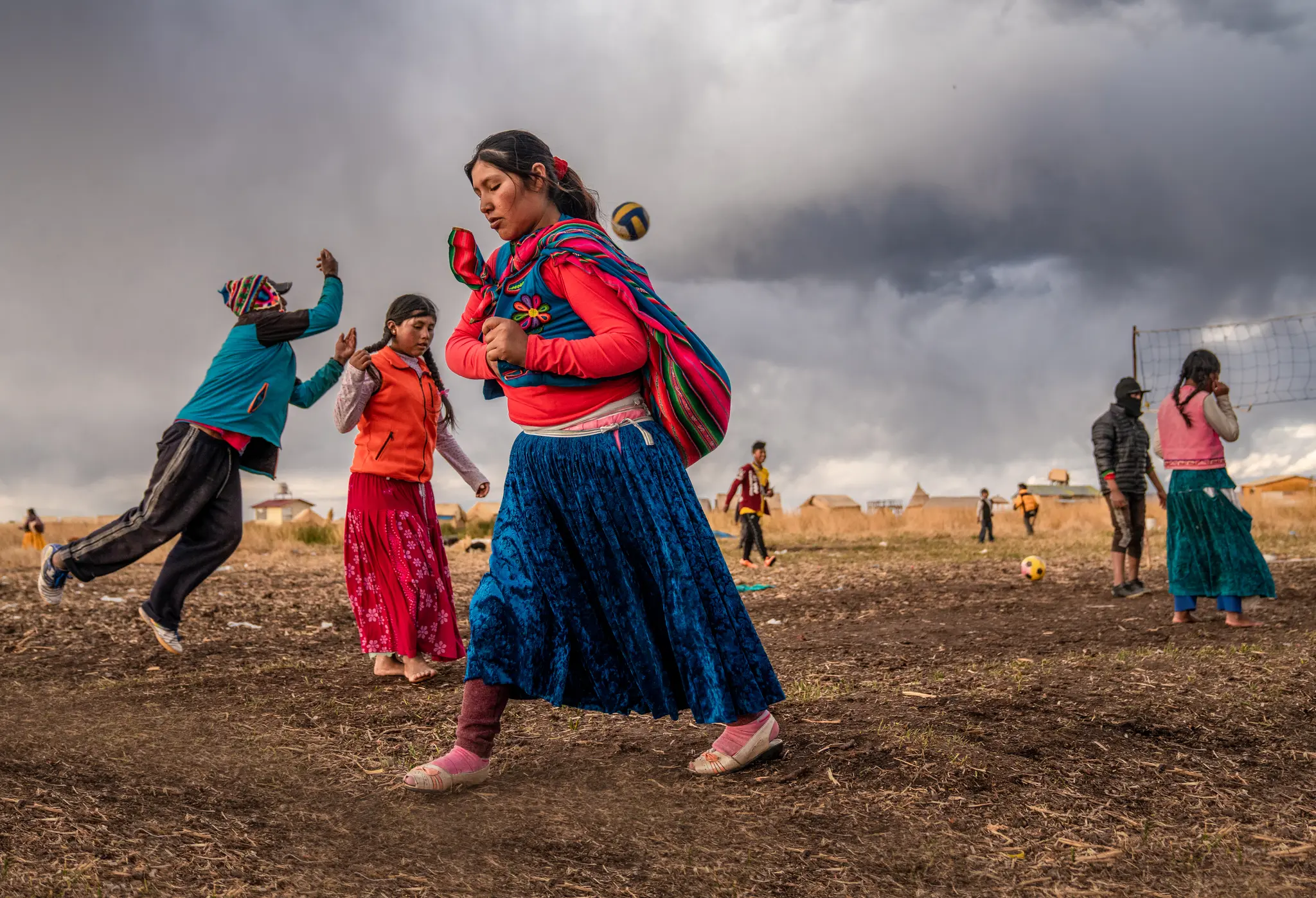
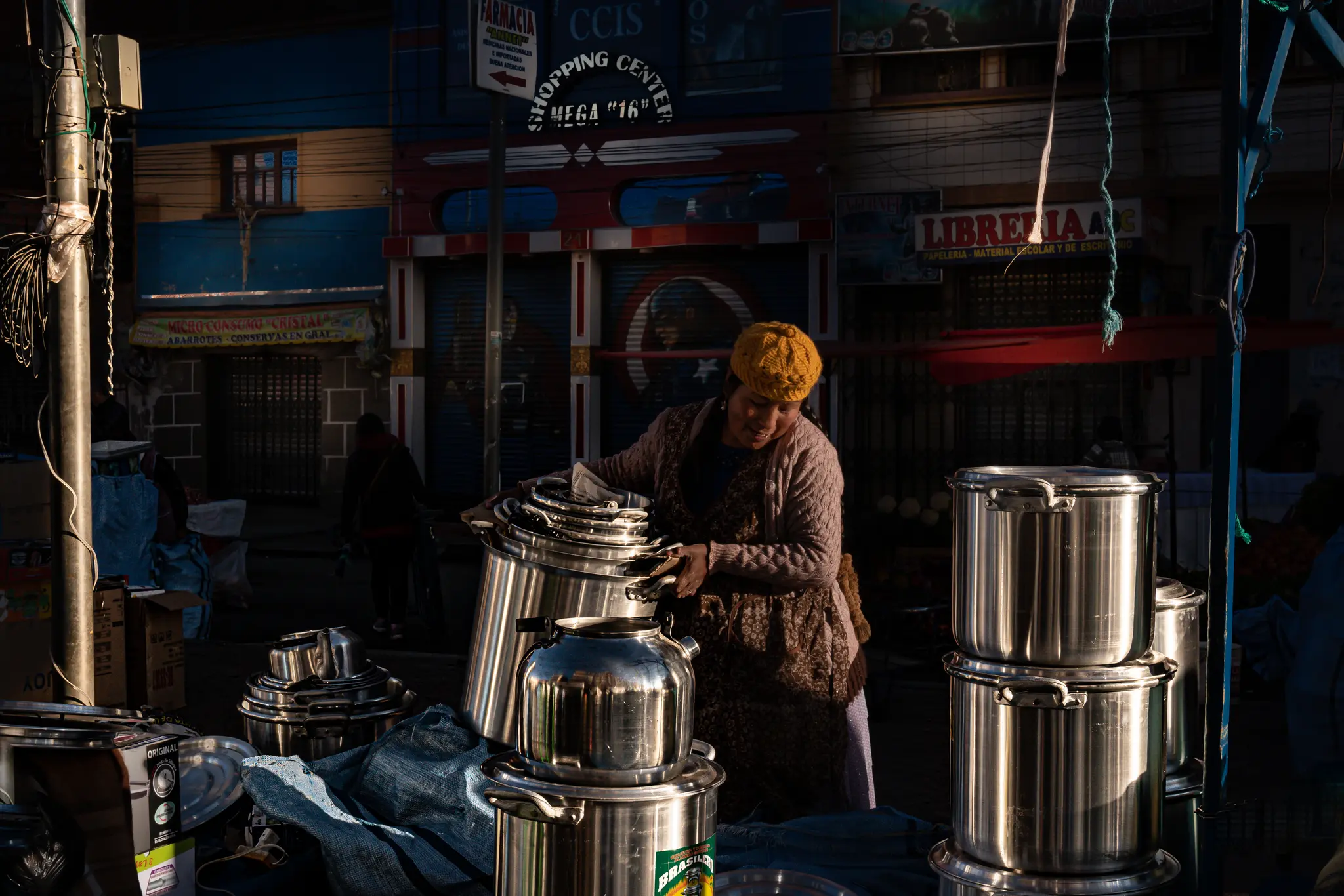
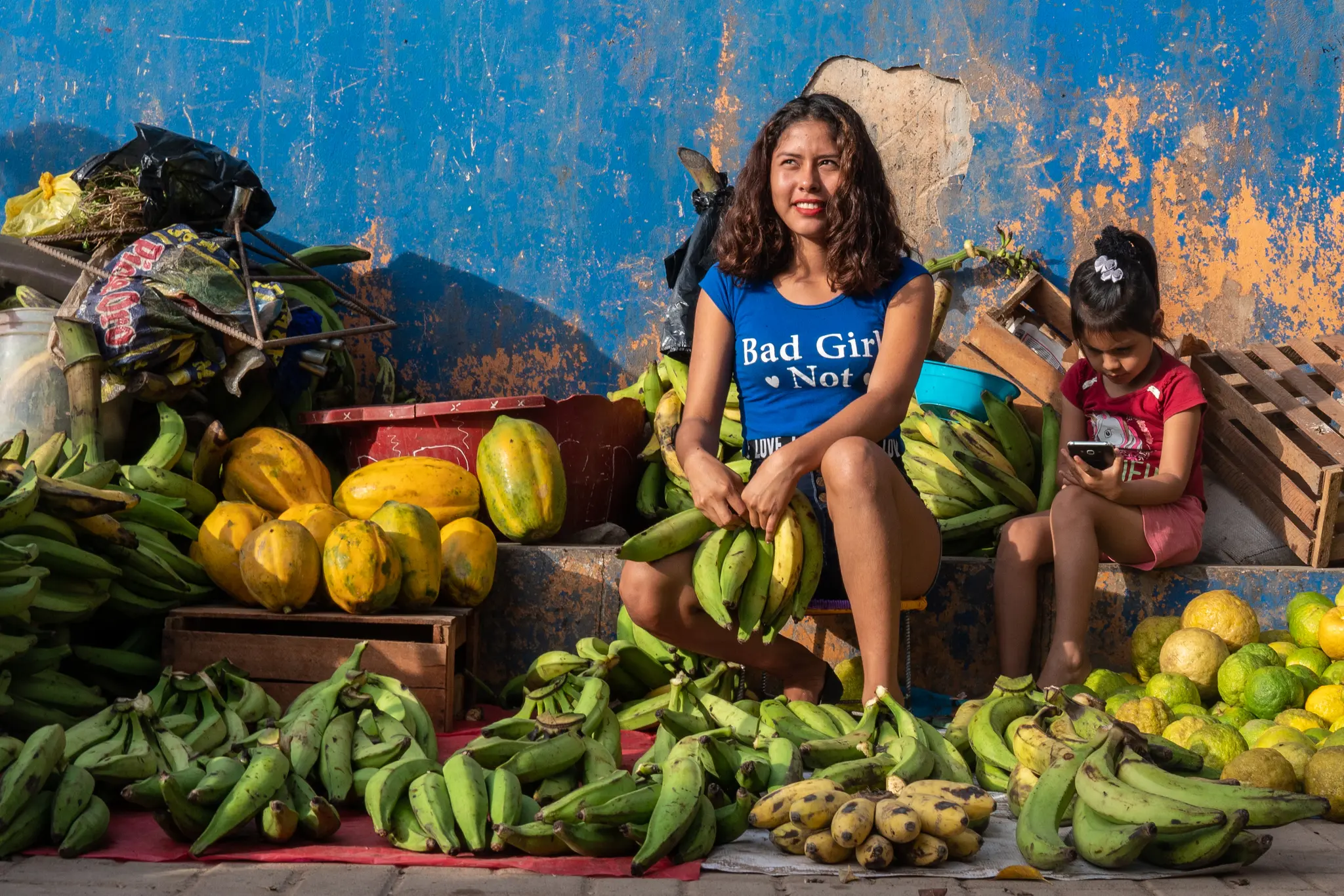
I felt that I was taking pictures in a very direct manner – in this universe so rich and full of ideas – I could so clearly depict a family in the cemetery, and the people at their work: women selling in the many kinds of markets, miners in Potosi, people working at the port or on the salt-terraces near Machu Picchu, and fishermen and the bird-thieves in Pucallpa. Under the surface, there are more complicated matters that I didn’t have the time to investigate, but what I saw was a deep sense of history, existing together in a paradox with a kind of magical realism.
Street photography here is a combination of ethic (the many different groups and the mix of them), and of current urban sights, like graffiti, buildings, and crosswalks. In previous street photography, I felt it was my job to show you what I wanted you to see and how I wanted you to feel, and to leave my mark. Suddenly here in Peru and Bolivia, I had a different feeling – the voice of where I was, the strength of the colors, and the look of the place and its people were all much stronger than me – everything was telling its own story, and I had to simply present it. Until now I always searched for a subject in what I saw in the street –what was interesting, or dramatic– but suddenly there were many topics at once, and the background became more important than the subject, for example: murals of death in the cemetery, and the flowers there that made the whole place look like a happy garden.
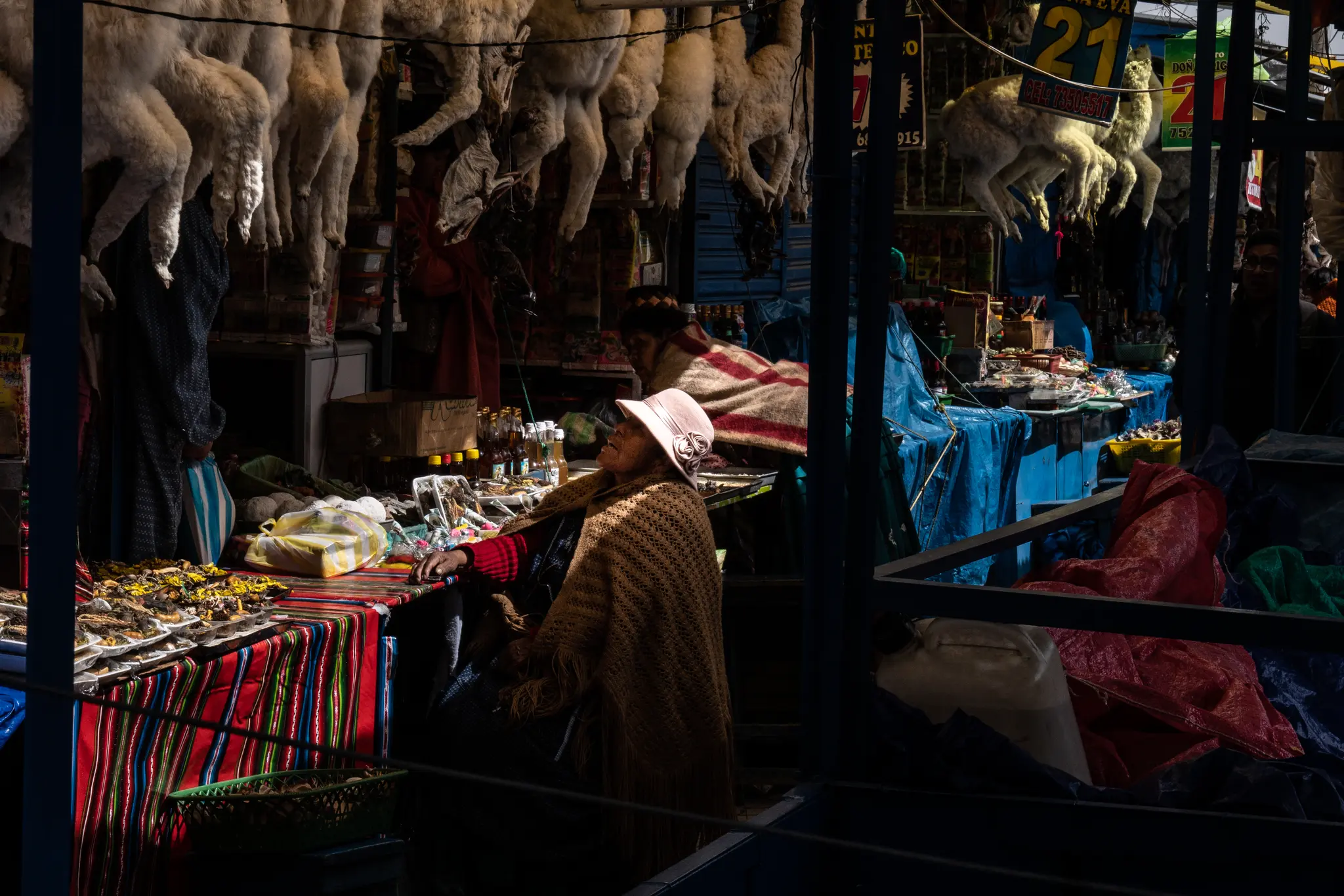
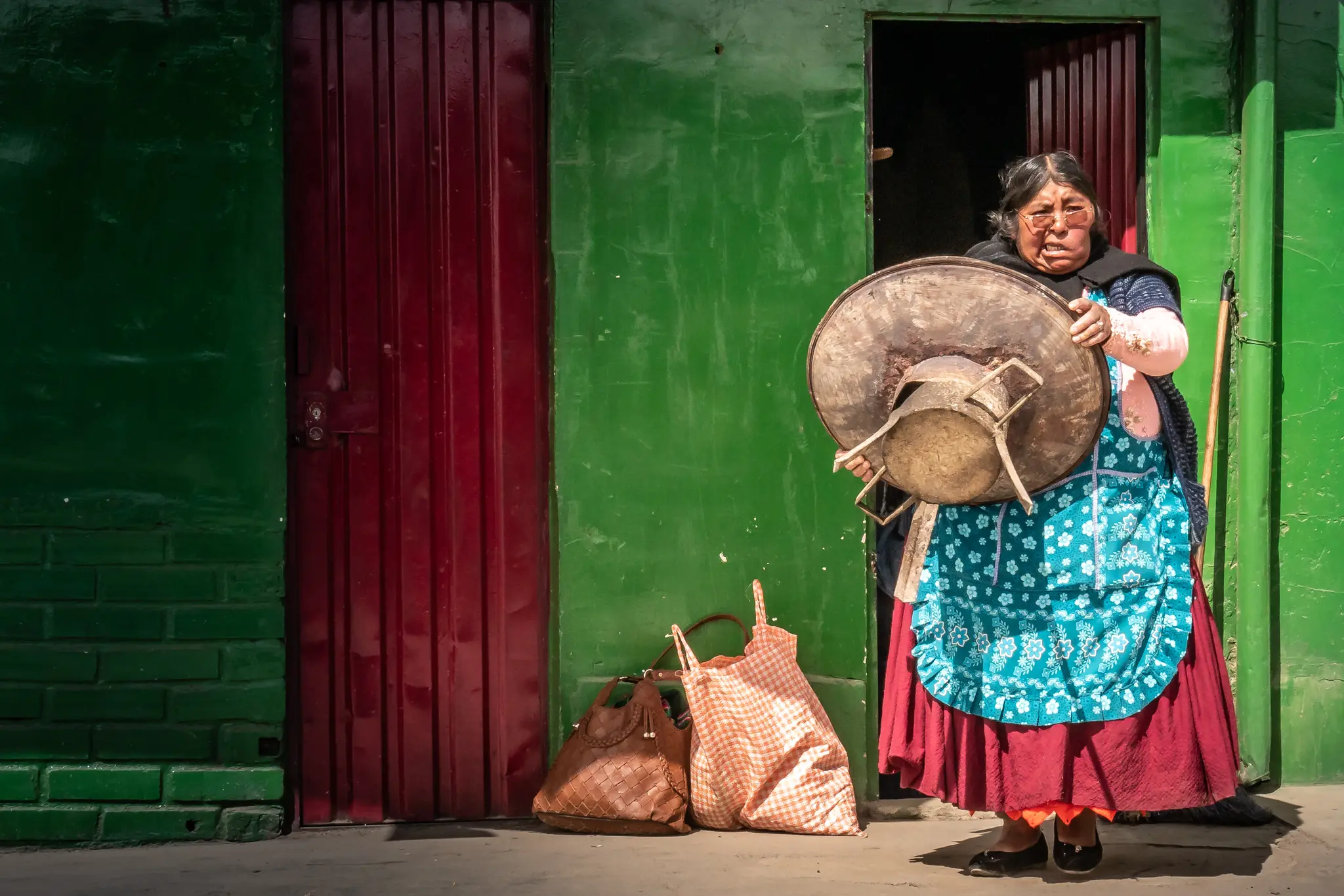
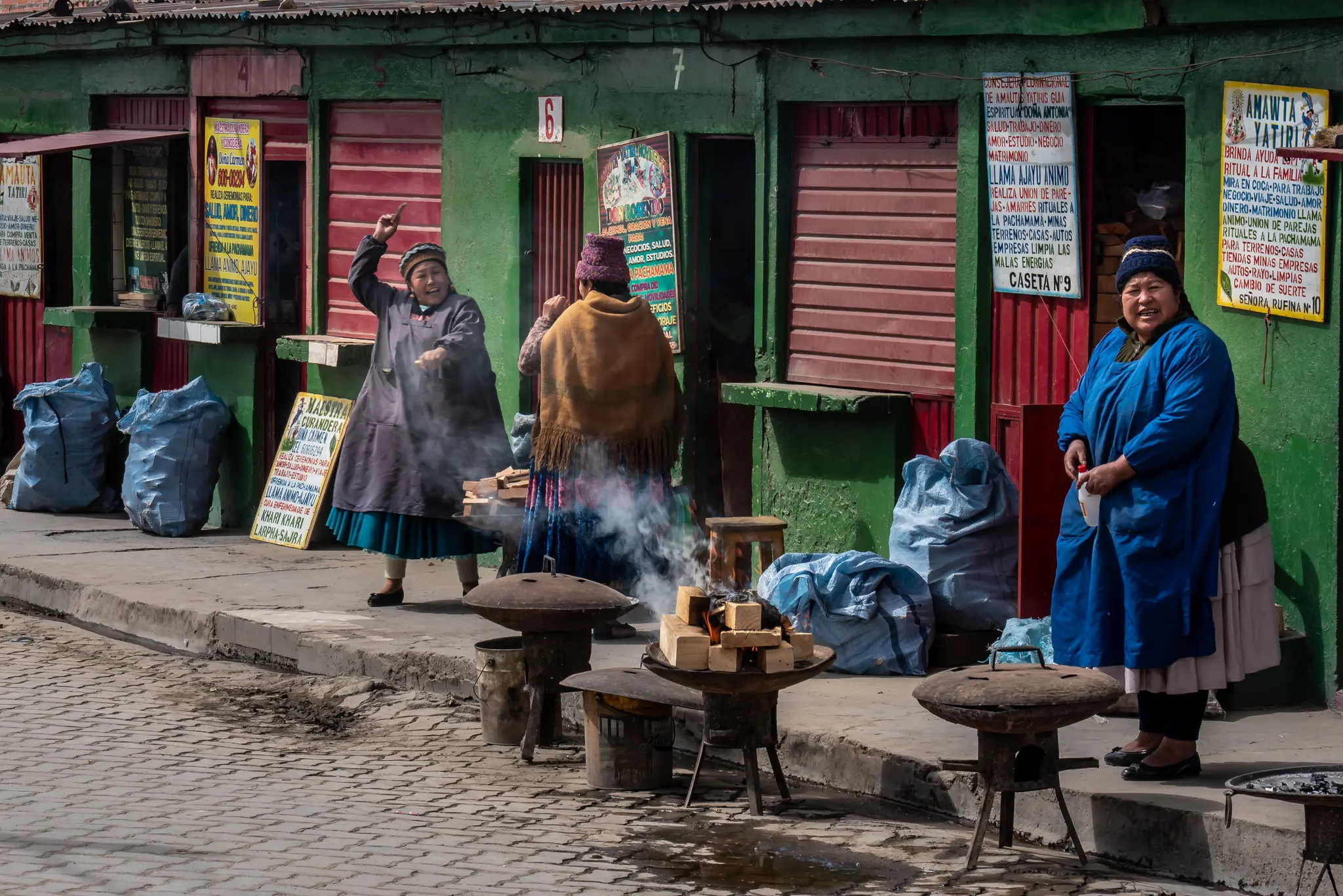
There was also a feeling of confrontation –although people were generally kind and generous, they didn’t always want their photos to be “taken”. In the markets, people covered their faces with their hats or even threw food at me – here a banana, there a tomato! The “Witches market” was very unique –here women from the Yamara tribe, called Yatiri, seem to be a kind of witch doctor. They wear wide dresses with many layers underneath and dark bowler hats – clothing originally from Europe which they were forced to wear but have made into their own strong style. In the early morning, the women begin their work – they chopped wood, lit small fires and awaited people who sought their advice. In the witches’ alley, each woman opened a tiny shop on the sidewalk, started a fire and began to create her own herbal remedies and potions, or charms. Using these, each woman gave advice about personal, familial, social and political events. But clearly, they did not like being photographed! One woman (one witch?) ran toward me with a chair in her hand, another swatted me with her broom, and a third filled a bucket of water and threw it at me, cackling with laughter!
Every picture taken there was a whole story, as life there seems very “thick” or dense somehow. While they have been there forever, I’ve only just arrived –and I already have to leave. My visit to Peru and Bolivia was a story that I never wanted to end…